

PPL Corp. named C. Joseph Hopf, vice president of energy trading for Goldman Sachs in New York, as PPL's lead energy marketing executive. PG&E Corp. elected President and CEO ...
Off Peak
Off Peak
April 15 , 2002
Catch A Wave!
The solution to California's crisis may have been lapping at the beach.

Turns out those surfer dudes (and dudettes) may have been riding on the wave of the future. The California Energy Commission recently awarded Dr. Asfaw Beyene, a mechanical engineering professor at San Diego State University, a $120,000 grant to study the feasibility of using ocean swells as a potential source of renewable energy.
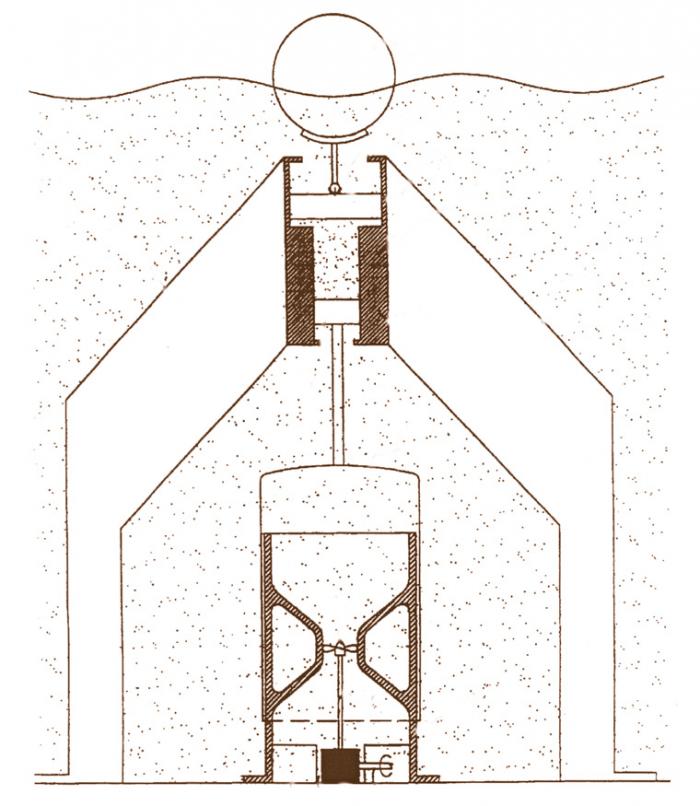
And we thought gas-fired peakers were the way to go.
Believe it or not, sea wave energy has been on some people's radar screen for a long time. In fact, one of our friends, of the engineering persuasion, designed a sea wave energy project in high school for the Honeywell Science & Engineering Prize. It was device like a dam that at high tide trapped seawater, then as the tide receded, the water would go through turbines to convert the energy to electricity. Even though he didn't win, our engineering friend must have been ahead of his time.
According to Beyene, several hundred patents have been registered worldwide for capturing wave energy. Most of the research and development has been in Europe, funded by the largess of government. As one might imagine, the research so far has been mainly at universities, though some European companies and utilities have constructed prototypes.
In good old surfin' USA, government support has been modest, according to Beyene. Some companies have become involved in prototype testing, but no "wave machines" (yes this is the technical term) are currently deployed in North America. There may be some wave machines deployed by 2005.
Yet wave energy is not just a "green Euro" idea. A decade ago, Pacific Gas & Electric Co. conducted an assessment of the waves off Northern California, and concluded that there might be up to 23,000 MW in them thar waves. The trick, of course, is figuring out how feasible it is to make that energy from the waves. Bayene's task is to determine just how much electricity could be produced from California's 1100 miles of coastline. Thus far, only a small portion of the coast has been evaluated for its wave energy potential, and none of those assessments have taken into account technical, economic, and environmental factors.
At the , we wondered what portion of the grant might go to crucial beach research items like sunscreen and beer. Beyene coyly refused to say. We also wondered if he would let us participate in this quest for advancing science and technology in the area of renewable energy. Somehow, working a wave farm sounds a lot cooler than working on a wind farm in a cornfield. Strangely enough, we didn't get a response from Beyene about whether nosy reporters could participate in his beach par-, er, serious research project. We are also still waiting to hear whether our application to SDSU's engineering program has been approved.
Articles found on this page are available to Internet subscribers only. For more information about obtaining a username and password, please call our Customer Service Department at

