
Public Utilities Reports

PUR Guide 2012 Fully Updated Version

Available NOW!
PUR Guide

This comprehensive self-study certification course is designed to teach the novice or pro everything they need to understand and succeed in every phase of the public utilities business.

Order Now

The Fusion Reaction

How an environmentally friendly power source can solve the fossil-fuel supply-and-demand gap.

Fortnightly Magazine - August 2005

The need for new, environmentally friendly energy sources accelerates as we enter the next half-century, driven by the likelihood of permanent changes in the availability and price of fossil fuels. Consensus is growing that global warming from increased carbon dioxide in the atmosphere is real and significant. Oil supplies in the near future will not readily meet demand, and natural gas and natural-gas liquids will not easily fill this supply/demand gap. The likely results: increased reliance on coal, and an associated increase in the level of carbon dioxide in the atmosphere. Can we find replacements for carbon-dioxide-emitting energy sources that do not place added burdens on the atmosphere?
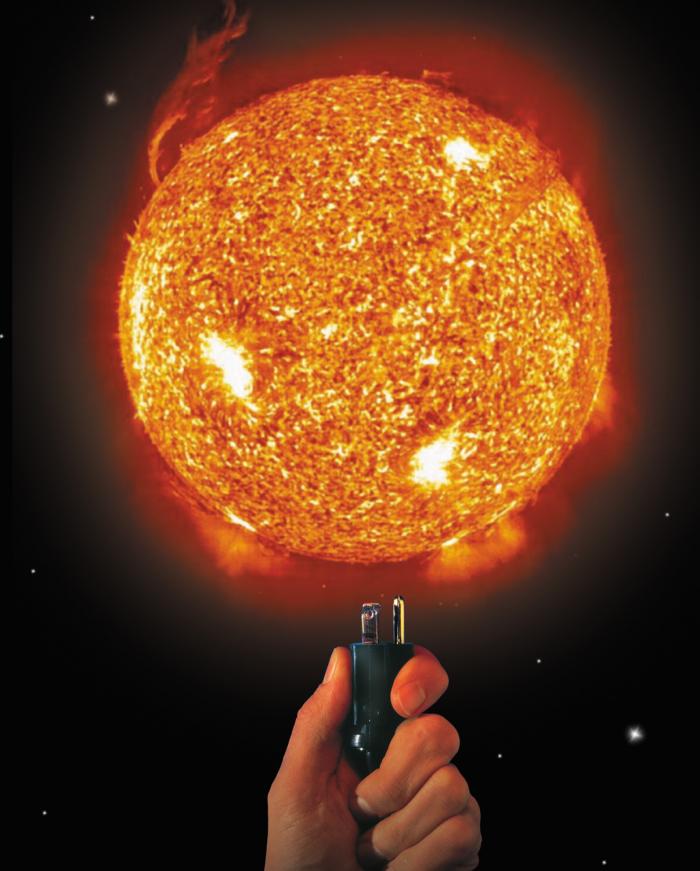
Increased reliance on efficiency, nuclear fission, and renewables could fill the energy supply/demand gap during the first half of this century, 1 but the limitations on these sources and the widening supply/demand gap especially will be challenging during the last half of the century. If properly funded, a commercial fusion reactor prototype could be available by the 2040s, and fusion power substantially deployed during the second half of this century.

Fusion's Promise

Projections of future world energy demand from the International Panel on Climate Control (IPCC) are based on a range of assumptions used for energy analysis. 2 The top curve in Figure 1 is a basic IPCC (business as usual) energy-demand projection through the next century. The next curve shows how much of this energy can come from fossil fuels (assuming the present mix) where atmospheric carbon dioxide is limited to 750 parts per million (ppm). The third curve is the difference between these two curves-the requirement for non-carbon-dioxide-emitting energy sources required to achieve the 750 ppm limitation. This carbon dioxide level is roughly twice the present level.

Figure 1 - Future Energy Scenario

The bottom curve in Figure 1 shows a fusion scenario with a deployment rate based on experience with other energy technologies.

The advantages of a fusion-based energy system include its relatively unlimited fuel source, with limited hydrocarbon or greenhouse-gas emissions and limited nuclear waste. Fusion is, by its nature, a base-load electrical power source, and is deployable within the existing distribution system-limiting the need for additional power transmission facilities. In addition, electricity derived from fusion can be used to produce hydrogen as a transportation fuel, if we choose to implement the infrastructure to support hydrogen-powered transportation. The challenge over the next several decades will be completion of an economically competitive fusion power plant.

During the past several decades, funding of small to moderate-sized experiments for domestic and foreign fusion programs has helped the development of a full-scale reactor, but larger experiments will be required to complete the development and advance the technology for a commercial power reactor.

Tokamak Trials

The magnetic confinement configuration that is most widely studied and developed, and has achieved the best performance, features a donut-shaped plasma and is called a Tokamak.

Pages