
When Congress repealed the Holding Company Act, it gave states greater authority to regulate utilities. New Jersey picked up the baton and enacted rules to protect ratepayers.
Partnering on Pipeline Safety
The state regulator’s perspective on gas infrastructure inspections and investments.

A little more than two million miles of natural gas distribution pipelines crisscross the United States, connecting homes and businesses with one of our most important energy resources—natural gas. The nation’s pipeline system is the safest, most reliable and cost-effective way to transport this essential fuel across the country. Yet, despite the gas industry’s strong safety record, the 2010 San Bruno, Calif., and 2011 Allentown, Penn., incidents transformed public sentiment and placed both industry and regulators under intense scrutiny about the perceived safety of pipeline systems and the effectiveness of federal and state enforcement.
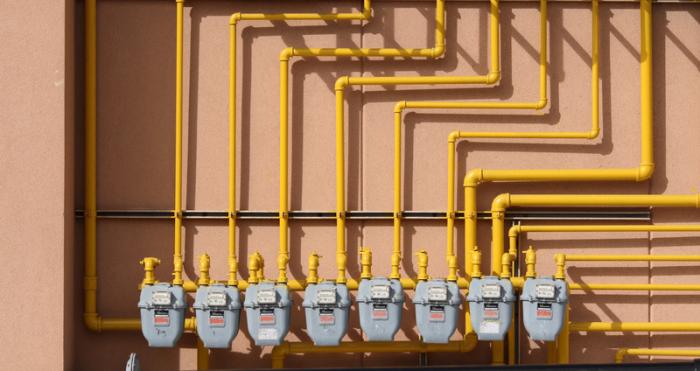
As these recent incidents demonstrate, a life lost because of a gas or hazardous materials pipeline accident is a tragedy that strikes pain and fear into the heart of the affected community. Any incident is always one too many.
Pipeline safety is at the heart of state utility commissioners’ duty, as representatives of the state governments responsible for overseeing natural gas utilities and many of the safety programs at the distribution level, to ensure safe and reliable service to customers. Our state pipeline safety inspectors carry an even greater burden; they’re literally the boots on the ground and are among the first responders to the scene after an incident occurs. They coordinate with emergency personnel and utility officials, and they lead investigations into what happened and why. They’re always on call, working days, nights, and weekends to ensure utilities are doing all they can to keep the pipeline system safe, reliable, and secure.
The challenges inspectors and the regulatory community face are growing. As pipelines age, the need to replace utility infrastructure becomes more crucial. At a July 2011 National Association of Regulatory Utility Commissioners meeting, one expert estimated the cost of upgrading the nation’s pipeline system—both transmission and distribution—to be roughly $215 billion over the next 10 to 20 years. 1 This number is sobering on its own. And when added to the roughly $2 trillion estimated for electric utility upgrades and the more than $1 trillion for the nation’s water infrastructure, the price tag becomes even more daunting. 2
Simply rolling this trillion-dollar cost into our consumers’ rates is a non-starter. While the regulatory compact demands that utilities maintain and upgrade their systems proactively, it also requires that utilities be given a fair opportunity to earn a return on the capital invested in their systems. In practice, this means that utilities must affirmatively take action to upgrade the pipeline system, despite the fact that traditional ratemaking policies can leave utilities with the residual risk of not securing timely or complete cost recovery.
But as a practical matter, this can sometimes have counter-intuitive implications when it comes to advancing public safety; a utility that needs to systematically invest increasing
