

Public Utilities Reports

PUR Guide 2012 Fully Updated Version

Available NOW!
PUR Guide

This comprehensive self-study certification course is designed to teach the novice or pro everything they need to understand and succeed in every phase of the public utilities business.

Order Now

Perspective

A face-to-face interview with FERC Chairman Pat Wood III.
Fortnightly Magazine - April 2004

Perspective

A face-to-face interview with FERC Chairman Pat Wood III.

Bold. Fearless. Relentless. These are the words now being used by both critics and supporters to describe Federal Energy Regulatory Commission Chairman Pat Wood III.
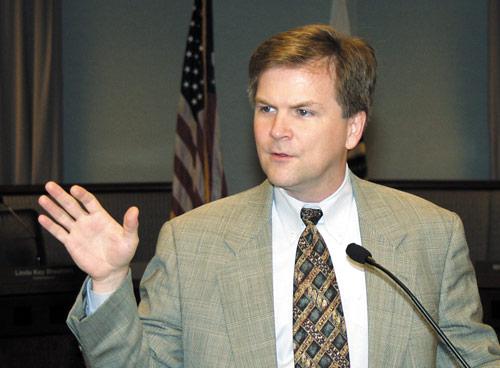
FERC's recent policy initiatives and directives mark a strong shift from what was last year regarded as a more reluctant commission.

In recent months, FERC has taken on highly contentious issues such as interconnection standards, regional transmission organization membership, and market power and reliability, in a way that is unprecedented, analysts say.

Perhaps because of the lack of movement by Congress on the energy bill, or the addition of two new commissioners, FERC has shown itself willing to sacrifice political capital, endure legal challenge, and even pre-empt Congress to meet its objectives.

What has prompted this sudden change in tenor at FERC, and what does it mean for the industry? Executive Editor Richard Stavros, in an exclusive interview, talks to the man at the center of the storm and asks what the commission has in store for the electric utilities industry in 2004 and beyond.

Fortnightly: After the blackout, transmission investment has been sub-optimal. At what point should regulators step in and require upgrades?

Pat Wood: Well, I don't think since the blackout it has been sub-optimal. It's a pretty short-term thing from the way company's planning cycles [and] regulatory response cycles are. I think a lot of problems that existed today and existed before the blackout is, what's the incentive for a company to build a more robust grid when all it does is advantage their competitors generation, which is the more vertical market now? The other [problem] is, why would I invest in transmission when I can get a better return in "fill-in-the-blank"? That was probably a bit more attractive argument before the blackout, and not since...

The real core issues ...[are] how do you know you're going to get your money back? Generation actually, even unregulated generation, depending on the nature of the deal, has had a more predictable payback than transmission, what with rate caps at the retail level, the questions about jurisdiction between us and certain states, siting issues that take decades, the fact that the people who are trying to build transmission [in] about half the markets in the country are also out there with the retail brand, and they don't want to sell it. Transmission lines have gone through people's yards and barns and ranches and cemeteries and what have you. They aren't really popular projects, so to have the same name on their company that also is out there competing for your business [is] probably not what a marketing agency would advise you to do. There are a lot of things going on there that I think really don't get dealt with unless the transmission and generation issues are dealt with.

Fortnightly: I wrote an editorial about my surprise that there was no investment going on in transmission. You made the point that it was because these transmission assets aren't independent, and that's why the investment isn't happening.

Pat

Pages