

Perspective
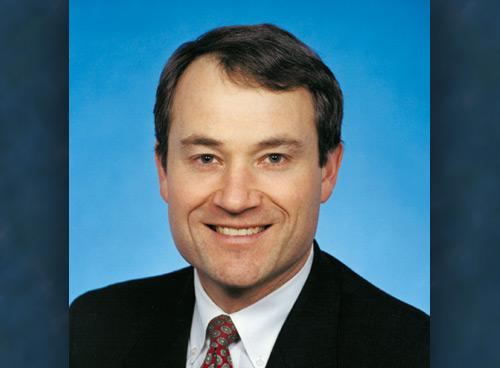
Exelon Chairman, President, and CEO John W. Rowe, on the proposed merger that would create the largest utility in the United States.
...
Perspective
Perspective
A Year After the Blackout:
Grid reliability is still at risk unless the industry quickly takes action.
"Those who do not learn from history," the cliché goes, "are doomed to repeat it." The report issued by the U.S.-Canada Power System Outage Task Force on last summer's massive blackout in the Northeast certainly offers an excellent and thorough understanding of the causes of the event, which remains fresh in the industry's mind. Why, then, can't grid experts offer stronger assurances that similar failures will not occur in the future?
Rising demands and continuing low grid investment remain on a collision course. Transmission capital budgets have seen a modest post-blackout uptick that is nevertheless barely enough to keep pace with load growth and replacement, let alone boost system margins to foster more robust competition.
California's overtaxed grid has remained on a knife's edge all summer, and the pre-Olympics blackout in southern Greece reminds us of how rapidly and spectacularly grids can fail when they become unstable. Beyond improved understanding of the causes of blackouts, the industry must have clear grid investment signals to lift the specter of risk.
Other measures can certainly help. Under the strong leadership of the North American Electric Reliability Council, for example, inter-area coordination and communications have improved. But transfer limits are ultimately set by material properties and natural laws that even the most powerful legislatures cannot trump.
Legislators can, and must, frame broad policies that foster a healthier grid investment climate, yet the post-blackout momentum to enact reforms has stalled. In this highly polarized election season, many critical measures-mandatory reliability standards, siting reform, investment incentives, and tax-law changes to ease transmission asset sales-are stuck in neutral. Electricity consumption has long been one of the closest correlates of overall gross domestic product, so this combination of political and physical gridlock threatens to cripple our nation's prospects for long-term, sustainable growth.
Federal-State Tension, Agreement
In light of this gridlock, federal and state regulators must agree on steps they can take, under existing authority, to strengthen grid security and reliability. The recent history of propagating grid failures doesn't make such agreement easy. Many states have lost confidence in the Federal Energy Regulatory Commission (FERC) and its vision of transmission as an open-access "superhighway" supporting robust competition. Some wish to keep their grids as tightly regulated "cul-de-sacs" shielded from the unpredictable traffic of interstate commerce. After all, why endure the political, financial, and land-use costs of siting local grid upgrades to support regional power flows?
Yet beneath this surface disagreement there is gathering consensus on some key points. First, truly secure power networks are indispensable to our 21st century economy. Customers will not soon "cut the cord" but will demand the low-cost, reliable supplies the grid alone can provide. Second, land-use and space issues will intensify, and tomorrow's grid must be constructred largely within a fixed physical footprint. New technology solutions are urgently needed, and both the National Governors Association and FERC have voiced inteest in grid solutions that make fuller use of existing pathways.
Reactive Power Management
Regulators have divergent views

