

Top Innovators
PSEG won the Fortnightly Top Innovator 2024 award ''Lewis Latimer Top Innovator in Technology or Process Design'' for its Outage Management System Deployment.

PUF's Lori Burkhart: Brian, describe your innovation and its positive impact.
Brian Heath: The innovation is a complete modernization of our outage management process as it relates to significant weather events, as well as normal blue-sky days. The new system and processes provide our employees with near real-time data aiding in decision making and deployment of resources quickly and efficiently. The innovation allows us to get the lights on faster and improve the customer experience.
As New Jersey's largest dual utility service, the implementation of this solution impacts 2.3 million of our electrical customers, as well as thousands of our field personnel. This innovation has over twenty-five interfaces to our enterprise systems, which gives our customers and employees the latest information as we respond to different emergent situations.
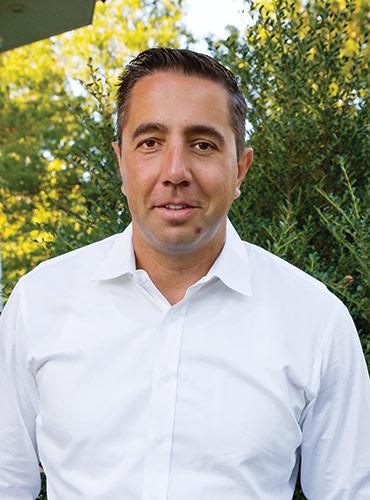 Brian Heath: I started my career as a line worker, making my way into operations. Knowing we deployed a tool that leverages the latest and greatest technology to assist them manage their workload and be responsive to customers is very satisfying.
The program also replaced the devices that our field personnel utilize to send and receive job details. We have deployed thousands of iPads, improving our field crew's useability, situational awareness, and connectivity.
With such a large-scale deployment that impacted all our utility departments, continuous improvement will be the focus going forward. We will continue to adjust and tweak processes ensuring the safety and reliability of our electrical grid, all while communicating the latest information to our customers.
PUF: Ashwini, what would you like to say about the innovation and its positive impact?

Ashwini Paranjape: I would like to add a couple of things to what Brian said. At PSEG, reliability and safety are two of our top two priorities. This innovation has allowed us to maintain our priorities, but it also offered us an opportunity to streamline our business processes.
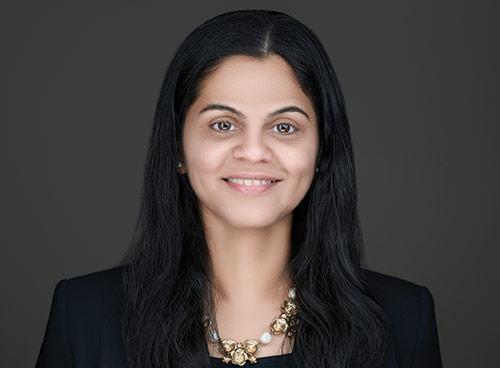 Ashwini Paranjape: The Outage Management System project has been a catalyst for change. It has brought changes in operator mindset, distribution technology integration, and operational processes.
Sometimes, technology changes, but the end-to-end business processes remain the same. Over time, this tends to result in inadvertent operator burden. Reducing operator burden and offering a new user experience and data visualization has had a positive impact.
PUF: Brian, what was your role in the innovation's development?
Brian Heath: As a division operations manager, I was at the forefront of the collaborative effort in developing the requirements and defining scope: facilitating conversations on what worked in our legacy system, what needed improvement and what was no longer applicable.
Ashwini and I worked across many different groups to develop new processes and define deployment strategies and training material, all while keeping clear lines of communication open with senior leadership and key stakeholders.
PUF: Ashwini, talk about your role in the development of the innovation.
Ashwini Paranjape: In my primary role as a division operations manager, my team and I are responsible for maintaining OMS availability and training plans, delivery operations, reporting, and emergency preparedness. Making sure we are still able to perform those functions was a big part of my overall responsibility.
Outage management system configuration, workflows, and the way the system performs has a direct impact on our customers and our performance. I worked on ensuring every user can perform their job with the new tool, making sure we are taking time to understand how various groups use these integrated systems, analyzing what do our users like, versus how they should use the system, and strategies for managing this change across the organization.
This has been a huge change for all of us. Overnight, we went from using a twenty-three-year-old technology to a brand-new OMS for two thousand-plus users; so, managing expectations, pulling everyone together were key parts of my role.
Brian Heath: Everybody in some manner has a hand in the outage management system or the emergency response world as part of the utility, therefore we needed to ensure everyone had a voice and a means of being part of the conversation.
Ashwini Paranjape: Yes. The last bit is the alignment. Great collaboration between various groups within the electric divisions and cross-functional teams across the organization has been remarkable. Everyone marching toward the same goal helped us.
PUF: What was most rewarding to you about working on this innovation?
Brian Heath: The positive feedback from our folks in the field has been most rewarding. I started my career as a line worker in the utility, eventually making my way into operations. Knowing that we deployed a tool that leverages the latest and greatest technology to assist them manage their workload and be responsive to our customers is very satisfying.
PUF: Ashwini, talk about what was rewarding to you.
Ashwini Paranjape: Sometimes changes are welcomed and sometimes there's some degree of hesitancy. For this project, getting the end users involved from the beginning, alignment on how certain key things should work, the prioritization of features and functionality: it helped us build trust with our users, and that was a very rewarding experience.
The OMS is still new, so there is some learning curve with the new system. As with any complex project during the design and implementation phase, we had a lot of sleepless nights, and we didn't always agree, but now, taking a step back and seeing those plans become the reality is truly a gratifying experience.
At a high level, the OMS project has been a catalyst for change. It has brought changes in operator mindset, distribution technology integration, and operational processes. I feel honored to contribute to such a large project and offer positive influence. I thank our leadership for leading and guiding us.
