
Proving Smart-Grid Savings
Real-world projects show tangible returns.
Much is riding on successful smart-grid deployments. Experiences at several utilities demonstrate the costs and benefits of today’s automation technologies.

Real-world projects show tangible returns.
Much is riding on successful smart-grid deployments. Experiences at several utilities demonstrate the costs and benefits of today’s automation technologies.

Whistleblowing case has ramifications for an entire industry.
Should whistleblower-protection provisions of the federal Energy Reorganization Act protect an employee of a small firm that has a staff augmentation contract with a regulated nuclear energy technology company? The battle of the briefs has been blazing in a federal case set to answer that question.
Siemens Energy has been awarded an 18-month, $300,000 R&D program by the Illinois Clean Coal Institute to study the effects of coal and coal-derived syngas combustion on the behavior of material and coating degradation in utility boiler and gas turbine environments. Focus areas of the research program will explore materials degradation modes in integrated gasification combined-cycle (IGCC) systems and utility boilers.
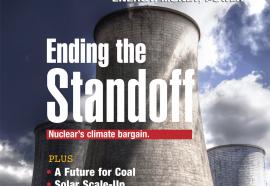

Capture and storage tech developments secure coal’s future.
Capture and sequestration will help ensure the future of coal-fired power plants. Demonstration projects are allowing utilities to kick the tires on the latest technologies, and to learn how CCS will affect operations and economics at state-of-the-art plants.

Legal and regulatory changes are transforming the industry.
This year has marked a sea change in energy policy, from environmental compliance to transmission pricing. Fortnightly interviews top lawyers to better understand how regulatory developments are affecting the power and gas industries.

Utilities cut support for climate-change deniers.
This summer marked the 40th anniversary of a pivotal event in the environmental movement. On June 22, 1969, the oily surface of the Cuyahoga River caught fire, drawing national attention to the plight of America’s lakes and rivers. However, clean water standards didn’t begin with the Cuyahoga River fire, the EPA or the Clean Water Act. A series of common-law nuisance lawsuits, combined with a patchwork of state laws and (weak) federal statutes, preceded the comprehensive legislation that emerged from the smoke of the Cuyahoga. Today we’re seeing a similar progression in greenhouse gas regulation, with civil suits, state initiatives and marginal federal actions apparently marching toward a national climate policy.

Utility projects advance the state of the art.
Given this dynamic state of evolution, it’s not surprising that next-generation technologies are undergoing their own difficult transitions. This transition is exemplified by four high-tech projects being executed by four electric utilities: Duke Energy, American Electric Power, Consolidated Edison and San Diego Gas & Electric. Their projects address different parts of the power-supply chain, and they’re taking different paths to secure financing and regulatory acceptance.

State attorneys general target energy policy issues.
As energy issues take center stage in the policy debate, state attorneys general increasingly are using their political influence and legal authority to affect a wide range of areas—from greenhouse-gas emissions to siting and development of infrastructure projects. Working constructively with state AGs can help utilities avoid becoming targets of investigation and litigation.
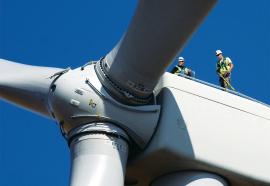
Renewables attract utility investment dollars.
New federal policies have opened the gates to utility investments in renewable generating plants. Some states, however, still make it difficult for utilities to put such assets into the rate base. Executives at Duke, OG&E, PG&E and Xcel Energy discuss challenges and opportunities affecting their renewable investment strategies.