Utilities prepare for a bumpy road.
Ed May and Stephen Johnson
Electric vehicles promise major benefits for utilities, including increased electricity sales and accelerated transformation of passive energy consumers into collaborative stakeholders. But EV integration faces major challenges, from transformer overloading to the complexity of managing mobile transactions. Addressing these challenges in a collaborative way will allow the industry—and the country—to realize the benefits of a healthy market for electric transportation services.
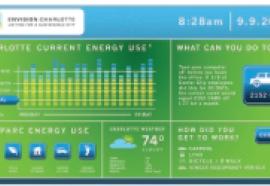
Former Pres. Bill Clinton and other dignitaries help Duke, Cisco and Charlotte, N.C., launch commercial efficiency initiative; AEP signs 20-year MOU to buy solar output from New Harvest plant; Wartsila expands gas-fired generator in Turkey; U.S. DOE awards geothermal RD&D grants; GE acquires Dresser for $3 billion, and also acquires Calnetix industrial cogen technology; SunEdison sells 70 MW Rovigo PV plant; Ford Motor Co.
The best example of combined dynamic rates and smart billing is found in Ontario, Canada. It uses central MDM to produce time-differentiated customer bills.
IT officers are getting more efficient, but guess what keeps them up at night?
Ever-present security concerns are keeping utility chief information officers up at night. With their IT budgets under constraints in a back-to-basics era, four CIOs speak out about their concerns over funding, staffing, and the future.
How cutting-edge military technologies can help solve some of the industry’s most critical issues.
Whether it’s an aging workforce, the impact of competitive markets, or an outdated transmission system, today’s energy and utility organizations are facing a whole new set of challenges. What many people in the industry don’t realize is that the utility sector is not the first to face these kinds of issues. The U.S. military is dealing with, or has dealt with, a strikingly similar set of problems in recent years.
Advanced Meter Reading
Mark Leach
Advanced Meter Reading
An executive speaks out.
I think, frankly, that it's those marketing folks who conjure up all the myths about advanced meter reading. Rather than sheepishly admitting that their product is deficient in multiple areas, corporate spinmeisters spin webs of words and images into difficult-to-understand concepts, hoping upon hope they can fool us. They bank on the old adage: tell a lie enough and soon people will begin to believe it.
Complex billing is one way to minimize the size and frequency of blackouts.
Brian Owenson
Complex billing is one way to minimize the size and frequency of blackouts.
The search continues for the smoking gun responsible for the Northeast blackout last August. Absent a clearly defined single cause, analysts turn to the usual suspects: Is the grid large enough? Does it require additional investment? Given that the grid was never designed to handle a competitive industry, is it reasonable to require that it now do so?
Utilities are finding strategic benefits in demand-based metering technologies.
Guerry Waters
Technology Corridor
Utilities are finding strategic benefits in demand-based metering technologies.
It's been years since utilities regarded customers as mere check-writing extensions of their meters. In fact, utilities' information technology focus during the past decade has centered on gaining greater control over customer information. The objective: Focus on-and fill-customer needs. The results are everywhere:
The industry continues to debate the costs and technology of automated meter reading, even as some regulators insist on immediate implementation.
Lori A. Burkhart and Richard Stavros
The industry continues to debate the costs and technology of automated meter reading, even as some regulators insist on immediate implementation.
In the rough-and-tumble energy biz, IT departments are paddling hard to stay afloat.
Jennifer Alvey
In the rough-and-tumble energy biz, IT departments are paddling hard to stay afloat.
The storm that Enron ignited last fall shows little sign of abating. Information technology (IT) departments at every energy company have had to react to rapidly changing conditions, whether it be shrinking budgets or nervous workforces.
Pages