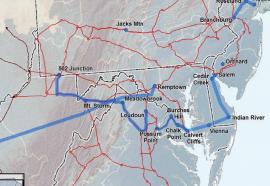
Why developers today are often kept waiting to get projects ok’d to connect to the grid.
Late last year FERC learned that the Midwest regional grid likely would require at least 40 years — until 2050 — simply to clear its backlog of proposed gen projects awaiting a completed interconnection agreement to certify their compatibility with the interstate power grid. But grid engineers would meet that date only by shortening the process and studying multiple projects simultaneously in clusters. To apply the process literally, studying one project at a time, as envisioned by current rules, the Midwest reportedly would need 300-plus years to clear its project queue.
RTO markets aren’t living up to the promise of cheaper power.
Robert McCullough, Berne Martin Howard and Michael Deen
Regional Transmission Organizations (RTOs) have not performed as well as open wholesale markets over the past decade. RTO advocates want governmental intervention, but the best answer may be requiring RTOs to file system lambdas.
The blackout could doom deregulation, but why treat reliability and reform as either-or?
Bruce W. Radford
Frontlines
The blackout could doom deregulation, but why treat reliability and reform as either-or?
Driving west near Cleveland on the Ohio Turnpike back in August, a few days after the big blackout, I saw what looked like a small helicopter hovering up ahead, about 25 feet from the top of a transmission tower.
Was this a prank? Had terrorists struck? Or was it the local TV news station, just trying to get a closer look?
The commission tacks a new name onto a familiar concept.
Lori A. Burkhart
The commission tacks a new name onto a familiar concept.
By now it is old news that the Federal Energy Regulatory Commission (FERC) on April 28 back-pedaled on standard market design (SMD), even renaming it the "wholesale power market platform." But SMD is far from dead, as some had wished. Instead, it is merely toned down, bowing to political furor and regional differences.
PUC could oust PG&E from the project, finding no need for an upgrade.
Lori A. Burkhart
PUC could oust PG&E from the project, finding no need for an upgrade.
Nearly a year after the Federal Energy Regulatory Commission (FERC) gave its blessing for upgrading California's notorious "Path 15" transmission bottleneck, an administrative law judge (ALJ) at the California Public Utilities Commission (PUC) has thrown a monkeywrench into the plan.
Rising gas prices spark a rush to wind farms, straining grid capacity and raising larger issues about market design.
Courtney Barry
Rising gas prices spark a rush to wind farms, straining grid capacity and raising larger issues about market design.
When the Public Utility Commission of Texas (PUCT) was drafting rules to encourage the use of renewable energy, it took pains to guard against the chance that power producers would fail to reach the state's target of 400 megawatts (MW) in installed new renewable generation capacity by Jan. 1, 2002. The commission needn't have worried.
Why power plants should pay for grid upgrades.
Cliff Rochlin and Jeff Huang
Why power plants should pay for grid upgrades.
Do we make all generators equal-using affirmative action to give rights to merchants that are "comparable" to utility-owned plants?
Or, do we let the locational price signals shine through-trusting all plant developers, whether regulated or not, to act in self-interest?
Some thoughts on who should take the lead and how to set up financial incentives.
Camden L. Collins
Some thoughts on who should take the lead and how to set up financial incentives.
One of the most interesting questions that arises from federal restructuring of the electric grid, with regional transmission organizations (RTOs) and a standard market design (SMD), concerns the risk of building transmission in an RTO environment.
And where the trouble spots lie in FERC's grid plan.
See Affidavit of William H. Dunn, Jr., on behalf of the Montana Consumer Counsel, FERC Docket No. RT01-35, filed 5/29/02
And where the trouble spots lie in FERC's grid plan.
The mood appeared calm on June 26 in Washington, D.C., at the regular bi-weekly meeting of the U.S. Federal Energy Regulatory Commission (FERC). Key officials from various regional transmission organizations (RTOs) had gathered before chairman Pat Wood and the other commissioners to brief them on progress over the past year in reforming wholesale electric markets, and on what the FERC might expect in the summer at hand.
On the virtues and vices of ICAP, ACAP, FTRs, hubs, flowgates, DAMs, and gaming.
Bruce W. Radford
Special Report ... Special Report ... Special Report ... Special Report ... Special Report ... Special Report ... Special Report ...
Pages