
Our Nuclear Lifeline
Learning from the tragedy of Vermont Yankee.
Learning from the tragedy of Vermont Yankee. Can merchant nuclear operators compete in the market place with cheap natural gas and subsidized renewables?


Learning from the tragedy of Vermont Yankee.
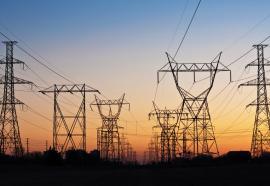

Adding up the benefits of infrastructure investments.
Allocating the costs of new transmission investments requires accurately assessing the value of those new lines, and identifying the primary beneficiaries. But formulaic approaches rely too much on the most easily quantified cost savings, and reject benefits that are dispersed across service areas—or that might change over the course of time. Brattle Group analysts J.P. Pfeifenberger and D. Hou explain that comprehensive valuation produces a more accurate picture.

Why electricity is good—and more is better.
A century of electrification shows clearly that more electricity—and cheaper electricity—enhances public health, raises living standards and also improves the environment. Conversely, higher prices harm businesses and families, with a disproportionate impact on low-income households. Public welfare goals are best served by public policies that make electricity more accessible and affordable to the masses—not less.

Integrating distributed resources into the smart grid.
The remedy for America’s gravest economic woes may lie in a smart grid that can deliver vast amounts of clean, renewable energy while enhancing our energy security and democratizing our energy system. Although regulatory questions and technical challenges might dominate the industry’s short-term focus, the smart grid’s driving forces parallel America’s long-term national interests — a fact that should guide ongoing technology strategies and investment decisions.

What conservation potential assessments tell us about ‘achievable’ efficiency.
Regulators across the country are relying on conservation-potential assessments to guide their policy decisions. Models based on macroeconomic analysis, end-use forecasting and accounting measurements provide different ways to assess the achievability of conservation and efficiency goals.

Are subsidies the best way to achieve smart grid goals?
FERC has proposed that wholesale energy markets should subsidize load reductions with full LMP (locational marginal price), without deducting the customers’ retail savings. Such a policy could distort the market, and other solutions might achieve the same objectives more efficiently.

Performance standards are a valid idea—if targets are achievable.
Performance standards are a valid and necessary idea to drive conservation, but only if targets are realistic and achievable. So far, success has been determined by program rationality. A uniform, market-based approach would give retailers flexibility to spur innovation.

Transforming DR and smart-grid policies into reality.
Regulatory policies are evolving to make demand response and smart-grid planning a reality across the country. Cooperation between federal and state lawmakers will allow local flexibility within a uniform national framework.

Consensus building is an imperative and educational art form.
With public opposition rising against almost any kind of utility project or investment, collaboration among stakeholders with widely divergent points of view never has been more critical. Three recent utility cases demonstrate how a formal stakeholder collaboration process can build support for otherwise contentious decisions.