Calendar of Events

May 29, 2013 to May 30, 2013 | Chicago, IL
Jun 09, 2013 to Jun 12, 2013 | San Francisco, CA
Jun 10, 2013 to Jun 12, 2013 | Boston, MA

Keywords

Public Utilities Reports

PUR Guide 2012 Fully Updated Version

Available NOW!
PUR Guide

This comprehensive self-study certification course is designed to teach the novice or pro everything they need to understand and succeed in every phase of the public utilities business.

Order Now

Independent system operators

Smaller, Cheaper, and More Resilient

The rationale for microgrids.

Edward N. Krapels and Clarke Bruno

Despite an array of challenges, microgrids are becoming a force in the market. Innovative projects bring greater efficiency and resilience.

Demand Response: Breaking Out of the Bubble

Using demand response to mitigate rate shocks.

Ahmad Faruqui

In the minds of many policy-makers, DR has become associated with rate shocks, rate volatility, unpredictability, and loss of control over energy costs—the very things DR was designed to overcome. What can be done to change this?

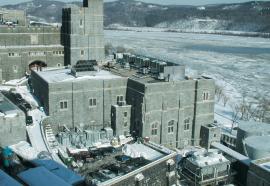
Synchronizing on West Point

Could local generators be used either to regulate voltage or control the power factor on distribution systems in New York?

John Kueck and Darrell Massie

Reactive power is becoming a hot issue in many regions of the country. Regulators and grid operators are grappling with ways to account fairly for reactive power supplies, and to encourage such resources to come online where they are needed. These analyses, however, are largely ignoring a vast fleet of infrastructure already installed on the network. West Point military academy, for example, has four small synchronous generators that are used for combined heat and power or emergency power applications. If these generators also were used as synchronous condensers, they might supply additional revenue to pay for the distributed energy investment.

Legislative Hot Spots: From Texas to Ohio, New Jersey to Minnesota, Electric Restructuring Games Begin

Joseph F. Schuler, Jr.

Perhaps the only political prediction bound to come true this year is that the words ôelectric restructuringö will reverberate in nearly every stateÆs legislative chamber.

So says Matthew Brown, director of the energy project at the National Conference of State Legislatures.

But other factors support BrownÆs prediction. Public Utilities FortnightlyÆs informal survey of most states turned up similar results. Legislators know that the Clinton Administration and the U.S. Congress plan to introduce a federal bill this year.