

Calendar of Events

May 29, 2013 to May 30, 2013 | Chicago, IL
Jun 09, 2013 to Jun 12, 2013 | San Francisco, CA
Jun 10, 2013 to Jun 12, 2013 | Boston, MA

Keywords

Public Utilities Reports

PUR Guide 2012 Fully Updated Version

Available NOW!
PUR Guide

This comprehensive self-study certification course is designed to teach the novice or pro everything they need to understand and succeed in every phase of the public utilities business.

Order Now

International Atomic Energy Agency

The Bullish Case For Uranium

Higher prices to come?

Ed Brezinski

For decades, global uranium suppliers have been providing low cost reactor fuel in plentiful supplies. However the market is changing, and nuclear fuel prices are set to increase. Some plants will be affected more than others, but the age of uranium cost certainty is coming to an end.

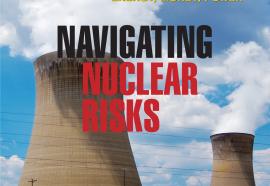
Memo to the President-Elect (Part 2)

A clear and present need for nuclear energy expansion.

C.E. (Gene) Carpenter Jr.

Addressing climate change will require extending the life of today’s nuclear fleet and laying the foundation for new plants.

Is Yucca Enough?

Scenarios depict possible nuclear waste futures.

Greg Turk and Tom Sweet

Nuclear-waste management is a multi-billion dollar problem, and the future of nuclear power will depend on its resolution. Four scenarios depict possible outcomes and impacts on the electric power industry.

Face-Off: The Nuclear Non-Starter

Persistent economic and political issues continue to prevent the expansion of nuclear power.
Michael T. Burr

All Nuclear Power Plants Are Not Created Equal

Jay Maidment and Geoffrey Rothwell

April 01, 1998

WHICH NUCLEAR PLANTS WILL SURVIVE competition? To answer that question, senior managers at electric utilities must know a nuclear plant's true economic potential. Without an accurate understanding of operating economics, a utility might lose a good plant or waste resources on poorer plants that should be closed.

Of course, a shutdown may be appropriate at some plants (em perhaps a few situated in the most competitive regions, or others plagued by poor inherent physical characteristics. However, most U.S.