
Rise of the Machines
Who’s afraid of the transactive grid?
Smart grids and nodal markets spark the emergence of a transactional grid. In fact it’s already happened, and we’re just becoming aware.


Who’s afraid of the transactive grid?
Smart grids and nodal markets spark the emergence of a transactional grid. In fact it’s already happened, and we’re just becoming aware.
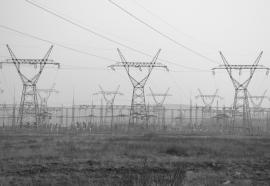
PJM and the crisis over FTR underfunding.
PJM’s latest crisis—the underfunding of financial transmission rights that we’ve seen over the last few years—pushes regulators right to the edge. How far do they trust wholesale power markets? Do they accept the idea, proven by a famous economist, that freely traded financial instruments can work just as well—better even—than firm, physical contract rights?
In PJM’s case, we are told, the problem occurs when too much negative congestion shows up in real-time balancing. But if congestion is bad, shouldn’t negative congestion be good?

Amory Lovins on negawatts, renewables, and neoclassical markets.
Fortnightly speaks with Amory Lovins about the evolving role of conservation, competition, and distributed resources in the energy industry.
NSTAR appoints new president; Southern Company names new financial management team; BPA gets new administrator; plus management changes at AEP, Duke, ITC, ConEdison, GDF Suez, ERCOT, MISO, NARUC, and others.
MISO’s board of directors approved the applications of four new transmission-owning members: Cleco Power, Lafayette City-Parish Consolidated Government, Minnesota Municipal Power Agency, and Prairie Power. As a fully integrated transmission-owning member of MISO, each will participate in MISO’s competitive energy markets and system planning and operating functions.

Analyzing the Order 1000 comply filings from non-RTO regions.
Last fall, utilities across the country began filing tariffs with FERC to explain how they’ll comply with Order 1000. That’s quite a handful, but maybe not a stretch for the RTOs. Not so for the non-RTO regions.

Portfolio planning in the age of gas.
PUCs are concerned that a rapid shutdown of coal-fired plants will start a full-tilt dash to gas—similar to the one that caused bankruptcies among independent power producers in the late 1990s and early 2000s. But this time around, ratepayers and not IPP investors will be stuck with the risk, if utilities rush to add all that new gas-fired capacity to rate base.
Calpine signs PPA with Public Service Company of Oklahoma; TransCanada and Ontario PowerAuthority agree to develop 900-MW gas-fired power plant; Panda selects Siemens to build combined-cycle plant; Progress Energy retires coal plants dating from 1923; Southern Company and Turner acquire 30-MW PV project; PSO begins smart meter pilot rollout; Southern California Edison contracts with Corix to install smart meters; Iberdrola USA hires Burns and McDonnell to review grid infrastructure. Plus contracts and announcements from Itron, eMeter, Echelon, Quanta Services, DNV, Metadigm, Landis+Gyr, and others.

Retrofitting early protected North Carolina ratepayers.
Ongoing litigation over EPA rules raises compliance risks and costs. North Carolina utilities, however, benefited from the state’s forward thinking.