Calendar of Events

May 21, 2013 to May 22, 2013 | Washington, DC
May 21, 2013 to May 22, 2013 | Charlotte, North Carolina
May 21, 2013 to May 23, 2013 | Atlanta, GA

Keywords

Public Utilities Reports

PUR Guide 2012 Fully Updated Version

Available NOW!
PUR Guide

This comprehensive self-study certification course is designed to teach the novice or pro everything they need to understand and succeed in every phase of the public utilities business.

Order Now

North Carolina Utilities Commission

North Carolina Approves Dominion Rate Base Expansion

Upon review of Dominion North Carolina Power’s petition for $63.66 million in additional revenues, the North Carolina Utilities Commission authorized the utility to increase its nonfuel base rates by $36.44 million. The commission rejected the company’s recommended ROE of 11.25 percent in favor of a 10.2-percent ROE instead.

Letters to the Editor

(March 2010) New Day for Prudence: I am sending this letter at the request of Robert Gruber, who is the executive director of the Public Staff-North Carolina Utilities Commission (NCUC), which is the state agency charged with representing the public in matters before the NCUC. In the article, “New Day for Prudence,” the group that filed the quoted testimony is not “the Office of Public Counsel.” It consists of a number of non-profits and associations that banded together and called themselves the Public Advocacy Groups for the purpose of intervening before the NCUC. We’re also concerned because the article’s description of the NCUC’s ruling is erroneous.

Buying Into Solar

Rewards, challenges and options for rate-based investments.

Paul Alvarez and Benjamin Hodges

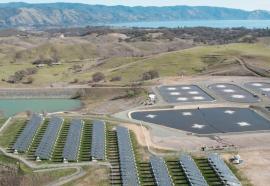
Utilities traditionally have met renewable portfolio standards with power purchases from IPPs. But new approaches are allowing utilities to build their rate bases with investments in solar generation.

Sunrise

The future looks bright for distributed PV.

Steven Andersen

The future looks bright for distributed photovoltaics. New technologies and government policies are driving a revolution in PV manufacturing. But a robust national distributed generation system requires a grid that can accept two-way control of electrons.

Seeing Green

Renewables attract utility investment dollars.

Michael T. Burr

New federal policies have opened the gates to utility investments in renewable generating plants. Some states, however, still make it difficult for utilities to put such assets into the rate base. Executives at Duke, OG&E, PG&E and Xcel Energy discuss challenges and opportunities affecting their renewable investment strategies.

Back to Gas

Utility turbines bridge the capacity gap.

Scott M. Gawlicki

Utilities are turning to natural gas as a bridge fuel, and to support non-dispatchable renewables.

CEO Roundtable: Debating The Boucher Bill

Utilities consider imposing a retail surcharge to fund clean-tech R&D.

Michael T. Burr

Utility CEOs debate the merits of a retail surcharge to fund clean-tech R&D.

2008 Regulators Forum: Putting Efficiency First

New rate structures prioritize conservation, but will customers buy it?

Michael T. Burr

As saving energy becomes a policy priority, utility commissioners struggle to reconcile traditional revenue models with smart metering and smart pricing. Unlocking conservation potential will depend on transforming passive ratepayers into smart consumers. Fortnightly hosts a roundtable discussion with commissioners from six states.

People

(Octover 2008) Xcel Energy named David Sparby president and CEO of Northern States Power Minnesota. Entergy Corp. appointed Terence Burke general counsel and chief legal officer for EquaGen, the joint venture operating company to be owned 50 percent by Entergy and 50 percent by Enexus Energy. Steven Agresta was named executive vice president, general counsel and chief legal officer for Enexus Energy. NorthWestern Energy appointed Robert C. Rowe as president and CEO. And others...

Policies Get Smart

State and federal incentives push utilities to invest in grid intelligence.

Carl Imhoff

State and federal incentives provide the carrot for utilities to invest in grid intelligence. But regulatory and technological incentives are not enough without customer participation. Smart-grid policies will succeed only by focusing on customer needs and benefits.

Pages