Decommissioning and remediation of coal- and oil-fired plants.
Bruce J. Baker, Jean H. McCreary, and Libby Ford
As new EPA regulations drive companies to decommission older power plants, utilities face issues involving plant retirement and demolition. Some sites can host new power plants, but many can be better used for other commercial purposes. Thoughtful planning and decommissioning strategies can bring the greatest value from underutilized assets.
Renewable M&A lives on despite death of Treasury cash grants.
Brian Boufarah and Marlene Motyka
The U.S. Treasury cash grants for new renewable power projects expired at the end of 2011. These incentives, which were implemented under Section 1603 of the American Recovery and Reinvestment Act of 2009, helped to support continued capacity additions throughout the recession. The impending expiration of these grants caused a wave of merger and acquisition (M&A) activity during 2011 as developers and financiers rushed to get deals done and to begin construction in order to meet the Section 1603, 5-percent safe harbor threshold by the Dec. 31, 2011 deadline.
Unforeseen consequences of dedicated renewable energy transmission.
Roger H. Bezdek and Robert M. Wendling
Achieving aggressive renewable energy goals will require building thousands of miles of new transmission lines, and these so-called “green-power superhighways” could bring major new sources of low-cost electricity into the market. But will those sources be renewables? Analysts Roger Bezdek and Robert Wendling argue that with new access to distant wholesale markets, coal-fired generation would become more competitive than ever.
Prospects for clean energy legislation in 2011.
With budget battles heating up in Washington, Congress and the Obama administration are squaring off to debate energy policy legislation. While Democratic leadership favors a clean energy standard, Republican lawmakers are focused on blocking administration initiatives to regulate greenhouse gas emissions. A compromise approach might bring substantial changes to America’s national energy strategy.
Models are evolving for utility-scale solar development.
During the next few years, the biggest growth in the solar energy market will happen in the form of utility-scale projects, mostly driven by state renewable portfolio mandates. But financing such projects has become more difficult, with a smaller pool of equity capital and an evolving set of regulatory requirements.
Experts predict the top issues that utilities will have to weather this year, and beyond.
Richard Stavros & Michael T. Burr
A soup-to-nuts preview of the next 12 months that touches on spinoffs and interest rates, climate change and New Source Review, the future of nuclear, investor returns, and natural-gas price volatility.
GAS SUPPLY
Michael T. Burr
GAS SUPPLY
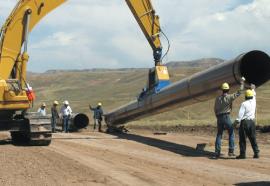
Pipeline and LNG terminal developments may arrive too late to prevent a natural gas disaster.
For exactly two months, MidAmerican Energy sponsored a $6.3 billion project to bring stranded natural gas from Alaska's North Slope to an adjoining pipeline in Canada. But when Alaska's Department of Revenue rejected MidAmerican's proposal for an exclusive partnership to develop the pipeline, the company pulled out.
It is hard tyo foresee abandoning the discounted cash flow method relied upon so heavily for the past couple of decades.
Jeff D. Makholm
It is hard tyo foresee abandoning the discounted cash flow method relied upon so heavily for the past couple of decades.
In the Feb. 15, 2003, edition of , Jonathan Lesser says that regulators need to rethink the traditional discounted cash flow (DCF) method for finding the cost of capital, or "at the very least, regulators should no longer rely solely on the DCF to set allowed returns."
Who should have "green tag" ownership under power purchase agreements, the buyers or the sellers?
Paul N. Belval and Mary F. Rossetti
Who should have "green tag" ownership under power purchase agreements, the buyers or the sellers?
A legal controversy is brewing in the electric industry over who should reap the financial benefits of the green characteristics of power plants, under existing power purchase agreements (PPA).
A Twenty-Fold Increase?
Former coal lobbyist Glenn Schleede plays Don Quixote, crusading against the DOE's 20-year initiative to boost investment in windmills.
Pages