
A Holistic Cyber Strategy
Security must be organizational – simply complying will leave you vulnerable.
Workforce Management: Because standards are aimed only at critical assets, cyber security must be holistic – with all employees involved.


Security must be organizational – simply complying will leave you vulnerable.

Questions and answers on consumer privacy and threats to the grid – both physical and cyber.

Embracing a competitive and digital future for utilities.

A survey of state policies on release of customer data.
The advent of smart grid technology has raised new and challenging issues concerning data privacy. Of course, data privacy isn’t a new concern for the energy industry, as utilities have always collected customer data, some of which is common to any business, such as contact and credit information, and some of which is unique to the energy industry, such as usage and demand data.

Policy priorities for managing T&D evolution.
A pair of myths is driving many investments today—i.e., America’s T&D system is falling apart, but the smart grid will save the day. A new MIT study reveals a more nuanced truth about reliability, efficiency, and plans for new technologies. The most effective policies and investments will focus on solving real problems and delivering tangible benefits.
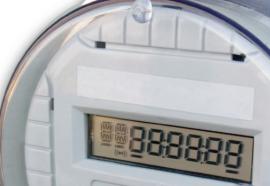
Providing reasonable options for customers who object to smart meters.
Customers in some markets are demanding the right to opt out of smart meter deployments. Their concerns involve radio frequency (RF) emissions and potential privacy breaches. Whether these concerns are valid or not, some regulators are requiring options for customers who don’t want smart meters. The right approach can satisfy concerns without undue costs and complexities.

The consumer-centric smart grid and its challenge for regulators.
Federal and state regulators play a critical role in the evolution of the smart grid. Lawmakers face a host of questions, from deciding who owns consumer data and how it can be used, to defining a new range of regulated and unregulated utility services and applications. How much regulation will be needed to manage the transformation to a smart grid? And how much regulation will be too much?

Utilities prepare for a bumpy road.
Electric vehicles promise major benefits for utilities, including increased electricity sales and accelerated transformation of passive energy consumers into collaborative stakeholders. But EV integration faces major challenges, from transformer overloading to the complexity of managing mobile transactions. Addressing these challenges in a collaborative way will allow the industry—and the country—to realize the benefits of a healthy market for electric transportation services.

Utilities work toward a more mature relationship with customers.
The notion that utilities don’t do a good job of consumer engagement is only half true. The fact is, many customers don’t want to be engaged. They just want cheap, reliable electricity, no questions asked. But smart grid advancements call for a dramatic improvement on both sides of the conversation. Utilities are struggling to create a more mature relationship with their customers.
In response to direction from the state legislature to protect customer data privacy as smart meters are installed, California Public Utility Commission President Michael Peevey issued a notice of proposed decision in Rulemaking 08-12-009(“Decision Adopting Rules to Protect the Privacy and Security of the Electricity Us