State-policy turmoil reshapes utility markets.
As many states move toward re-regulation, we speak to commissioners in Illinois, Missouri, Pennsylvania, Texas, and Virginia to learn how policies are evolving—and how far the regulatory shakeup will go
Oracle’s software guru Guerry Waters eats and breathes the new infrastructure.
Oracle’s Guerry Waters is one of the country’s leading gurus on smart-meter technology—a business sector with huge potential for addressing today’s environmental problems.
Why the next wave of transformation is already upon us.
The electricity system in the United States received renewed attention after the August 2003 blackout that affected more than 50 million customers across the Northeast United States and caused billions of dollars of damage to the U.S. economy. This blackout became a call to action as the event exposed the United States’ dependency on a vulnerable infrastructure. The intelligent network is one of the results of that call to action.
How does the DuPont Model—a hybrid of which provides the methodology behind the Fortnightly 40 rankings—actually work? The author shares lessons learned during implementation of the hybrid model this year.
(September 2006) How does the DuPont Model—a hybrid of which provides the methodology behind the Fortnightly 40 rankings—actually work? The author shares lessons learned during implementation of the hybrid model this year.
David Powell, Southeast Lineman Training Center: I enjoyed reading “Baby Boom Blues”. What amazes me is although there is a great need it seems the only people who see the need are the utility companies themselves.
David Sumner, CEO, ARRL: Even the “cloudy” outlook for BPL reported in your article &ldquoA Hard Look at BPL: Utilities Speak Out” is overly optimistic.
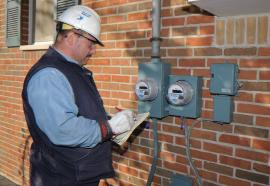
Smart metering is coming of age. Is the utility world ready for it?
Some states, including Illinois, Oregon, Pennsylvania, and Texas, have been considering smart-metering questions as part of rate cases and resource-planning discussions. Other states, such as Kentucky, Louisiana, Ohio, and Virginia, have initiated EPACT Section 1252 inquiries separately from other proceedings. The tenor of the discussion also varies from state to state, with high-cost power states generally more attracted to AMI than low-cost states are.
Legislation and technology developments give a jump-start to smart metering
By Michael T. Burr
What a difference a year makes. In 2004, automated metering infrastructure (AMI) was in something of a slump, but the Energy Policy Act of 2005, an uptick in natural disasters, and encouraging results from pilot projects have strengthened the business case for investing in AMI.
What a difference a year makes.
In 2004, the automated metering industry was in something of a slump. After the 2003 Northeast blackout, and facing rising gas prices and diminished investor confidence during a time of war, many utilities put automated meter reading (AMR) on the back burner.
Analyzing the conservation effects of demand response programs.
Chris King and Dan Delurey
Does demand response increase or decrease overall electricity usage?
A review of which technologies and companies stand to win and lose as a result of the 2003 blackout.
E. Kyle Datta and Dan Gabaldon
A review of which technologies and companies stand to win and lose as a result of the 2003 blackout.
Mishap, human error, and malice regularly crash the electric system. We have lurched from the Western economic power crisis of 1999-2000 to the Eastern reliability power crisis of 2003. Neither more studies nor more blackouts have changed what's been built-an excessive quantity of large generation plants dependent on relatively few major transmission lines. On its current course, the grid's inevitable destination is disaster.
Regulatory and market forces put the pressure on information technology to perform.
Jennifer Alvey
Regulatory and market forces put the pressure on information technology to perform.
Technology isn't in the driver's seat at some energy companies, but it's not as if those companies have reverted to using typewriters, carbons and rotary dial phones. In fact, it's beyond dispute that information technology (IT), in particular, can improve business performance-and nothing is more important to energy companies right now. But with slashed budgets and collapsing credit ratings, how should energy companies spend their precious IT dollars?
Pages