Calendar of Events

Jun 17, 2013 to Jun 19, 2013 | Gaylord National Resort & Convention Center in National Harbor, Maryland
Jun 19, 2013 to Jun 21, 2013 | Munich, Germany
Jun 19, 2013 to Jun 20, 2013 | Las Vegas, Nevada

Keywords

Public Utilities Reports

PUR Guide 2012 Fully Updated Version

Available NOW!
PUR Guide

This comprehensive self-study certification course is designed to teach the novice or pro everything they need to understand and succeed in every phase of the public utilities business.

Order Now

state implementation plans

Regulating Fine Particles

Developing a new paradigm for managing fine particulate air pollution.

Annette C. Rohr and Ronald E. Wyzga

The Environmental Protection Agency regulates emissions of particulate matter based on the mass of those emissions—not on the toxicity of the particular components. A growing body of evidence shows that different kinds of particulates affect health differently. Research by the Electric Power Research Institute suggests that in order to most effectively protect public health, the EPA’s next round of air quality standards should differentiate between relatively benign sulfate or nitrate compounds, and more harmful trace metals in particulate emissions.

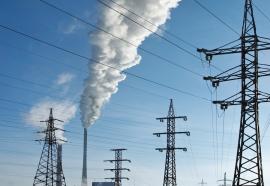
EPA's Winding Road

How we got here and what to expect.

Jean Agras

New air quality regulations, including the Cross-State Air Pollution Rule, have prompted substantial investments in emission control upgrades. But a series of additional standards—for mercury, toxins, cooling water and ash residue—are driving delays and shutdowns in the coal-fired power fleet. Investment decisions depend on a clear understanding of where EPA is headed, and how the new regulations will affect generators’ costs—and market prices.

A Multi-Pollutant Strategy

An integrated approach could prove more effective for controlling emissions.

Sam Napolitano, et al.

Despite political challenges, the EPA and Congress have made strides toward a more coherent and integrated approach to regulating air emissions. The time is right to reach consensus on a multi-pollutant strategy.

The Politics of Carbon

The 2008 elections portend federal regulation of greenhouse gases by 2010.


James I. Stewart and M. Sami Khawaja

The outcome of the 2008 elections will determine how the nation deals with greenhouse gas emissions. With the presumptive nominees for president for both parties supporting mandatory GHG regulation, a cap-and-trade system likely will become U.S. law. How soon and how tough depends on the choices voters will make in November.

Demand Response: The Green Effect

How demand response programs contribute to energy efficiency and environmental quality.

David Nemtzow, Dan Delurey and Chris King

Demand response reduces overall energy usage, but the magnitude of the reduction depends on whether the technologies are developed and deployed with efficiency in mind.

News Digest

FERC Docket No. ER01-2076-000, protest filed June 15, 2001.


News Digest


News Analysis

The lawyers debated over ozone and soot, but the markets saw NOx as the "smoking gun."
Carl J. Levesque


News Analysis


The New Venture Capitalists: Utilities Go Shopping for Deals

How gas supply and price disruptions now outweigh Big earnings potential plus an energy-related focus are prerequisites when AEP and Cinergy sort through investment projects.
Jim Letzelter


News Digest

Carl J. Levesque

Agency moves ahead despite ruling that Clean Air Act is unconstitutional.

By granting petitions filed by four Northeastern states seeking to reduce ozone pollution in their geographic areas through reductions in nitrogen oxide emission (NOx) from out-of-state sources, along with other initiatives, the Environmental Protection Agency on Dec. 17 began to clean the regulatory air that has grown murky as of late.

Midwest vs. Northeast? EPA's NOx Policy

Regina R. Johnson and Lori M. Rodgers

Eight states blame upwind sources. Agency to revisit emissions targets.

The U.S. Environmental Protection Agency's Sept. 24 rule for 22 eastern states to file plans to reduce nitrogen oxide emissions would ostensibly reduce transport of ground-level ozone, or smog, in so-called "nonattainment areas." But eight of these affected states have filed petitions arguing that NOx emissions blowing in from nearby jurisdictions must be controlled before they can comply.

So far, in preliminary statements, the EPA has indicated that at least some of these petitions have merit.

Pages