
Calendar of Events

May 21, 2013 to May 22, 2013 | Washington, DC
May 21, 2013 to May 22, 2013 | Charlotte, North Carolina
May 21, 2013 to May 23, 2013 | Atlanta, GA

Keywords

Public Utilities Reports

PUR Guide 2012 Fully Updated Version

Available NOW!
PUR Guide

This comprehensive self-study certification course is designed to teach the novice or pro everything they need to understand and succeed in every phase of the public utilities business.

Order Now

TMI

Seismic Omen

Fukushima shockwaves hit America’s nuclear renaissance.

Dan Scotto

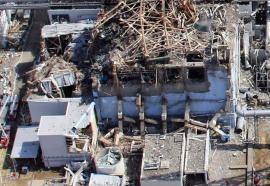
In the aftermath of the March 11 earthquake and tsunami, questions are arising about the safety and survivability of reactors located in geologically active areas. Major changes might be required, and as a result the U.S. nuclear industry might face an existential challenge on the order of the Three Mile Island accident.

Windpower's Warning

ERCOT’s February emergency suggests storage capacity is needed to support renewables.

Gary Moland

ERCOT in February averted a blackout that could have become a disastrous defining moment for the windpower industry. This near miss can teach utilities and system operators valuable lessons about integrating variable energy sources into the power grid.

People

New Positions:
We welcome submissions to People, especially those accompanied by a high-resolution color photograph. E-mail to: photos@pur.com

People

Perspective

Seven recommendations to improve TMI's nuclear plant security that have gone unheeded.
Eric Joseph Epstein

News Analysis

State public service commissions are insisting that utilities adopt risk management programs, and are allowing less pass-through for those that don't.
Charles W. Thurston

People

Fortnightly

Fortnightly

Perspective

John S. Ferguson

Efforts to make generation competitive have induced several electric utilities to sell their power plants. Some sales are voluntary. Some are forced by rules mandating functional segregation from transmission and distribution. Of those sales announced or completed, most have involved high-cost utilities, and all have garnered at least book value, suggesting an attempt by sellers to deal with stranded costs.

Why then, are buyers willing to pay more than book value? They must believe they can improve on cash flows - either by raising revenues, trimming costs, or both.

News Digest

Lori A. Burkhart, Phillip S. Cross and Beth Lewis

Business Wire

William Catacosinos has resigned as chairman of MarketSpan Corp., the utility formed to replace the troubled Long Island Lighting Co. Catacosinos is under investigation by the New York attorney general due to a $42-million severance payment as part of the buyout of LILCO by the New York government-run Long Island Power Authority (see Public Utilities Fortnightly, August 1998, p.28).

SCT Utility Systems Inc., signed a software and services agreement worth about $13 million with the city of Seattle for the BANNER Customer Management System.

Inventing a Business in Wires & Pipes

Joseph F. Schuler Jr.

IF COMPETITIVE ELECTRIC MARKETS PROMISE LEAN MARGINS and slim savings on commodity sales, then perhaps transmission and distribution companies could play a larger role in selling end-user services.

Yet low-risk T&D companies, building on their reputations as reliable providers, may need to grow to acquire the "critical mass" needed to make money selling services over delivery systems.

One of the few, if not only, businesses publicly betting on this strategy is the $4.1-billion GPU Inc. of Morristown, N.J. - and GPU means business.

All Nuclear Power Plants Are Not Created Equal

Jay Maidment and Geoffrey Rothwell

April 01, 1998

WHICH NUCLEAR PLANTS WILL SURVIVE competition? To answer that question, senior managers at electric utilities must know a nuclear plant's true economic potential. Without an accurate understanding of operating economics, a utility might lose a good plant or waste resources on poorer plants that should be closed.

Of course, a shutdown may be appropriate at some plants (em perhaps a few situated in the most competitive regions, or others plagued by poor inherent physical characteristics. However, most U.S.

Pages