Hydrogen Power
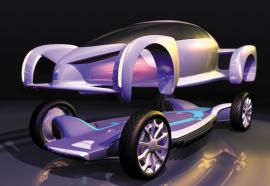
A New Initiative, a New Fuel Cell Car
General Motors unveiled its Autonomy fuel cell car, which it says is the first vehicle designed exclusively for the fuel cell.

A New Initiative, a New Fuel Cell Car

Part 1: How markets today are out of sync.


Technology is changing the game. Is your utility ready?
Although today microgrids serve a tiny fraction of the market, that share will grow as costs fall. Utilities can benefit if they plan ahead.
Three CEOs, three business models, one shared outlook.
Cheap gas, regulatory uncertainties, and a technology revolution are re-making the U.S. utility industry. Top executives at three very different companies—CMS, NRG, and the Midwest ISO—share their outlook on the industry’s transformative changes.
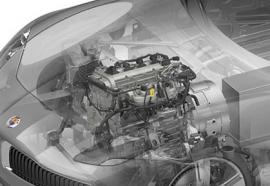
Can utilities put EV batteries in the rate base?
Thomas Edison once hoped to make a fortune in the auto business—selling electric cars. Of course it never happened; he and Henry Ford tried and failed to bring a low-cost electric car to market. They scuttled the project after investing $1.5 million toward the effort—more than $32 million in today’s dollars. Edison’s nickel-iron batteries just couldn't match the performance of Ford’s petrol-powered bang-bang.

Shaping system transformation.
New technologies—and new expectations—require taking a fresh look at the institutions and practices that have provided reliable electricity for the past century. Collective action is needed to define the key attributes of a future grid and then to take the more difficult next step—adapting our processes and institutions to align with that future vision. A thoughtful approach will allow America to capture the potential value that’s offered by sweeping changes in technologies and policies.

Integrating distributed resources into the smart grid.
The remedy for America’s gravest economic woes may lie in a smart grid that can deliver vast amounts of clean, renewable energy while enhancing our energy security and democratizing our energy system. Although regulatory questions and technical challenges might dominate the industry’s short-term focus, the smart grid’s driving forces parallel America’s long-term national interests — a fact that should guide ongoing technology strategies and investment decisions.
(March 2011) TVA and EPRI demonstrate solar-assisted EV charging station; Ford unveils the all-electric Focus; Central Maine Power awards substation contracts; ERCOT deploys ABB software in nodal market; FirstSolar starts up PV plant for Southern Company and Ted Turner; plus contracts and announcements involving Open Systems International, Verizon, Suntech Power, Alcatel-Lucent, Siemens, Cisco, Elster, Sensus, Silver Spring Networks and others.
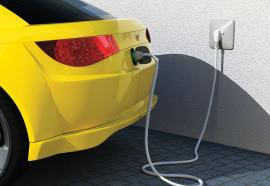
Can the grid handle the coming electric vehicle load?
As electric vehicles become commonplace, will the grid be able to handle the extra load? Too many cars plugging in at once might cause disruptions and necessitate costly infrastructure upgrades. Handling the vehicle load in a smart way, however, will ensure a smooth transition to the plug-in future.