

Public Utilities Reports

PUR Guide 2012 Fully Updated Version

Available NOW!
PUR Guide

This comprehensive self-study certification course is designed to teach the novice or pro everything they need to understand and succeed in every phase of the public utilities business.

Order Now

Perspective

Exelon Chairman, President, and CEO John W. Rowe, on the proposed merger that would create the largest utility in the United States.
Fortnightly Magazine - May 2005

Perspective

Exelon Chairman, President, and CEO John W. Rowe, on the proposed merger that would create the largest utility in the United States.

There are utility chief executive officers (CEOs) and then there is utility chief executive officer, or the captain of all captains.
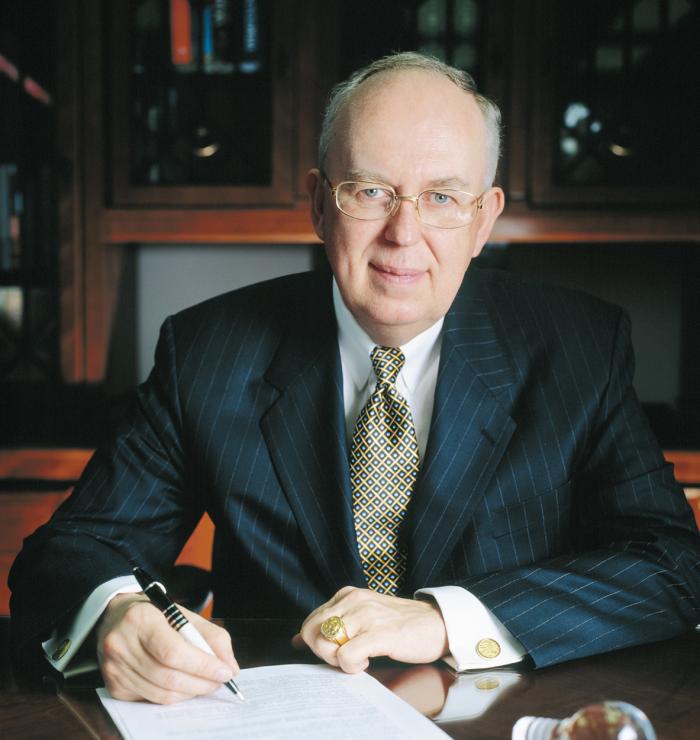
Exelon CEO John W. Rowe would head the largest utility in the industry, if a proposed merger with PSEG goes through. By creating a $40 billion market-capitalization utility, the newly formed company would be 60 percent larger than its nearest market-cap peer, and would have total assets of approximately $79 billion, with almost $25 billion in annual revenues and $3.2 billion in annual net income.

The combined company would be the nation's largest power generator and a leading U.S. wholesale power marketer, with a generation portfolio of approximately 52,000 MW of domestic capacity, including about 20,000 MW of nuclear generation.

Not surprisingly, a planned merger of such magnitude has ignited a debate over the ideal size, scope, and scale of a modern utility. While some espouse economies of scale and greater balance-sheet benefits, others are unsure of the value of larger U.S. utilities. Critics point to European utilities-some that are twice the size of the entity that Exelon proposes-as oligopolies that have stifled electric competition on the Continent. Consumer advocacy groups have raised similar concerns in respect to the Exelon-PSEG merger. The Federal Energy Regulatory Commission is reviewing the merger for market-power issues, and it is widely believed that the new company will have to divest some of its generation to preserve competitive wholesale markets.

Moreover, others have asked whether the nation's regulatory agencies are adequately equipped to regulate companies of this size, and what the implications would be for regulation if similar-sized utilities were to consolidate.

What is the best course of action? Is this the beginning of a consolidation wave? Is Exelon-PSEG going to be the first of many $40 billion utilities?

In an exclusive interview, I cover these issues and talk to the man whose company dares to be bigger, and some say, better than all the rest.

Public Utilities Fortnightly: What is the value of the merger between Exelon-PSEG? What can you do by owning PSEG that you couldn't do alone?

John W. Rowe: There are both short- and long-term opportunities. The biggest short-term opportunity is to improve our value of our share of the Salem and Hope Creek nuclear fleet by running it better, while we also improve their value in both Salem and Hope Creek. In the longer term, they seem to be able to get better distribution and reliability than we do, with somewhat less money being spent. [That] is an area where we can learn something from them. We can increase the geographic diversity of both our generation and delivery systems. We can increase the regulatory diversity of the company, and we can provide greater overall scale at an affordable price.

I think everybody in the industry agrees that scale has value, it's just that it doesn't have unlimited value. So the issue is always, can you find a

Pages