Calendar of Events

May 21, 2013 to May 22, 2013 | Washington, DC
May 21, 2013 to May 22, 2013 | Charlotte, North Carolina
May 21, 2013 to May 23, 2013 | Atlanta, GA

Keywords

Public Utilities Reports

PUR Guide 2012 Fully Updated Version

Available NOW!
PUR Guide

This comprehensive self-study certification course is designed to teach the novice or pro everything they need to understand and succeed in every phase of the public utilities business.

Order Now

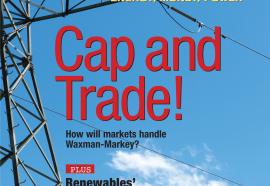
Waxman-Markey

Can We Afford Climate Regulation?

Lawmakers are rushing a costly decision.

Larry G. Berg

Utilities are struggling to predict the costs of greenhouse gas regulation. In the quest for a greener planet, how much should consumers be asked to pay for environmental benefits that might be difficult to measure?

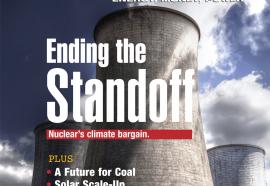
Nuclear Standoff

Can climate-policy brinksmanship create a sustainable nuclear industry?

Michael T. Burr

American voters dashed the nuclear industry’s hopes for a renaissance last November—or so it seemed. Recent developments in Washington have rekindled those hopes, but will climate-policy brinksmanship lead to a sustainable future for nuclear power?

Policy Shift: 2009 Law & Lawyers Report

Legal and regulatory changes are transforming the industry.

Michael T. Burr

This year has marked a sea change in energy policy, from environmental compliance to transmission pricing. Fortnightly interviews top lawyers to better understand how regulatory developments are affecting the power and gas industries.

Green Contracting

Structuring renewable agreements to survive change.

Donna M. Attanasio and Zori G. Ferkin

The potential for a federal renewable energy standard (RES) and carbon regulation, considered with the effect of state-imposed renewable energy standards, is fueling a strong, but challenging, market for renewable energy. Utilities are competing to sign up the best new projects, the types of renewable technologies available are increasing, and there are various government stimulus programs for energy; yet, the financial markets still are hesitant. Against this backdrop, how should contracts for power from new renewable resources be shaped so that those deals will look as good five, 10 and 15 years after execution as on the day the ink dries?

Starting a Fire

Utilities cut support for climate-change deniers.

Michael T. Burr, Editor-in-Chief

This summer marked the 40th anniversary of a pivotal event in the environmental movement. On June 22, 1969, the oily surface of the Cuyahoga River caught fire, drawing national attention to the plight of America’s lakes and rivers. However, clean water standards didn’t begin with the Cuyahoga River fire, the EPA or the Clean Water Act. A series of common-law nuisance lawsuits, combined with a patchwork of state laws and (weak) federal statutes, preceded the comprehensive legislation that emerged from the smoke of the Cuyahoga. Today we’re seeing a similar progression in greenhouse gas regulation, with civil suits, state initiatives and marginal federal actions apparently marching toward a national climate policy.

Betting on Shale

Will unconventional gas assure plentiful supplies?

Lee Van Atta

At the moment, the United States is experiencing a glut of natural gas with record underground gas storage inventories and prices around $4/MMBtu, which serves to underscore the new thinking about U.S. natural gas supply—i.e., future gas supplies might be less constrained than earlier studies suggested they would. Given the speed with which the expectations for U.S. natural gas have changed, it’s reasonable to ask how solid is this new thinking about U.S. natural gas supply and what should the role of natural gas be in meeting our long-term energy needs in a carbon-constrained economy?

Renewable Overload

Waxman-Markey RES creates land-use dilemmas.

Tom Hewson and Dave Pressman

The Waxman-Markey bill proposes a federal renewable electricity standard. This standard, combined with state mandates, raises the risk of forest land shortages and higher prices for food and feedstocks.

Carbon In Electricity Markets

Price transparency will drive GHG reductions.

Fred Wellington and Michael Scholand

In light of coming GHG legislation, price transparency is the key to achieving cleaner generation through the dispatch of lower-carbon sources.

Catching Europe's Cold

Michael T. Burr

When prices for emissions allowances collapsed in Europe’s carbon market a year after trading began, critics said the collapse proved a regulatory product couldn’t be traded internationally. Sure, they said, the U.S. acid-rain market worked, but it was never an international market—and it couldn’t be, given the propensity for governments to protect their own economies.

Hobson's Hamburger

It’s time to end the uncertainty about carbon costs.

Michael T. Burr, Editor-in-Chief

This summer marked a pivotal moment for the energy industry. In June, the U.S. House of Representatives approved the American Clean Energy and Security Act (ACES), a.k.a., the Waxman-Markey bill, which among other things would require the U.S. economy to cut its greenhouse-gas (GHG) emissions 83 percent by 2050.

Pages