
Smart Metering: TOU Billing Today
The best example of combined dynamic rates and smart billing is found in Ontario, Canada. It uses central MDM to produce time-differentiated customer bills.


The best example of combined dynamic rates and smart billing is found in Ontario, Canada. It uses central MDM to produce time-differentiated customer bills.

GHG reduction via residential electricity ratemaking.
Energy efficiency holds the key to meeting lofty greenhouse-gas (GHG) reduction goals. Rate design can help—specifically residential inclining block rates should be considered as part of the industry’s efforts to comply with forthcoming GHG targets.
The real reasons behind the state’s energy savings.
In 2006, the California legislature and governor positioned energy conservation and efficiency as the cornerstone of the state’s Global Warming Solutions Act. The Act mandates a 2020 statewide limit on greenhouse gas (GHG) emissions to 1990 levels. Compliance will be nothing short of Herculean: California will have to reduce per capita energy usage in a manner that accommodates continued brisk population growth and protects the state’s economy from economic dislocations and recessionary pressures.
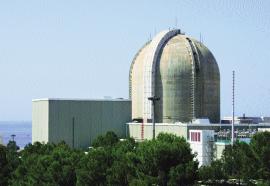
Building reactors requires new federal commitment.
Several key barriers prevent the construction of a new U.S. nuclear power fleet. These barriers must be overcome to prevent a power-shortfall emergency.
Smart-grid stimulus targets the wrong problem.
The $800 billion stimulus bill has spawned a feeding frenzy among would-be recipients of the money. Smart-grid technology companies, for example, are excited about the bill’s $4.5 billion in 50/50 matching grants to “modernize the electric grid.” However, not everybody is cheering.

Utility turbines bridge the capacity gap.
Utilities are turning to natural gas as a bridge fuel, and to support non-dispatchable renewables.

T&D investments prioritize reliability and load growth.
A massive T&D system build-out is starting, but more needs to be done. Executives from Northeast Utilities, Pepco Holdings and ITC Holdings discuss improvements needed for reliability, capacity, security, smart-grid and demand-response measures, as well as accommodating wind and green-energy quotas.

The financial crisis calls on utilities to invest in America’s future.
True story: At the dinner table recently, my 11 year-old son—who’s running for 6th grade student council—bemoaned the arguments he’s having with other candidates. I asked what they’re arguing about, and he said “Everything.” “Oh really? What’s your position on the mortgage bailout.” “It sucks!” he blurted. I countered, “But if we don’t do it, the financial system will collapse.”

As green mandates tighten, utilities scramble to comply.
Mandatory renewable portfolio standards are becoming the norm. But after low-hanging green fruits are harvested, renewable power might get scarce. Many utilities will struggle to meet RPS requirements until lawmakers create stable federal policies and a national market for green credits.

Market forces are transforming the IOU business model.
As market forces transform the IOU business model, Apple’s iPhone provides a metaphor and possible example for the industry to follow. The iUtility will emerge as companies renegotiate the regulatory compact and reinterpret the traditional rate formula.