

Influencing Charging Behavior
Erika Myers is the principal of transportation electrification for SEPA. Erika has worked in the EV industry for over a decade and specializes in the nexus among EVs, clean energy, and electric utilities.
Without a thoughtful approach to encourage off-peak residential charging, the predicted rapid growth in electric vehicle (EV) adoption could lead to costly distribution system impacts and infrastructure upgrades for utilities.
Since forecasts predict much of the future charging load associated with EVs will occur at home, residential time-varying rates will be a valuable tool for utilities to manage system costs by influencing EV charging behavior.
According to a recent report from the Smart Electric Power Alliance (SEPA) titled, Residential Electric Vehicle Time-Varying Rates That Work: Attributes that Increase Enrollment, EV specific time-varying rates effectively incentivize off-peak charging, and customers are interested in using them.
The report provides empirical evidence supporting design and implementation factors that increase customer enrollment. Produced in partnership with The Brattle Group, Enel X, and E4TheFuture, the analysis is based on a survey of nearly three thousand EV customers and twenty-eight utilities offering EV rates — the most comprehensive EV rate survey to date.
As of 2017, approximately nine percent of all U.S. utilities and energy suppliers offered a residential time-varying rate, with over six and a half million customers enrolled. The landscape of EV specific time-varying rate offerings is changing quickly, with the majority of these rates introduced in the past few years.
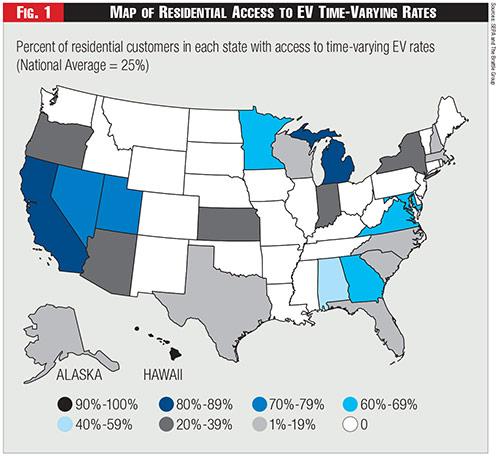 Figure 1 - Map of Residential Access to EV Time-Varying Rates
SEPA's report identified sixty-four active residential EV rates being offered by fifty utilities. Figure 1 illustrates where these residential EV time-varying rates are located across the U.S. and the share of residential customers with access.
See Figure 1.
Rate Design is Key
For the purposes of the report, the authors included residential time-varying rates that were identified and marketed as rates specifically available to EV drivers. Often, these rates have specific off-peak windows designed to accommodate the charging duration needs of EVs. The rates are sometimes — though not always — limited to EV drivers.
Utilities designed the rates for three main reasons. First, to encourage EV adoption by lowering the overall total cost of ownership. Second, to discourage charging during times when the distribution system is constrained. Third, to encourage charging during low or negatively priced wholesale power hours, such as when renewable generation is being curtailed.
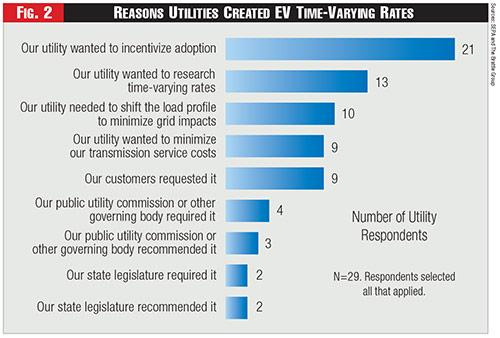 Figure 2 - Reasons Utilities Created EV Time-Varying Rates
Additional motivations, including utility governance board or legislative body requirements, are shown in Figure 2. Where utilities have proactively developed residential EV rates, enrollment has been more than twice as high as rates that were required or recommended by customers, governance boards, or legislatures.
See Figure 2.
The rate offerings in the survey differ significantly across design features such as peak-to-off-peak price ratio, number of pricing periods, timing of those periods, and seasonality. The price ratios of the rates varied from 1.2-to-1 to 15.5-to-1, with a median of 3.6-to-1.
Approximately one-third of the rates analyzed in the utility survey would provide an average participant with bill savings compared to the default rate, even in the absence of changes in charging behavior.
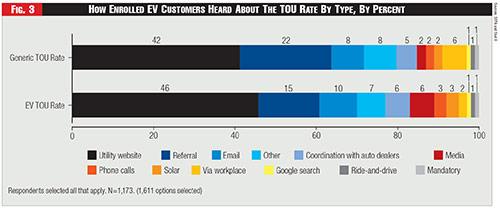 Figure 3 - How Enrolled EV Customers Heard About The TOU Rate By Type, By Percent
For the other two-thirds, the customer's bill would remain the same or increase if charging load was not shifted to the off-peak period. Rates that offer bill neutrality or savings encourage enrollment, however, this was not shown to be a standard feature across the analyzed utility rates.

Designing rates that save customers money, require limited up-front fees, and have fewer barriers to enrollment can lead to participation rates that roughly double those of other EV rate offerings.
The findings also show that successful rate offerings do not necessarily require a large peak to off-peak price differential, and that utilities may engage broader segments of their customer base and achieve higher enrollment rates by offering multiple distinct EV rate options.
Metering Considerations
Despite potential savings, some customers are deterred by the initial enrollment fees for the installation of additional metering equipment. For this reason, metering techniques are critically important for rate implementation and can determine the difference between success and failure.
 Erika Myers: For many customers, an EV rate may be their first exposure to load management.
The report goes into further detail on the pros and cons of five metering approaches: existing meter, secondary meter, submeter, metering via telemetry from the EV charger, and load disaggregation from data pulled from a meter or other device, such as a meter collar. While the survey didn't identify a correlation between enrollment and a specific metering approach, it is clear from the data that customers want options that minimize enrollment costs.
Customer Insights
To identify what customers want from time varying EV rates and why they may have not participated in available options, the project team developed a customer survey that was sent nationwide to existing Enel X JuiceNet charger customers.
When respondents were asked why they enrolled in the rate, eighty-six percent enrolled to save money — nearly three times more than the next option — and for environmental benefits.
Therefore, while customers are primarily motivated by savings, environmental considerations are also important. By speaking to both of these motivations in program design and marketing campaigns, utilities can appeal to a wider range of customer types and interests.
Keep Marketing Simple
While marketing is important, it doesn't have to be expensive. Seventy percent of surveyed customers heard about their time-varying rate through least-cost marketing efforts such as website landing pages and emails.
Ride-and-drive events are also popular among utilities; however, they may be less successful at recruitment. Figure 3 shows a breakdown of different marketing activities used to reach out and educate customers on time-varying rate programs.
See Figure 3.
To maximize enrollment, the rate should be promoted when customers are most engaged. This can be achieved at dealerships and ride-and-drive events when customers are making the EV purchasing decision, by electricians and charging station installers when customers are thinking about charging costs, and by tying enrollment to eligibility for utility-sponsored EV rebates or charging infrastructure purchases.
This ensures the consumer is aware of the rate early in the process. Typically, once the EV is purchased and the charger is installed, customer engagement is reduced and momentum toward the EV time-varying rate enrollment is lost.
A Bridge to Direct Load Management
As the industry builds the capabilities for direct EV charging load control, utilities may be able to leverage on-board batteries for advanced grid benefits. Eventually, direct load control can complement time-varying rates and provide more dynamic grid services than rates alone.
Direct load control can also help minimize the challenges posed by the formation of new timer peaks on the distribution system, which is when drivers simultaneously program their EV or charger to begin charging right after the off-peak rate begins.
EV time-varying rates are an effective first step for utilities to develop strong customer relationships and trust that can serve as a bridge between passive (such as behavioral load control) and active (such as direct load control) managed charging in the future. For many customers, an EV rate may be their first exposure to load management, therefore utilities should make every effort to ensure that the experience is positive.
Regulators should consider long-term strategies that optimize EV load control options depending on variables such as the forecasted penetration of residential EVs, available distribution capacity, the integration of intermittent loads (such as distributed solar), and the cost of on-peak electricity. Each utility will be starting from a different place, so utilities should deploy customized solution sets based on the ultimate goal of the load management program and the needs of customers.
Recommendations
Utilities can take advantage of early opportunities to improve EV-grid integration through time-varying rates. Recommendations compiled from the survey results and utility interviews include: Minimize the up-front costs for customer enrollment wherever possible; Make the price differential between on-peak and off-peak significantly large to incentivize participation, but not so large that it deters customers from enrolling; Offer multiple rate options with different designs which allows utilities to appeal to and engage more customer types and preferences.
Where possible, incorporate an opt out rather than passive opt in elective - especially for programs containing a rebate or incentive for a charger or vehicle purchase; Provide tools and information to help customers make a rate choice that works best for them; Consider innovative approaches to rates and incentives, such as dynamic rates, off-peak credits, subscription rates, and load disaggregation with retroactive incentives.
Ensure adequate marketing funding to promote the rate to customers; Use multiple marketing channels to amplify the message; Build a long-term strategy to transition from passive managed charging to active managed charging; Work with EVSE providers to deliver unified open standards that could lower the cost of integrating networked EV charger telemetry.

To download the free SEPA report, "Residential Electric Vehicle Time-Varying Rates That Work: Attributes that increase enrollment," go to: https://sepapower.org/resource/residential-electric-vehicle-time-varying-rates-that-work-attributes-that-increase-enrollment/
To download the free SEPA webinar summarizing the report, "Utility Experiences with Residential EV Rates," go to: https://sepapower.org/media-item/utility-experiences-with-residential-ev-rates/
Lead image: © Monkey Business Images, Dreamstime.com
