

Smartest Projects
Gui Maia is manager of digital innovation at Ameren. Tracy West is director of research and development at Southern Company. Kevin Schwain is director of transportation electrification at Xcel Energy. Steve Mitnick is President of Lines Up, Inc., Editor-in-Chief of Public Utilities Fortnightly, and author of “Lines Down: How We Pay, Use, Value Grid Electricity Amid the Storm.”
Gui and his team at Ameren are applying artificial intelligence to prioritize maintenance of natural gas distribution systems to protect customers and employees. We named it the Smartest Digitization Project. Tracy and her team at Southern Company are installing a cutting edge generation and storage system to enhance resilience at Georgia Tech, quite proudly since a few of them were Yellow Jackets while in college. We named it the Smartest Microgrid Project. Kevin and his team at Xcel Energy are implementing an extensive program to put Minnesota customers — at scale — into the driver's seat of an electric car. We named it the Smartest Transportation Electrification Project.

Gui Maia, Tracy West, and Kevin Schwain celebrated their awards with us at a session of the recent Global Smart Cities and Communities Virtual Summit, hosted by Dentons. If you missed that session — why I ask — catch it here, where we've excerpted the highlights of this insightful discussion on smart innovation. Not to forget, there were other great sessions as well at the conference. How many industry events do you attend that feature an astronaut, a presidential candidate, and a senior officer of the world's leading sustainable cement company?
Dentons' Clint Vince: Today, Steve Mitnick will moderate a panel with three utilities selected by Public Utilities Fortnightly for groundbreaking projects in the smart cities and connected community's context.
PUF's Steve Mitnick: About three months ago, Public Utilities Fortnightly announced a special feature and competition. We asked for nominations from around the country, throughout our industry, for the smartest utility projects.
This was a development from last year when this was called the Fortnightly Smartest Communities 2019. We thought there are so many projects that aren't transforming an entire community but are outstanding.
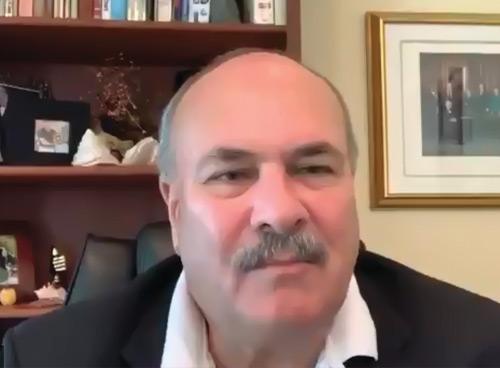 Clint Vince, Chair, U.S. Energy Practice and Co-Chair, Global Energy Sector, Dentons
In the September issue of Public Utilities Fortnightly, we're going to acknowledge nominations for the Fortnightly Smartest Utility Projects 2020. These three that we're going to talk about today are indicative of what companies in the industry overall are accomplishing.
It's not surprising because the leaders of these three companies are Warner Baxter, CEO of Ameren, Tom Fanning, CEO of Southern Company, and Ben Fowke, CEO of Xcel Energy.
We present the Fortnightly Smartest Utility Projects 2020. I am going in alphabetical order. Representing Ameren is Gui Maia. He has a PhD in biological engineering and is manager of digital innovation at Ameren. His project is designated as the smartest digitization project.
Tracy West is director of research and development at Southern Company. Her project is the smartest microgrid project. We received a lot of nominations for microgrids.
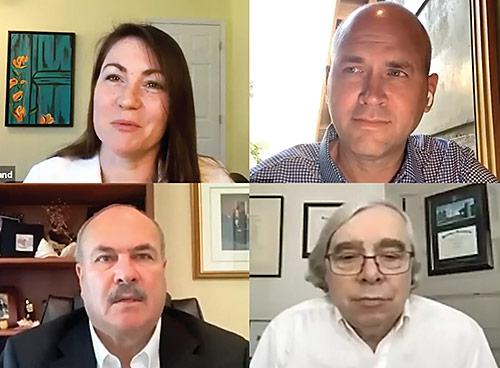 From top left, Emma Hand, Partner and Co-Chair, Global Energy Sector, Dentons, Mike McNamara, CEO, Dentons U.S., Clint Vince, Chair, U.S. Energy Practice and Co-Chair Global Energy Sector, Dentons, and Ernest Moniz, former U.S. Secreatary of Energy, and CEO, Energy Futures Initiative.
Representing Xcel Energy is Kevin Schwain. He is director of transportation electrification at Xcel Energy. His is the smartest transportation electrification project. Almost half of all nominations came in on that, so we had to comb through those and maybe Xcel's will be adopted nationally in some way.
The first thing I want to ask each of you is, what makes your project distinctive and a little different than what you see industry-wide? Gui Maia, what's distinctive about this digitization project, to find gas leaks?
Ameren's Gui Maia: Comparing this project to others within our industry, we took a substantial step away from the legacy model, which was basically a score-based system. What is this score-based system for managing gas assets?
It could be, for example, an asset that's old, and you assign a higher risk to that. If it's a material that is more breakable, brittle, or corrosive, you assign a higher score. If it's a stable plastic, assign a lower score. The gas integrity management team, and our division engineers, would sit down and discuss, what are factors considered to be important?
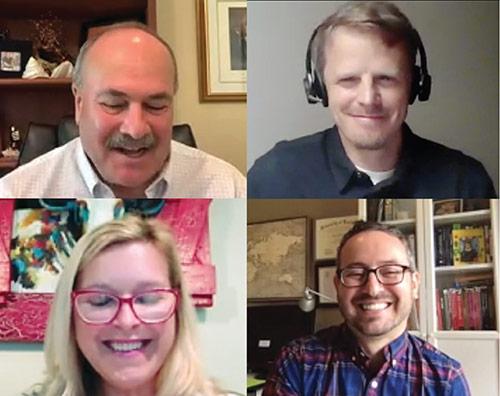 PUF Panel on Smartest Projects, from top left, Clint Vince, Chair, U.S. Energy Practice and Co-Chair, Global Energy Sector, Dentons, Kevin Schwain, Director of Transportation Electrification, Xcel Energy, Tracy West, Director, Research and Development, Southern Company, and Gui Maia, Manager, Digital Innovation at Ameren Innovation Center, Ameren.
They would go one by one. Within, let's say, Asia, the age of the asset could be ten, twenty, or thirty years old. They have a certain level. All those factors have four or five levels. They try to combine them and create the scores to go to our almost one hundred thousand risk areas.
This is how the territory was breaking down and saying, this has a high score, so we should allocate more resources to that. The main difference is, a score based model is a good model, when you have a few factors, using the analogy of the method used to assess health of babies, which is a score based model when the baby is born. It is effective because you only have a few factors.
When you're looking at hundreds of factors, then within each factor, you have different levels where the combinations of all of those factors can be thousands, even millions. We don't have the brain capacity to process all that information. The gas integrity team knew that and have this database of internal information about the asset but wanted to combine all this.
For example, let's add the population density, the soil type, is this a business district? There are many factors to consider. The machine learning model processed that information and gave a unified score for each of those almost one hundred thousand risk areas.
 Paula Gold-Williams, CEO, CPS Energy
The main thing was using that tool. They asked, we have this data and how can you help us? At the innovation center we said, we can use machine learning. That was separate from what we have been doing so far, not only for the gas division, but other divisions.
Southern Company's Tracy West: This is a cool project that took several years to develop. We got it into the rate base. It is a rate based funded joint research facility set up with Georgia Tech.
More important than my MBA is my mechanical engineering degree from Georgia Tech. I'm close with that group. We set this up to be a joint research to test plug and play DERs in an urban environment.
We're hooked into the network underground, which is something that makes this special. It will be a test bed in a network underground distribution system that serves the Coda Building.
The Coda Building is a new building that has the high-performance computing center for Georgia Tech, but it also serves mixed commercial use customers. We'll get to look at a lot of variables on both sides of the meter as we take this in operation. It has a fuel cell. This will be our first fuel cell at the microgrid scenario.
Xcel Energy's Kevin Schwain: I'm proud to accept the work here on behalf of my colleagues at Xcel. This is a subscription program for residential customers that are interested in an electric vehicle.
We're working with about a dozen auto dealers in the metro area that we serve in Minneapolis and St. Paul. That is the first connection point with many of these customers. It is an important time, when a customer is deciding how they're going to charge their car and we want to make sure we're part of that process.
First, we engage customers when they're buying that car, and taking delivery. The next piece is that we're installing a charger of their choice in their garage. It's sending out an electrician to help them figure out how to get their home wired.
The next piece is we're automating that electric vehicle. It's happening when that's best for the electrical grid, by automating, and it's going to make it easy for customers. We're doing all that at a single, low price that customers will pay each month, regardless of how much energy they use. That's the subscription pilot program in a snapshot.
What's different and innovative about this are two things. It's our approach. The first is that we didn't necessarily start with bedrock rate design principles.
We certainly hold dear and see them as important, but we started with, what do customers want? How do they pay for products in other industries? What might they expect from us as they embrace this new technology? That's one of the items that led us to the notion of a subscription program.
The other element that was unique is working with the auto dealers in making sure we were integrated into that sales channel. It was understanding from them, what difficulties do they have when they're talking to a customer about charging an electric vehicle? This is designed as much for that auto dealer's experience as it is for the residential customer, for example who needs to plug into the wall once they bring the car home.
PUF's Steve Mitnick: I saw that the subscription rates can be thirty-three or forty-four dollars a month. That's a cool part of it.
Xcel Energy's Kevin Schwain: Absolutely. Anything that helps customers understand immediately how easy and affordable this technology can be, has helped us sell more cars, make customers happier, and realize all the benefits of electric transportation.
PUF's Steve Mitnick: For this second question for each of you, how did this project come about?
Ameren's Gui Maia: I was a data scientist at the innovation center that I manage now, and the gas team came to us and said, we have all this information and need to figure out a way that we can use that information to make better decisions.
They had the feeling we could do it because of the nature of the innovation lab. We use the University of Illinois interns, led by full-timers. We also have a data science team, and a software engineering team. They knew our structure, and said, can you help us with that?
We started discussing and saw they were great candidates to apply some kind of machine learning model to it. What led to a lot of creativity is our set up.
We have the University of Illinois interns and they can be an interdisciplinary team, maybe with PhDs in physics, or it could be computer engineers and graduates. We have all these mixed types of teams. We went in together.
They have all these ideas. When they see a new problem, they ask questions that have not been asked for twenty years.
One of the key aspects for execution by the gas management team is they were proactive. Engagement was high. The execution of the project was successful each step, because we wouldn't wait one month to go back to them and ask, how is it going?
We have our formal meetings, and we have our stand ups, but if we had to talk, we would reach out to each other. It was strong relationship building. We knew that, if there was something wrong with your data set, for example, we would have immediate feedback.
We had our data engineering process and it was better because we could speak with them. When we started producing the results, they said, this is great, but how can you explain that better?
One of our interns came up with, let's use the explainable AI. Let's go through every factor, that can be all the combination of factors that gives us a high-risk score for that area. Why is that happening?
We said, this factor is important because maybe between assets, if they are older than forty years, they might have a problem. Then, maybe it's the material type or the number of the concentration of people in the area. It was the collaboration we had, which was agile and interactive with a lot of iterations.
Southern Company's Tracy West: A lot of universities wanted this. But one of our former executives, Leslie Sibert, does a lot of brainstorming with Georgia Tech. She was instrumental in coming up with this idea.
Georgia Tech was all over it, and it's multi-disciplined. This microgrid is helping out the electrical engineering school with its center for distributed energy.
It's helping out the mechanical engineering school because of the buildings to group and energy management systems, the Coda Building. It's helping out industrial engineering from optimizing the processes and the data that comes through the college of computing.
The engineering school at Tech was intrigued by having a joint research facility. From our side, it's a Georgia Power owned and operated asset. It allows us to plug and play on the generation resources in a microgrid.
<
It looks at alternatives. It allows us to look at that interaction of the customer on the other side of the grid, of benefits to the grid, and benefits to the customer. It solves a lot of problems.
We saw a win-win. When we put it into the integrated resource process a couple of years ago it passed, and now it's in the rate base. We're super excited that we have a Commission that's forward thinking and saw the benefits for the customer on this.
Xcel Energy's Kevin Schwain: We were doing a lot of work as a utility trying to understand, what were the barriers to adoption that a customer might feel and experience. What we observed were two basic facts we were aiming to overcome.
The first is even with these early adopters, these engaged customers found it difficult to articulate the cost savings or even conceptualize what's a kilowatt hour, and how much do I pay for a kilowatt hour? How does that compare to a gallon of gas?
Even folks that intuitively understood what this was about had trouble making those connections. A lot of customers would go to an auto dealer and ask these questions. Answering those types of questions is outside the scope of what an auto dealer might be trained to do or be capable of communicating to the customer.
We knew we had to come up with solutions. We had to make this easier both for the customers and make that sales process more fluid. It was those two observations that drove us in this direction.
PUF's Steve Mitnick: What were some creative moments during the project?
Ameren's Gui Maia: We had a couple of important moments. One was, how are we going to present to this group? We want to be a capability for the gas team to use.
One of the things was explainable AI. We were able to implement the algorithm and there is a lot of art for this, but we showed the graphs and visuals, so they could see what was happening.
One aspect was a machine learning model that is effective for more structured than tabular data. We found there was another tool that was built on top of the model that was able to scrutinize all the factors that we found important, to create a high risk or a low risk and then we shared that.
Another time in terms of the creative spark, we were trying to figure out how were we going to represent this model. We were able to tweak the algorithm and extract all the probabilities of the model, combine them, and assign for each of one hundred thousand risk areas. Compared to the legacy model where you couldn't do much more than a thousand. It's not doable.
For each one of the one hundred thousand risk areas, we have a probability of risk associated with that. They could say, for the first one hundred risk areas, we're going to have a certain type of resource allocation to find those that are high risk. We're going to put more resources on that one.
What I loved in this interaction, especially with the interns was, they're passionate. They came to us to say, I found a solution. Then, they gave two, or three options, and we tested them. That dynamic makes my team excited, and our partner in gas management.
Southern Company's Tracy West: It's the fuel cell. Creating a green microgrid in an urban environment is tricky because you want to go toward solar and wind. That's not feasible in a downtown environment.
The fuel cell came into play and we said, we've got to figure out a way to design around the fuel cell. We did. That was one of the fundamental parts where we said, we're starting here.
We also set up this living lab as a classroom so students can learn about microgrids, their components, and the grid in a real-life environment. That's cool to expose this next generation of utility engineers to where we see the world going.
PUF's Steve Mitnick: How was it to work with these students?
Southern Company's Tracy West: We're getting underway, but with students you've got to get them into a safety mode first. You have to do a level of training and let them appreciate how dangerous electricity is, and the dangers around batteries or fuel cells.
You don't want to squelch their creativity. They ask a lot of questions. We've never had a dumb question, and we want to embrace everything they come at us with. It's fun.
You're excited when you leave the room saying, we're going to be in a better place twenty years from now. I can retire and know these students are going to carry it forward because they're bright with great aspirations.
PUF's Steve Mitnick: Kevin, were there growth spurts in the development of your project where maybe you were going down one path and someone said, if we make it a fixed price, then the consumer will say, that's cheaper than gas?
Xcel Energy's Kevin Schwain: Yes. What were the things we did differently, and where is the innovation? I point back to the rate design because that is where we had to challenge ourselves and put forward something that would challenge our regulators and other stakeholders when we introduce something new.
A lot of that innovation was stepping back, starting with customers and their technology needs. We were trying to marry that with what we know to be bedrock principles around rate design. Finding a way for those two to coexist in one package was the secret sauce that we were seeking.
We came forward with an approach that's the beginning and we're going to have to do more, but we'll learn from this first attempt. We're confident if you give us another chance, we're going to get smarter about how we do this and meet those customers' needs while still respecting these principles that are important.
PUF's Steve Mitnick: For all of you, how does your project serve the public interest?
Ameren's Gui Maia: We're trying to come up with an asset management tool for gas that is going to give more visibility about the likelihood of our asset to leak. This is a public safety issue.
In Ameren, one of our mantras is, safety first. Having a tool like that is going to help our engineers use and make better decisions on strategizing and prioritizing our gas distribution grid in a way that is safer.
This is not only for our customers but our Ameren employees, as they're going to be dealing in assets, and to have more information associated with them.
There is also the environmental impact. If you have good prevention of gas leaks, or prevention of an explosion, you have environmental side effects.
Number one is our customers, making sure we have enough information or better information so we can keep our assets' health, and that information can be used for the next generation of engineers to improve upon that capability.
Southern Company's Tracy West: This creates a knowledge center for assessing DERs for microgrid components in looking at the end-use customer. We've got the ability to learn a lot, and provide clean, safe, reliable, affordable energy, to all of our customers, as well as carry forward our agenda through the Strategic Energy Institute.
Our goal is to take the learnings and apply them across the footprint. We also have PowerSecure on the other side, that goes behind the meter. They won the bid on this.
We acquired PowerSecure in 2015. They are the largest microgrid company in the country now. They serve businesses like Home Depot and campuses on the West Coast, that we're not supposed to talk about, as they have rings around them.
There are all kinds of customer bases they serve on the other end of the meter to help with resiliency, reliability, and cost issues for green endeavors. We're learning a lot by having them on the other side of the meter to help us understand customers' needs, especially outside of our footprint on a national level.
Xcel Energy's Kevin Schwain: This program is aimed at making it easier to buy an electric vehicle and then charge it at home overnight. That's strongly in the public interest.
I put public benefits into three categories. The first is we have the ability to reduce the cost of transportation for everyone who will stop purchasing gasoline and diesel fuel and start fueling with electricity as a potential to save money.
The ability to reduce carbon and improve air quality is paramount. The electricity sector has been getting cleaner, and now we have this opportunity to use that clean electricity toward the transportation sector.
The third category of benefits has to do with charging that electric vehicle at home overnight. If we do this right, we see a potential to save customers money when fueling their vehicles and improve the environment, but also to put downward pressure on electricity rates for everybody. We see this future in which everybody that uses the electricity grid is going to benefit by bringing on additional load and managing that in a responsible way.
Dentons' Clint Vince: Steve, you've made this fun and informative. I want to mention that Debra Lam of Georgia Tech who runs their smart cities program is a co-chair of Denton's smart cities and connected communities, a think tank pillar for universities and NGOs. She's been a terrific contributor.
Dentons' Emma Hand: It has been a terrific panel. We enjoyed hearing about these projects and the breakthroughs on these fronts of, how do we leap forward?
We've had terrific panels all three days. On the first day, we heard about the need for connectedness, for being able to connect government and services with the community and being responsive, to understand the community's needs and meet them. We heard about how to connect key populations that are at risk of becoming isolated as we move into a digital age, like low income and rural populations.
This virtual summit has been impacted by the pandemic. One is in the shifts in prioritizations and perspectives people across industries have had about where they need to be focusing their time and attention to be able to respond to these types of global crises more effectively.
In our second day, we heard the need to be forming coalitions that can reach across previously siloed industries, public, and private partnerships. How do you gather people together who have the information and skills needed to hack some of these problems?
Today we had terrific examples of what can happen when that collaboration is achieved. We saw the power of interdisciplinary collaboration leading to creative breakthroughs for problems we have been struggling with.
Everything from smart governance initiatives that Governor O'Malley has been leading, to use of analytics to better allocate public resources, to the three projects described today by our panel. All were collaborations of folks from disciplines who wouldn't usually work together, to come up with a way to meet and advance a public interest.
I thank everyone for providing wonderful examples of interdisciplinary collaboration that can advance smart communities and smart cities. And help us get to the next level of achieving public benefit and meeting the needs of our United States and global population for better access to services, greater safety, greater reliability to improve the climate, and try to prevent the worst outcomes of climate change.
See also: Fortnightly Smartest Utility Projects 2020 Nominations
