

EPRI
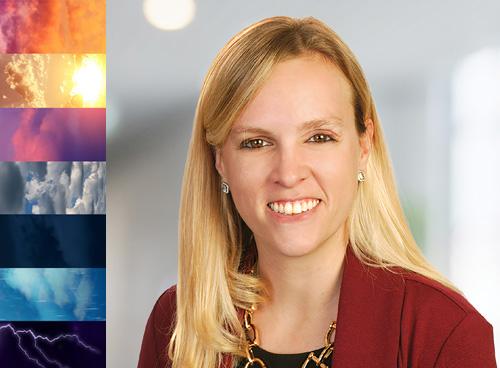
Morgan Scott is EPRI’s Director of Climate READi.
The PUF team spoke with some of the leaders of the Climate REsilience and ADaptation Initiative to harden systems for the more adverse environmental conditions ahead. Here in this special feature are conversations with the Chief Scientist of the National Oceanic and Atmospheric Administration, the COO of Southwest Power Pool, the General Secretary of Europe's electric industry association, and two leaders at EPRI.
PUF's Steve Mitnick: You have your job at EPRI but now you have this new responsibility. What does that entail?
Morgan Scott: I am director of our Sustainability and Ecosystem Stewardship research team, but also of Climate READi, (REsilience and ADaptation initiative). Over the next three years, I have responsibility for moving this initiative forward.
We have an incredible technical team who will be digging into the three workstreams we have simultaneously launched over the next three years, but it still requires a lot of engagement across the Institute with our researchers, as well as our member companies and affinity group participants. I'm looking forward to helping facilitate those efforts.
PUF: Give us an overview of those three workstreams.
Morgan Scott: Workstream one is around characterizing the climate hazard — zeroing in on climate data and guidance. We'll be looking at climate data availability today, quality of that data, and suitability of that data to assessing risk to the power system.
When I say suitability, an example we often point to is temporal resolution — essentially the time frames associated with climate model data. Climate models are generally resolved at the daily level, but hourly and sub-hourly data is needed in many grid-planning analyses.
There's also a question of data gaps and how we might fill those gaps. What's the criteria of the data needed that we could articulate and turn over to data set creators? That's another aspect to this work which will be addressed in year two of the three-year workstream one.
Workstream two builds on that and looks to create the framework for assessing exposure and vulnerability. Using the climate data, we want to determine the approach to look across the power system from generation through delivery, including transmission and distribution, and also customer assets.
This workstream will also look to inventory risk-mitigation approaches that could be taken to address these vulnerabilities. It's not just vulnerability of the system today, but also how we think about investing in new assets that need to be operating twenty, thirty, even forty years from now. We know from climate data and projections that the environment could look different, so it's understanding how to use that knowledge to design and plan these assets and the power system today.
That gets built upon in workstream three, which brings the focus to a systems level and helps with prioritization. Once stakeholders understand vulnerability at an asset level, potential actions, and what new assets might need to be designed for, how do they prioritize investments?
What's the guidance that EPRI can create that considers climate vulnerability and accounts for other factors that energy providers and stakeholders have to consider? Safety, reliability, flexibility, affordability, equity, decarbonization commitments — the list goes on — but how do we pull that comprehensively into a rigorous and defensible approach to cost-benefit analysis and decision making?
PUF: These three workstreams, they're somewhat sequential, although maybe they'll all be going on at once?
Morgan Scott: They're working in parallel because they need each other's outputs. For example, workstreams one and two have to work together because the climate data experts need to understand more about what impacts the assets and the available data.
It's also vice versa, with the asset experts needing to understand what climate data are available to characterize impacts and which types of climate data are most suitable for different analyses to say here's what could happen to the assets.
Iteration is what can drive a meaningful conversation, when our teams are realizing new inputs and outcomes that could influence the other.
The same is true for workstream three. They need inputs from workstreams one and two to create these macro scenarios at a systems level with an understanding of both the climate projection data and the subsequent understanding of asset impacts.
That's why all three workstreams are underway, working in parallel, and very much iterative in nature.
PUF: Does EPRI have committees of people on the outside? Which would be the most interesting workstream to sign up for?
Morgan Scott: They're all interesting in different ways. From an EPRI perspective, each workstream has one to two technical leaders with a full roster of subject-matter experts participating in the group.
I love how this initiative pulls people from every aspect of EPRI's technical world, indicative of both the size of the challenge we're looking to tackle and the comprehensive perspective each teammate brings. Every EPRI research sector is included.
Additionally, another critical component of this work is the external industry engagement.
Global problems need global perspective. Climate READi has a diverse membership, including energy providers, the ISOs, and RTOs.
Our member advisors will bring both strategic and technical input, participating on webcasts, coming to workshops, and contributing their experience to enhance our framework development.
We also have our Climate READi Affinity Group. This brings other essential voices to the table, including the National Labs, the regulatory community, codes and standards bodies, academia, the scientific community, consultants, NGOs, the financial and insurance community, and the disclosure community, to name a few.
There are so many who bring unique expertise and experience that will enhance the value of the framework's development. The Affinity Group brings these experts together to interact with members, the EPRI team, and member advisors in order to more comprehensively advance this effort.
The first workshop for this initiative, bringing these groups together, is set for October 19-20. The meeting is an opportunity for peer-to-peer sharing and interactive discussions to drive framework development.
PUF: Why is Climate READi so important to industry and the public?
Morgan Scott: I'd say there are three reasons why this is important right now. The first is we are continuing to see society's dependence on electricity increase with decarbonization commitments and electrification in order to achieve those commitments.
As we become more dependent on electricity, resilience is a prerequisite. We always want to keep the electricity reliably flowing, but it's also about how resilient companies are when they lose the ability to provide that power. This will only increase in importance as our dependence on electricity grows.
A second piece of this is a lived experience of extreme weather events. Even the past few weeks have seen an abundance of headlines — extreme heat, derechos, flooding. This summer brought unprecedented extreme heat around the world, underscoring the need to understand ways to mitigate these weather extremes.
Finally, the third piece of this is the enhanced scientific capabilities around modeling. Advancements in our ability to compute, project the future, and downscale data has meant we have a better understanding of the range of possible futures we could experience from a climate standpoint. This can be a valuable input to planning our power system of the future.
It's those three items, societal dependence on electricity, the lived experience of extreme weather today, and the advancement of our scientific capabilities when it comes to understanding potential climate features that have come together to underscore the need for Climate READi.
PUF: What are you looking for regarding milestones, achievements, and impact?
Morgan Scott: Personally, I see two measures of results: engagement and use. For starters, we're adding more members every week. We're at nearly thirty members, and we expect that number to grow.
Similarly, we're growing our Affinity Group — when we have organizations that are proactively reaching out to us, interested in learning more about us, and getting involved in this initiative, that's a sign of success.
The other piece of this is the use of the tools and resources we produce. I have always said to our member company advisors that if the outputs of our work aren't going to be used, if they're not bringing value to you, we need to course correct.
When I see the tools EPRI's developing cited or applied to a company assessment, our technical resources elevated by others through direct application, that is another measure of success. I look forward to seeing companies start to apply the outputs of Climate READi and ultimately, the framework in its entirety.
PUF: Are you optimistic that this can have a real impact? Can Climate READi make the grid more resilient?
Morgan Scott: I'm incredibly optimistic because the whole purpose of this initiative is to help stakeholders think comprehensively about what the future could look like. This isn't about picking winners or losers and models aren't crystal balls. How do we use our collective understanding to appropriately inform future planning and decision making?
We also have to be thoughtful about flexibility, and how we can make decisions that are robust to a range of possible futures. There will always be changes that are going to require adjustment. The science, power system, and customer behavior are going to change.
Right now, it's about getting everyone on the same page. We're going to come up with an approach that is industry accepted, coalescing around rigorous and defensible approaches to this type of assessment to provide appropriate consistency, not just for the energy providers, but also their stakeholders including the investment and regulatory communities.
PUF: What does this mean for regulators?
Morgan Scott: The results of these types of assessments and the application of this methodology and framework is going to be used to help justify companies' decision making around planning their systems, operations, and response capabilities.
In many cases, that goes to a regulator for approval. Providing regulators the opportunity to engage now in this effort and understand what READi is seeking to accomplish can help with future engagement.
As regulators see these results coming out and are making decisions, it's our aim that by creating a consistent, replicable methodology, they can have comfort and understanding that this approach is scientifically and technically defensible. It is a well-informed approach to thinking about vulnerability and response prioritization.
PUF: How are member companies involved in this effort? Some are already doing assessments, is that correct?
Morgan Scott: For sure, we know companies aren't going to wait three years for the framework to be complete to do climate risk assessments. As you say, several companies have already done assessments — Commonwealth Edison and Southern California Edison are just two of several examples.
We want to take that experience and use that to inform the development of the framework. We also want to take the time to explore new case studies as a means of applying and testing the framework as we're building it.
EPRI is doing these types of assessments already. Alliant recently published its climate report, which summarizes some of the results from work that they did with us.
You may have seen the press release from ComEd that we'll be working with Argonne on their assessment. I'm excited about the various projects that we'll be able to engage with READi participants and stakeholders, which will ultimately drive continued development of the framework.
PUF: What's the most interesting part of this for you?
Morgan Scott: What I have found the most interesting about this project is how we're bridging the gap between the scientific community focused on climate data, modeling, and risk with practitioners throughout the energy industry. At a recent Climate READi-focused seminar, we heard power company participants share that this is really one of the first times they'd been able to speak directly with a climate scientist.
It's creating this type of big-tent experience, where we're putting people in the same room, all working toward development of the same framework that is so fruitful and rewarding. We're helping to bridge this gap between the power system engineers and the climate science experts.
It's rewarding to see and we're learning that these organizations are hungry for this type of engagement. This interaction is going to be a key component to the success of this work.
Climate REsilience and ADaptation Initiative conversations:
