

EV Adoption
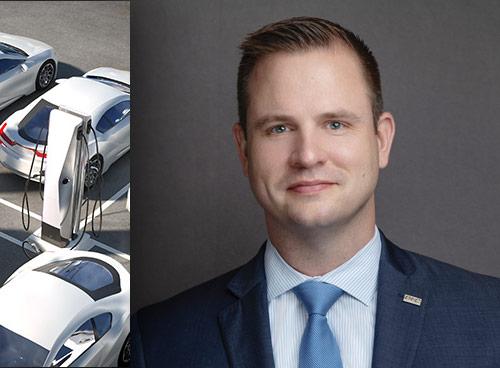
Brian Guzek is Vice President of Corporate Strategy at Duquesne Light.
The Public Utilities Fortnightly team asked the same five broad questions of eighteen experts from twelve utilities. We found it so interesting to compare these dozen discussions, the commonalities, and the differences too. Read on to see what's up with EVs at Arizona Public Service, Avangrid, CMS Energy, Commonwealth Edison, Con Edison, Duquesne Light, Idaho Power, National Grid, NiSource, Portland General Electric, Puget Sound Energy, and Southern Company.
And we wish to express PUF's gratitude to Bidgely, the energy intelligence and EV solutions company, that sponsored this special feature, and made it possible for us to bring it to you.
PUF's Steve Mitnick: What's the goal of Duquesne Light Company's electric vehicle programs, residential and commercial fleet?
Brian Guzek: In the Pittsburgh region, we're experiencing a growing demand for cleaner transportation options with a focus on electric vehicles. The growing demand, which is part of a broader, economy-wide transition to cleaner sources of energy, has the potential to truly change how we live.
As with any transformational movement, it's important to maintain focus on a vision for how we can help our customers and communities thrive. Our vision is to enable a larger than light, clean energy future for all.
We truly emphasize the "for all" piece because this future is for everyone. We talk about delivering exceptional results today and boldly harnessing opportunities for tomorrow. It's having that blended view of what we need to deliver now, to also position ourselves for the future, and ensure we support an equitable transition that allows all our customers to experience the benefits of electric mobility.
A solid vision is important to achieving our goals. One of our EV goals, which we published recently in our inaugural ESG report, is thirty by thirty. We want to electrify thirty percent of our fleet by 2030.
We are looking to set an example for the region by committing to advance ourselves, while also supporting our customers in the Pittsburgh region, where we serve two counties in southwestern Pennsylvania. This influenced our second EV-related long-term target, where we committed to enabling the grid infrastructure for fifty thousand electric vehicles by 2030.
We're at around eight thousand EVs in our service territory now. We follow EPRI's modeling, and we're trending to where the experts predict EV adoption is headed. Being a third-generation Pittsburgher, and my kids are fourth generation, it's awesome to see that growth.
We have a robust transmission system in place because of the heavy industry that operated in Pittsburgh. These industrial giants have since left the region. Because of this additional capacity, we are well positioned to support EVs, where some utilities might have six- to eight-year challenges around rights-of-way and the building of transmission lines.
We consider ourselves ready and able. We need to make investments, and we plan to do so, but more on the distribution side. Our timelines have shrunk substantially because of our existing transmission assets. We have some runway, and we want to keep that runway to continue to stay ahead of the curve.
We've partnered with a company called LineVision to implement dynamic line rating technology. We are expanding our existing transmission capacity to make sure we don't run out of that runway. Again, it's that balance of meeting the challenges of today to prepare for the opportunities of tomorrow.
PUF: What are you doing to educate consumers about electrification, maybe working one-on-one with large customers? Are there incentives?
Brian Guzek: Yes. We've done a lot of work around education and community engagement. We've been a huge supporter of the Pittsburgh Auto Show, which allowed us to connect with a wide variety of customers.
We've created a digital EV Guide on our website where customers can go to see what their EV options are out in the market. Customers are concerned that there aren't a lot of EVs out there, so we try to debunk that myth.
We show them how easy it is to connect. We do frontline engagement, like at the Pittsburgh Auto Show and other community events, and we've seen a lot of benefit from these efforts.
Also, targeted outreach, where we look at our customer personas and those who are most apt to take that next EV journey with us. We've taken some targeted approaches there to make sure we're getting to the right customers.
We do some residential partnerships, but on the C&I side, recently, our transportation electrification team hosted an Electric Fleet Expo. We had two hundred registrants in our service territory who participated.
At the expo we had some utility partners like FirstEnergy, and others that came. We hosted a number of forums, discussed first movers, and what we can do to support fleet customers in their transition to experiencing electric mobility. One of the programs we offer is a fleet advisory service, where we partner with our customers and look at their overall fleet.
From there, we see what's more advantageous to convert to electric. That's medium duty and heavy duty. The light duty is easier, as you can do that math quickly, per gasoline prices today.
PUF: You mentioned LineVision, and what other external parties are you working with?
Brian Guzek: From a grassroots perspective, we've partnered with the City of Pittsburgh and also our local public transit provider, Pittsburgh Regional Transit. In 2022, they committed to achieving a zero emissions fleet by 2045. This means more electric buses and places to charge those buses.
We've supported their transition efforts from the make-ready side, where we go beyond the meter all the way up to the charging stations. We invest heavily in the communities where our customers live to create a place where we can all thrive.
An example that speaks to me personally is when I was volunteering with an organization called Grounded Strategies. There's an old steel manufacturing neighborhood in Pittsburgh where we help convert vacant lots to green areas.
I remember standing there with the coordinator of Grounded, and it was right by a bus stop. Every time the bus approached, a big plume of diesel fumes came out.
I remember talking to the individual who said, "the more concerning thing is, this is also a school bus stop." That hit me.
So, we've partnered with Pittsburgh Regional Transit, which currently has eight fully electric buses running today that help reduce pollutants in their communities. They love them. If you think also about the OpEx person looking at fuel costs versus electricity, there's a big difference. They see the benefits.
Recently, we've partnered with Student Transportation of America, the organization that operates many of the school buses in our area. Through this partnership, we've enabled the region's first electric school buses that'll be running in the upcoming school year. We hope to do more of these projects that benefit the students' lives.
We are also part of Pittsburgh Region Clean Cities, which partnered with us at our recent Fleet Expo that I mentioned. The workforce development side has also been active. We had representatives supporting these efforts speak at the Fleet Expo. This is an important discussion because different types of skill sets will be needed, and we want to make sure we're giving everybody the opportunity to participate.
PUF: How are you trying to detect and track how much EV penetration is out there?
Brian Guzek: All utilities are doing the all-of-the-above strategy. We partner with organizations like EPRI to look at penetration modeling. We've partnered with the Pittsburgh Downtown Partnership and Pittsburgh Parking Authority, to see how many people are coming into the community and using charging stations in the city's main cultural center.
We currently offer a Community Charging Program, which goes through to the end of next year. Through our current programs, we'll install enough electrical make-ready infrastructure to support three hundred fifty charging station ports in our service territory by the end of 2024.
Part of that relationship, when we partner with our customers, is to get that data back to understand how the stations are being used. On the residential side, we offered a fifty-dollar rebate if they declare they have an EV, which gives us another layer of visibility into who is driving EVs in our service territory.
All of this allows us to then study the load curves. We're at the early stages. We have some preliminary insights, but we're able to see certain load curve spikes of the ones who declare they own an EV in our region. We know what that looks like.
Every utility's going to be a little different based on their draw, how their distribution system is set up, or how the collected data comes in from the advanced metering infrastructure. But we're getting more intelligent there. Within the next one to three years, we going to be mature in that space and be able to see where our proliferation is occurring.
PUF: Where's this program going to be in three to five years?
Brian Guzek: We're ready and we want to be here for our partners. In a nutshell, we're uniquely situated in Pittsburgh to be nimble and invest.
What success looks like is that our communities are getting larger than light support. We're more than just keeping the lights on. We're that partner. They trust us as a utility.
We're not going to be a fly-by-night installer of charging. We're going to be there with them, ready to support those fifty thousand EVs by 2030.
We'd like to see that all communities benefit from the EVs, from an environmental and a cost perspective. We continue to make sure we're not just focused on the future, but we want to make sure we're showing up for our customers today.
That's important, whether it's outreach, educational sessions, or shared learnings. We've had a lot of dialogue, with schools, Fortune 500 companies, and churches that want to put in EVs.
We go to every level of our community to make sure they can trust in our partnership. That's what success looks like is that we're well situated. Our customers know, rely, and trust that when they plug in their EVs, we're going to be there.
Some of our peer utilities have challenges because of the transmission limitations. They must give that hard message to their customers. Our customers don't even have to think about that.
EV Leaders conversations at fortnightly.com:
- Arizona Public Service's Kerri Carnes and Tony Perez
- Avangrid's Scott Bochenek and Charles Spence
- CMS Energy's Lauren Snyder and Jeff Myrom
- Commonwealth Edison's Diana Sharpe
- Con Edison's Britt Reichborn-Kjennerud
- Duquesne Light's Brian Guzek
- Idaho Power's Billie McWinn and Patti Best
- National Grid's Melissa Lavinson
- NiSource's Fred Gomos
- Portland General Electric's Larry Bekkedahl
- Puget Sound Energy's Josh Jacobs and Malcolm McCulloch
- Southern Company's Lincoln Wood and Stephanie Gossman
