

EV Adoption
Josh Jacobs is VP Clean Energy Strategy at Puget Sound Energy. Malcolm McCulloch is Manager New Products & Services at Puget Sound Energy.
The Public Utilities Fortnightly team asked the same five broad questions of eighteen experts from twelve utilities. We found it so interesting to compare these dozen discussions, the commonalities, and the differences too. Read on to see what's up with EVs at Arizona Public Service, Avangrid, CMS Energy, Commonwealth Edison, Con Edison, Duquesne Light, Idaho Power, National Grid, NiSource, Portland General Electric, Puget Sound Energy, and Southern Company.

And we wish to express PUF's gratitude to Bidgely, the energy intelligence and EV solutions company, that sponsored this special feature, and made it possible for us to bring it to you.
PUF's Steve Mitnick: What are your program's goals for electric vehicles, both residential and commercial fleet?
Josh Jacobs: As an electric service provider, one of our main goals is to enable the transition. We play a critical part in helping do that. It starts with the delivery systems; the electric vehicle charger network is a subset.
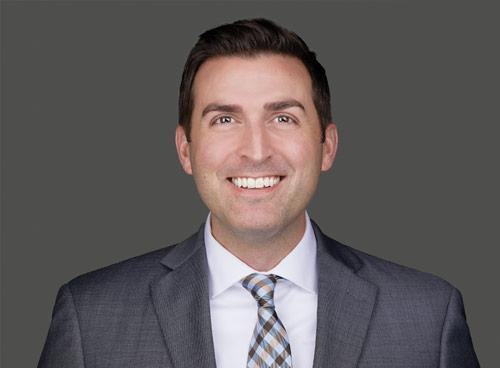 Josh Jacobs: A lot of investment will be needed in the delivery systems. To the extent we have insights into what customers might be thinking earlier, it helps us plan the upgrades to our feeders, substations, and transmission grid.
First and foremost, we have to make sure that we've got the right generation, transmission, and delivery infrastructure to enable the scale and the pace of change to meet our customer needs and help effectuate state policy.
In Washington State, there are a lot of new pieces of policy and legislation transforming the pace of change around transportation and how we electrify. We take our role seriously in terms of how we meet reliability, safety, and cost effectiveness of delivery systems to help support that change.
Second, from an electric vehicle charging network perspective, we want to make sure there's an equitable approach to how the communities that we serve make the transition. There're a number of third-party providers that will come in and aim to hit the best economic locations to earn a return.
The part we play is to help fill in the gaps, so everybody has an opportunity. We have a comprehensive portfolio of charging solutions to help meet customer needs.
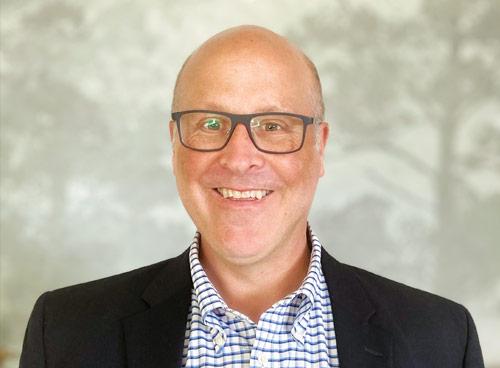 Malcolm McCulloch: We have AMI meters throughout our service territory. That gives us more ability on a geographic level to look at what kind of loads we are seeing and how we can proactively engage and upgrade our system to meet that need or engage customers to establish grid-friendly charging behaviors.
Malcolm McCulloch: The process in terms of the transportation electrification has been going on since 2015 driven largely by our state legislature. That gave PSE the opportunity to engage in this market transformation effort.
It's not just how we are going to ensure that the charging infrastructure is available and running, but also trying to think about the needs of our commercial and residential customers. A big part of what we do today is education and outreach. Making sure we're providing enough information for customers about vehicles that are available, where to get my next charge, and how far I can go.
We're trying to break down some of those barriers for customers. We're educating them on the economics of that transition, especially important for municipal, school districts, and fleet customers, so they can better understand their total cost of ownership.
Before we get the infrastructure in place, we're focused on education and outreach, so people are equipped with details to make the decision to transition, but also to feel confident.
PUF: Josh, how much progress do you think you've made at Puget Sound Energy?
Josh Jacobs: We started in 2018, to unpack this space. We started with a range of pilot programs, which provide tangible experience. The programs informed and offered us insights into larger investment decisions as we need support from our regulators to move forward.
We launched the series of pilots under our Up and Go Electric Pilot Program. It gave us insights around a range of residential, multifamily, fleet, and workplace charging, to understand what this looks like, the barriers, opportunities to remove barriers, and how to package all that into a plan.
Through that, we have almost six hundred electric vehicle chargers across our service territory helping inform our path forward. That next step is executing a range of tariffs for residential, fleet, and multifamily, to help customers invest in the charger network where we provide incentives or can partner with them and build out infrastructure that the utility owns and operates.
Malcolm McCulloch: In 2021, we received acknowledgement from the Washington Utilities and Transportation Commission on our Transportation Electrification Plan, a five-year strategic roadmap that laid out different approaches to serving the market. Then we went through the process in 2022, of getting our first phase of program tariffs approved.
In the first quarter of this year, we launched our multifamily charging program, which helps meet the charging needs of an underserved customer segment, which is EV drivers living outside of single-family housing. Equity is core to our mission and that means prioritizing solutions that include everyone in the clean energy transition. We have customers who don't have the option to charge at home because they're not the owner of the property, and public charging becomes a cost barrier.
We had a lot of interest from multifamily property owners because they saw it as an opportunity to increase the value of their property by having this asset and capability for tenants. Also, they were serving the needs of largely lower-income or underserved customers.
We have about ninety-seven properties that have applied for participation and we're doing due diligence on eligibility. We included in each of our programs what we call Empower Mobility Capabilities.
These are additional incentives. In certain situations, we're going to cover the full cost or provide an additional incentive to help those multifamily properties serving low-income customers to bridge that gap.
Also, what we did within that tariff is create a space for non-road electric vehicles. We provide an incentive of up to a thousand dollars for an electric bike or wheelchair, which advances mobility options for those who are unable to drive or cannot afford a car.
PSE's new Fleet & Commercial program, launched earlier this year, will help public, private, and nonprofit fleet customers meet sustainability goals and climate action plans through electrification of their fleets. We've had fifteen customers apply for that service.
We offer up to two hundred fifty thousand dollars in funding per site to support the installation of charging infrastructure, including any utility make ready to ensure our infrastructure to serve that facility is going to meet the fleet's future needs.
PUF: How are you tracking qualitatively or quantitatively with meter data adoption and usage? How are you dealing with that data and using it strategically?
Josh Jacobs: This is the big focus, as we think about how to effectively enable and support the transition across either our programs or the infrastructure investments that we need to be making to get ahead of the curve.

You have to start with the forecast. Where is all this load going to show up? We've seen drastic changes over the last twelve to eighteen months as the state has enacted new policies. A big one recently was the policy requiring that all new cars sold in Washington must be emission-free by 2035.
Washington published an up-to-date State Energy Strategy where they outline how we're going to decarbonize different sectors. It's a good summary of what's happening in the State of Washington; that forty-five percent of carbon emissions in the state comes from transportation.
We've got nearly a hundred thousand electric vehicles on the road today, and nine and a half percent of new vehicle sales in the Seattle-Tacoma area over the last year have transitioned to EVs.
It starts with how you forecast all this load and we're in the middle of a couple of things. Given the change to state policy, our most recent load forecast shows a marked increase in EV penetration, and therefore an impact on our load forecast. We see around a twenty percent annual growth in the EV load component of our overarching forecast.
Today, EVs make up about one percent of our peak demand. In 2030, it'll be about eleven percent. In 2045, it could be nearly forty percent of our peak load. That's a big change for the utility, so we're trying to focus on a couple of things.
One, how do we take this long-range overarching load forecast, and pair that with a bottoms-up approach to what we are seeing in the communities we serve. Where are we seeing the requests for EV charging infrastructure?
We're trying to use some new tools to help us understand which circuits are going to be impacted, which substations and transmission facilities need upgrading, so we can incorporate that in our plans for our electric grid. That's the first part.
Another important part is how to begin to lean into new programs to help us manage charging. The numbers I just gave are absent from any concerted, managed charging programs where we are employing time of use or demand response.
That's a big focus moving forward. How do we begin to incent customers in new ways to shift some of their charging habits to off-peak periods, so we can manage this in a thoughtful and prudent way?
Malcolm McCulloch: We do have a load management tariff in place today. It's focused on our fleet and commercial customers. It is a carrot.
We provide an incentive monthly if they shift to the off-peak periods. What we are hearing from our fleet and commercial customers specifically is a challenge around demand charges.
This comes also from third-party charging entities. We are going to be looking at if there is an opportunity to address this concern through rate design. We're launching a pilot in a couple of months to do time-of-use rates. Within that we're doing a whole house, electric vehicle, super off-peak rate.
Essentially, we're offering about half of our retail rate to incent customers in that program to charge during the super off-peak period, which is twelve a.m. to seven a.m.
We're launching demand response capabilities next year. We have a virtual power plant that's been brought online, and that's going to be a significant tool that our load office and trade floor can use.
We're looking at this from different directions, including how to integrate telematics, where we can use the data that comes directly from the vehicle to help with that process, as well.
It's all hands-on deck. We're trying to be dynamic and looking at where loads are coming from. We have AMI meters throughout our service territory. That gives us more ability on a geographic level to look at what kind of loads we are seeing and how we can proactively engage and upgrade our system to meet that need or engage customers to establish grid-friendly charging behaviors.
PUF: There are other stakeholders, NGOs, vendors, and consulting firms in this space. How are you dealing with those?
Malcolm McCulloch: This goes back to one of the underlying tenets of our process, which is making sure we're integrating our customers and equity in everything we do. Part of that process required us to engage with our community.
The interested parties were a critical process, not only for us to learn, but also an expectation that we had from our regulators that we were engaging with those customers.
We did extensive outreach with our tribal communities, municipalities, low-income providers, and a lot of community-based organizations that help serve vulnerable populations and low-income customers. That was helpful for us to learn. We layered learnings from those engagements within each of our programs through our Empower Mobility process.
We also have a lot of engagement with our commission, which established an Electric Vehicle Supply Equipment (EVSE) stakeholder group. On a quarterly basis, we engage with that group, which is comprised of various interested parties; NGOs, folks within the community, charging providers, and OEMs.
We go there to talk about how we're evolving in our program design. We are required to share our tariff designs and drafts of our tariffs, and they have the ability to review and provide comments, and then we go through a revision process.
The main purpose of this group is that when a new tariff gets to the commission, they want to see that the EVSE community has been engaged in and is supportive of the proposed programs. That's been helpful.
As far as how we're executing within the market, we've engaged a lot of folks to help us learn. We're trying different capabilities to understand for demand response. For example, we did a joint analysis with a third party to better understand price elasticity of those types of products and what incentives would encourage customers to shift their charging.
We are working with a third party on more engaged consultation with some of our equity-focused customers to help them go through a total cost of operation analysis so they can fully assess their fleet needs to build a plan to support their transition.
PUF: There's going to be a lot of meter data you're going to want to use.
Malcolm McCulloch: I have an amazing data scientist on my team who's been engaging with our load forecast team to figure out the impact of the state requirement that requires any new light-duty vehicle sold after 2030 be electric. He's been helping our forecasting team look at that data and understand how we are going to prepare our system and process to mitigate the impact of that change.
We now have interval data that we're going to try to integrate. It's going to change the way we do a lot of our billing and other capabilities.
It's not just within my team. We're leveraging a lot of our IT resources, building the infrastructure and the capabilities there to move to a more dynamic and automated capability.
PUF: Where do you think this is going? Are you optimistic? Where will you be two, three, four years from now?
Josh Jacobs: I'm one hundred percent optimistic. This is new territory for electric utilities. The challenge that's in front of us is to think creatively about how to transition from the legacy systems, how they operated in a complementary way over the past several decades, to what the future looks like.
It's a big shift for utilities, but we're leaning into it. We're trying to engage more actively with our customers to have conversations early and often about their needs, and how can we start to incorporate that into our thinking and planning earlier in the process, as opposed to later.
A lot of investment will be needed in the delivery systems. To the extent we have insights into what customers might be thinking earlier, it helps us plan the upgrades to our feeders, substations, and transmission grid.
It helps us think about how to start to package different programs together to meet needs differently. That's a big focus as we think about how to transition the grid from a one-way delivery system to a two-way platform with more dynamic engagement back and forth with customers.
EV Leaders conversations at fortnightly.com:
- Arizona Public Service's Kerri Carnes and Tony Perez
- Avangrid's Scott Bochenek and Charles Spence
- CMS Energy's Lauren Snyder and Jeff Myrom
- Commonwealth Edison's Diana Sharpe
- Con Edison's Britt Reichborn-Kjennerud
- Duquesne Light's Brian Guzek
- Idaho Power's Billie McWinn and Patti Best
- National Grid's Melissa Lavinson
- NiSource's Fred Gomos
- Portland General Electric's Larry Bekkedahl
- Puget Sound Energy's Josh Jacobs and Malcolm McCulloch
- Southern Company's Lincoln Wood and Stephanie Gossman
