

Top Innovators
Elizabeth Cook, Samuel Levinson, Sabrina Nguyen, Daniel Rodgers, Alex Rosenblatt, Richard Saporito, and Jessica Valentine represent the Advanced Grid Solutions team at Duquesne Light Company.
PUF's Lori Burkhart: Talk about the innovations that led to your team winning the John Beggs Top Innovator Award for Energy Transition, how they work, and benefits For Duquesne Light Company.
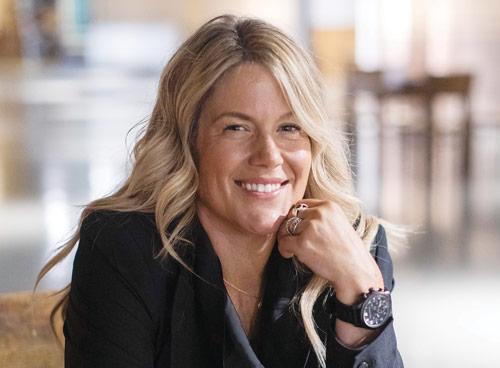
Elizabeth Cook: We submitted three projects, but the vision behind all of them is to enable situational awareness to the edge of the grid. When we're thinking about how we're setting up and preparing for the new energy economy that's being enabled by distributed energy resources, we need to know the real-time performance of assets we're in charge of, to ensure safe, reliable, affordable power.
The idea behind our innovation is thinking outside the box and looking to the larger industries to unlock new ways of doing things. That is embracing data and data analytics.
One project, Smart Electric Energy Districts (SEEDs), came from a perspective of seeing how our grid became one of the largest machines in the world. However, as innovative technologies start to be incorporated on that machine, we must start enabling the grid to perform in smaller pockets.
Instead of microgrids, how do we look at our system holistically, and start identifying areas of our territory or customers and how we serve them, provide novel solutions, and embrace the edge capability?
 Elizabeth Cook: We submitted three projects, but the vision behind all is to enable situational awareness to the edge of the grid. When we’re thinking about how we’re setting up and preparing for the new energy economy being enabled by distributed energy resources, we need to know real-time performance of assets, to ensure safe, reliable, affordable power.
SEEDs are a concept of service we want to provide to our customers, so we're doing this work together, enabling their side of the meter, as to how they use energy, and then allowing us to understand, prepare, and then advance that technology cohesively.
The other project, dynamic line rating, was from the understanding of the system from a transmission perspective. Everything we do as an industry comes down to, will the asset, aka, piece of equipment, handle the current flow and/or the voltage thresholds?
Knowing that our transmission system has a significant amount of technology or innovation that wants to connect to it, we were using static numbers in a dynamic world. Again, embracing a tool to unlock or uncap underutilized assets by understanding the true dynamic rating of our transmission conductors.
Last, are HEROS or the Smart Grid Chip. We're still debating the terminology, but it's high computational power at the edge of the grid, creating an open-source platform to start bringing in that data in real-time. Not new data to us, because we have advanced meter infrastructure that gives us the watts of our system, but it's in historical, latent data.
This tool, this capability, will allow us to embrace and engage real-time data, which then will enhance and optimize how we utilize our assets. That's the innovation. It comes from the mindset of unlocking the potential for current assets, using data, and then seeking those solutions with the industry together.
PUF: What was your role in the development of the energy transition innovation as part of the Duquesne Light Company Advanced Grid Solutions Team?
Jessica Valentine: I am an Advanced Grid Engineer. My role in our projects is as the project manager and technical point of contact.
For example, with our Smart Electric Energy Districts, we have a set of pilot projects that involve deploying battery energy storage systems as one of our first steppingstones to achieving the SEEDs vision. In these projects, I have been collaborating with our vendors and our internal stakeholders, trying to connect all the right parties, as we work to deploy a new and innovative technology on the grid. I play the role of coordinator and drive the project to keep it going as we encounter challenges along the way.
Sabrina Nguyen: I am a DER Engineer on our team. I help construct models for current active projects. With the Smart Electric Energy District projects, I make sure the models are properly constructed based on DLC knowledge and provide additional data to execute any additional studies for projects.
I also tangentially support these projects through real-time digital simulator studies. The goal of this testing is to enable newer projects by looking at the signals and controlling of different devices such as relays for when we want to interconnect DERs onto our grid, and to see how they would impact our systems.
Samuel Levinson: My title on the team is Load Forecasting Engineer. I'm one of the more data-focused people, working on improving our forecasting capabilities, and many times, in thinking about data more as a constant time series rather than a worst-case scenario, or a winter scenario, or a summer scenario. Thinking about it holistically and using all the data we have at our fingertips in more exciting and advanced ways.
We've had a lot of data for a long time, but we've only used a small slice of it. The first step is using all the data I have, and then as we're building this new infrastructure to get more data at the edge, how do we start using that?
Richard Saporito: I'm an Advanced Grid Consulting Engineer on the team. I've been with DLC for fifteen years, thirteen of which were in Distribution Planning. My role in Advanced Grid Solutions uses that distribution planning experience to provide technical expertise in each of our projects. This comes in the form of system analysis, circuit performance evaluation, battery sizing, and scoping everything that we do.

Daniel Rodgers: I'm an Advanced Grid Engineer, and I started here three months ago. My primary focus is modeling our 4kV circuits in CYME. They can be used to do hosting capacity studies, so we can figure out how much distributed energy resources you can put on each point in the circuit. That'll be crucial going forward as solar and electric vehicles ramp up.
Alex Rosenblatt: I'm an Advanced Grid Senior Engineer. I've been with DLC for about seven years. I take a lot of the data we are using and I'm working on building the backend systems such as DMS and DERMS to connect from the mothership to the edge.
This is so they can communicate with each other, and eventually so we can pull the data back, and have two-way communication flows between Duquesne Light and the edge, which is something currently we have, but not to the real-time effect that we want and need to effectively perform the data analytics and system reliability levels we believe are plausible.
It's all the systems that are coming into play; they'll be coming in '25, '26, '27, '28, but we're starting to build them up now. It's going to take time as part of the ADMS project.
Elizabeth Cook: I am the Director of Advanced Grid Systems and the Grid Modernization Program. My role is to help facilitate the internal and external stakeholder engagement to drive innovation.
The concept of innovation is thinking of improving our product, which is delivering electricity and offering energy services and products to our customers. With everything happening at the grid edge, are there ways for us to think of it differently, so we can be a trusted energy partner, regarding the services, to teach, and educate, and drive this new type of technology?
We're ensuring enablement, standing up, or identifying opportunities to enhance processes across the organization, funnel ideas, and then engaging all the stakeholders that make it happen.
We're within the corporate strategy realm, where we're working continuously with operations and every facet of engineering, ensuring they're aware, identifying where the pain points are, and creating tools to provide value to them. Same with IT and customers.
Trying to drive the vision of understanding grid modernization is holistically embracing the idea that IT, operations, and customers should be synergistically working together, and identifying how all those threads pull and tug at each other, so we are moving innovative new processes through the organization. That's my role.
PUF: What was most rewarding for you during this innovation project, which led to winning the John Beggs Award for Energy Transition?
Sabrina Nguyen: For background, I'm currently a PhD student at Pitt. My perspective is a bit different, because being in school for so long, it's hard to see where the payoff comes, and why go through all this education? Why get your degree?
Being a participant in these projects, I push myself to learn new technologies and studies, like the Real Time Digital Simulator project where I can apply classroom knowledge in the field. With our Smart Electric Energy District project, seeing the real impact on people and meeting the communities where we're making these projects happen, is rewarding.
These are areas I drive through and interact with in my free time, so knowing how we are being change agents there feels impactful. It shows that work, the effort, the heartache, the headaches, all have a reason and a purpose. Even the small achievements are to be celebrated.
Samuel Levinson: It's rewarding because I know the energy system is rapidly changing and I want to help enable that transition to support our climate sustainability goals. As a utility, you're the last stop sign to implementing a lot of these technologies. Being a part of the group that is helping to push these things forward, and not being a block in the way to transforming our energy grid is rewarding.
Richard Saporito: The most rewarding aspect of my work is getting to collaborate with Elizabeth. She was my manager in Distribution Planning. When she transitioned to Advanced Grid Solutions and posted an open position, I jumped at the opportunity.
She has a unique style of leadership that encourages free thinking and adaptability, which is ideal for furthering DLC's vision of a clean energy future for all and implementing the technology to get us there. That vision is truly Elizabeth's, and I have been excited to adopt it, embrace it, and use my skills to drive it.
Daniel Rodgers: The most rewarding thing is simple; it's working as a team aiming for a common goal to better the world around us.
Alex Rosenblatt: It's great to see what this innovation is going to become and how this is going to benefit our customers, our community, and everything around us.
Jessica Valentine: What's most rewarding is being encouraged to think differently, to imagine the grid will be more sustainable and efficient in the future and believe that we will be part of that transition as a team.
Elizabeth Cook: The most rewarding part is to be a part of a collaborative, engaged team, to love what I do, and to share that with these individuals, but hopefully continue to educate, teach, and inspire those all around us, within DLC, as well as externally. I truly believe if we change utility, we can change the world. There's so much weighing on how we use energy.
I also love the opportunity that's been given to me by DLC to have the platform to educate, communicate, and drive the vision. It's not just our vision, it's everyone's vision that we have to understand the grid as it is today and teach that to everyone.
I didn't even know what the power system was with a four-year degree in electrical engineering. We all have a responsibility as to how we see and use energy, and how we transform individually. Also, show the industry there is hope, we can make change. That continuously brings me joy in the job I do and hope to extend it across this team and the organization.
Lead image: The John Beggs Top Innovator Award for Energy Transition, from left, Alex Rosenblatt, Daniel Rodgers, Jessica Valentine, Elizabeth Cook, Sabrina Nguyen, Sam Levinson, and Richard Saporito.
Top Innovators articles at fortnightly.com:
- Fortnightly Top Innovator Awards 2023
- Edith Clarke Top Innovator Award for Reliability: CenterPoint Energy (Resilient Digital Substation)
- Lewis Latimer Top Innovator Award for Design: Avangrid (Cybersecurity Simulation in Metaverse)
- George Westinghouse Top Innovator Award for Leadership: Southern Company (Elevate Future Fund)
- Bertha Lamme Top Innovator Award for Generation: San Diego Gas and Electric (Wildfire Next Generation System (WiNGs))
- Charles Steinmetz Top Innovator Award for Grid Operations: Exelon (Automated Drone Initiative)
- Charles Steinmetz Top Innovator Award for Grid Operations: PPL Electric Utilities (Distribution System Series)
- Nancy Fitzroy Top Innovator Award for Environment and Safety: Arizona Public Service (Innovations in Predictive Maintenance)
- Nancy Fitzroy Top Innovator Award for Environment and Safety: Xcel Energy (Drones and Robotics in Nuclear Inspections)
- Maria Telkes Top Innovator Award for Distributed Energy: Arizona Public Service Company (Virtual Power Plant)
- Maria Telkes Top Innovator Award for Distributed Energy: Puget Sound Energy (Virtual Power Plant Software Platform)
- Francis Upton Top Innovator Award for Analytics: CMS Energy (Automated Analytics for Renewable Generation)
- William Hammer Top Innovator Award for Electrification: BGE (Fleet of the Future)
- William Hammer Top Innovator Award for Electrification: Puget Sound Energy (Clean Buildings Accelerator)
- John Beggs Top Innovator Award for Energy Transition: Duquesne Light Company (Advanced Grid Solutions)
- Mabel MacFerran Top Innovator Award for Storage: PNM Resources (Battery Energy Storage Systems at Solar Sites)
- Florence Fogler Top Innovator Award for Transmission Tech: PECO (Underground Automatic Transfer Switch)
