

Top Innovators
Mansur Mohammed and Carl Young represent the Cybersecurity Simulation in Metaverse team at Avangrid.
PUF's Lori Burkhart: Describe the innovation that led to your team winning the Lewis Latimer Top Innovator Award for Design, how it works, and its benefits to Avangrid.

Carl Young: This innovation is about a simulation in the metaverse, simulating cybersecurity events, and how we can react to them. For this innovation we created three virtual meta worlds, an electrical substation, the emergency communications center or ECC, and a cybersecurity collaboration meeting room. The latter is an event room for us to operate out of, while we're dealing with a cybersecurity attack.
The intent was to simulate, in a safe environment, a cybersecurity event occurring, which impacts a substation. It triggers physical damage to that substation. Then how do we handle and react to that?
How do our different teams mobilize under our incident command structure to safely and securely, isolate and minimize that damage, and then restore and recover the electric operations back to normal activity? That is the purpose of simulation, bringing those teams together, our cyber, electric operations, and emergency preparedness teams, and with our incident command structure, dealing with an event such as a cyberattack.
PUF: Mansur, what was your role in the innovation's development?
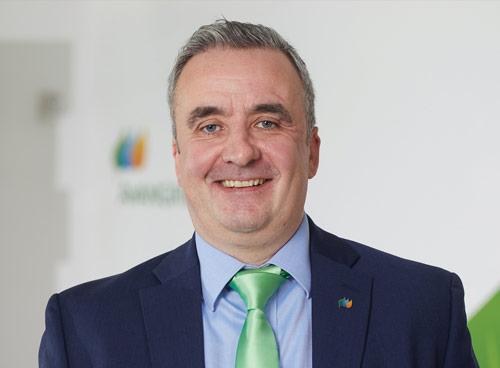 Carl Young: This innovation is about a simulation in the metaverse, simulating cybersecurity events, and how we can react to them. We created three virtual meta worlds, an electrical substation, the emergency communications center or ECC, and a cybersecurity collaboration meeting room.
Mansur Mohammed: The origin of the innovation came from when I saw different teams working in silos. Our cybersecurity team, every year, doing a NERC GridEx exercise with the different external stakeholders, including federal agencies.
I was thinking about if a cyberattack happens, how do we act? How do we react? These are all happening in emails with coordinated efforts. I was observing one of my team members who was part of that exercise.
Then I met with our environmental health and safety team. They have been developing training materials in virtual environments using augmented reality, virtual reality. This is something they are already doing. I thought, "Hey, why don't we match this together? Why don't we assimilate in the virtual world what our cybersecurity team is doing?"
We already have all the components, so let's bring it together, and create a cohesive environment for repeatable, controllable simulations. We took this on because we have examples from cybersecurity exercises. We thought, "Okay, why don't we bring that into the virtual world?"
 Robert Antonellis
I brought together the three teams, and our partners, explaining what's happening. How we do that is challenging. This was all my imagination. We said, "Metaverse, we're talking about a meta thing. It is industrial scale. Very few in the industry have developed this kind of simulation."
Bringing this together, as what we were trying to do is a process, took a long time. But I assembled a team. Carl was behind me. He was blessing me, "Hey Mansur, go ahead."
Even partners were questioning, "Oh, can we do this?" They did pieces, but not the whole simulation together. That is how we started this, as proof of concept/pilot. It came out well.
We developed the virtual electrical control center, the meeting rooms, and substation. Those are the artifacts, some of them existing in our environment, putting some together, bringing it all together, and creating scenarios.
 James Fox
PUF: Carl, talk about your role in the development of this innovation.

Carl Young: As CIO, my role is to empower and guide my team, and foster innovation in an industry where we work with real life constraints. It is difficult to be completely innovative in a regulated utility environment.
We must work closely with our technical partners and ground ourselves with real life problems. I'd love to do innovation for innovation's sake, as an IT professional. However, as a utility professional as well, and I've worked in utilities for twenty-five years, it's about grounding ourselves and looking at real life use cases and problems that we can solve.
I try to encourage and push my teams to consider what these use cases could be, and what are the issues we need to be looking at. Then how can we work with partners in a low-cost, collaborative way for solutioning.
 Crispin Gathuru
Now, it's using some of the new technology stacks available to us, because by using them, we can start to break ground. Even though we are constrained as a regulated industry, we can look at changing how we operate, and how we use the tools available to us to make a difference in our environment and in our business.
PUF: Jennifer, you and your team at Avangrid have benefitted from this innovation, so explain why that is.
Jennifer Pearce: I'm the Vice President of Reliability Assurance and Emergency Preparedness. Reliability assurance is all the NERC compliance, but on the emergency preparedness side specifically, this kind of simulation has a lot of future value.
A lot of what we do is coordinating across different disciplines in a geographically diverse service territory. Coming up with creative and innovative ways to bring our people together, in virtual environments, which are more real world like the metaverse, helps enable and simulate that in-person contact.
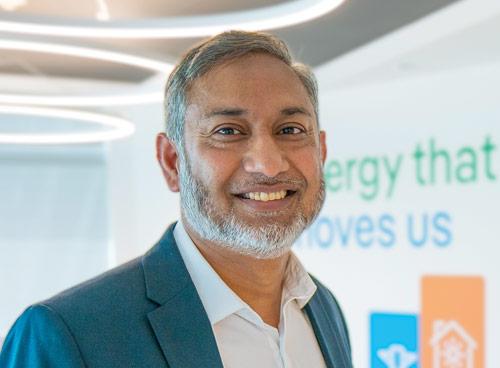 Mansur Mohammed
As an emergency manager by trade, I'm always inclined to say, "Everyone in-person in the office," because you lose something when you can't just walk out the door and go talk to someone that you need. By creating these virtual spaces that aren't just Teams meetings but simulate that ability to walk next door and find someone, gives us that same touch and feel of being in-person.
There's a lot of value in being able to respond more quickly when you have that connection for an event. I see that helping us in real world events if we get to the point where we can use places like the metaverse to do that coordination.
But also in preparedness, because what we do is designing trainings and exercises to practice our employees before a real event happens. You want to do that in as real a scenario as possible.
For example, in exercises, typically what the emergency management community does is we build an exercise that's written down on paper, and we might have up a few maps, some of our tools and technologies. But to simulate it in the metaverse and say, "Okay, you've got a substation attack," or "You've got several poles down and wires that needs to get strung back up," then you're creating an environment you can't create easily in the real world.
 Jada Pinto
It's potentially lower cost to do it in a virtual environment. Imagine the wide destruction a hurricane or substation attack can have on the power grid. It's too costly and impactful to recreate that in the real world. But to simulate it, you give that hands-on experience for folks, that they might not get until a real emergency.
This is the direction the future of society is going, in that people are living and working in different places, but we still must work together. This is how we do that using innovation in a more efficient way.
PUF: Mansur, what was most rewarding for you in creating and working on this innovation?
Mansur Mohammed: The team believing what we can do. Initially, when I explained this to different teams, they didn't believe we could bring it all together, move from one space to another, and see a virtual world.
Bringing the imagination to virtual reality, it's amazing. Now we can see a future in this virtual world. We can add artificial intelligence into that. In the future, we can add deep learning and machine learning models for fast action, and we can bring them here in the virtual world, have systems automatically do it, or we can guide them to do it.
This is the first step, but we can do a lot with this, bringing in many different teams and departments. That's amazing to see what we can do now and in the future.
PUF: Carl, what was most rewarding for you, working on this innovation?
Carl Young: Mansur touched on the team success. Getting people to buy into a common goal, and work hard to make this a reality, was great to see, across different disciplines within our organization. Also, working with our technology partners, which was fantastic.
The ability to take this type of application, and develop and apply that to other scenarios, to create a training or simulation environment, which is a safe space for people who work in an extremely dangerous industry. To simulate these types of events, understand and test out our emergency procedures, it's a huge opportunity for us to expand this.
That's probably the most rewarding is proving out that this technology, having a digital twin in the metaverse that can be used and consumed from different offices, in different geographic locations, and people experiencing that simulation, has great capabilities for future use cases to expand this and make our workforce better prepared for things that may happen, in a much safer way.
Top Innovators articles at fortnightly.com:
- Fortnightly Top Innovator Awards 2023
- Edith Clarke Top Innovator Award for Reliability: CenterPoint Energy (Resilient Digital Substation)
- Lewis Latimer Top Innovator Award for Design: Avangrid (Cybersecurity Simulation in Metaverse)
- George Westinghouse Top Innovator Award for Leadership: Southern Company (Elevate Future Fund)
- Bertha Lamme Top Innovator Award for Generation: San Diego Gas and Electric (Wildfire Next Generation System (WiNGs))
- Charles Steinmetz Top Innovator Award for Grid Operations: Exelon (Automated Drone Initiative)
- Charles Steinmetz Top Innovator Award for Grid Operations: PPL Electric Utilities (Distribution System Series)
- Nancy Fitzroy Top Innovator Award for Environment and Safety: Arizona Public Service (Innovations in Predictive Maintenance)
- Nancy Fitzroy Top Innovator Award for Environment and Safety: Xcel Energy (Drones and Robotics in Nuclear Inspections)
- Maria Telkes Top Innovator Award for Distributed Energy: Arizona Public Service Company (Virtual Power Plant)
- Maria Telkes Top Innovator Award for Distributed Energy: Puget Sound Energy (Virtual Power Plant Software Platform)
- Francis Upton Top Innovator Award for Analytics: CMS Energy (Automated Analytics for Renewable Generation)
- William Hammer Top Innovator Award for Electrification: BGE (Fleet of the Future)
- William Hammer Top Innovator Award for Electrification: Puget Sound Energy (Clean Buildings Accelerator)
- John Beggs Top Innovator Award for Energy Transition: Duquesne Light Company (Advanced Grid Solutions)
- Mabel MacFerran Top Innovator Award for Storage: PNM Resources (Battery Energy Storage Systems at Solar Sites)
- Florence Fogler Top Innovator Award for Transmission Tech: PECO (Underground Automatic Transfer Switch)
