
Edison Foundation
Emile Thompson is Chair of the D.C. Public Service Commission.
More than a dozen thought leaders and decision makers took the stage at the Edison Foundation's Institute for Electric Innovation's 13th annual Powering the People event in Washington D.C. Enjoy these excerpts.
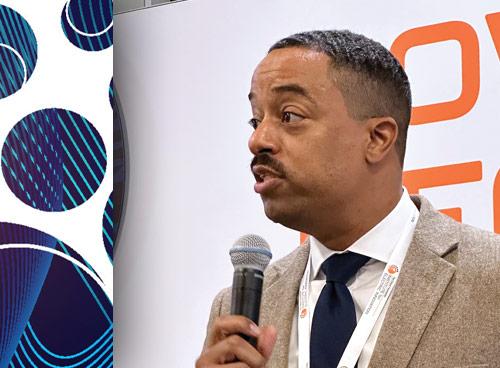
Emile Thompson: In the District, we have the most ambitious clean energy commitments. We state that by 2032, all electricity that's being used will be generated from renewable sources, and that by 2045, we will have carbon neutrality. In addition, we say that by 2041, fifteen percent of electricity that we consume within D.C. will be generated within our boundaries.
Now, we often say this, but D.C. is unique. D.C. does not have any thermal generation. It's a completely dense urban environment, with an aging building stock. So, when we start talking about these goals, affordability is front of mind to achieving each of these, and they raise very important questions, such as how we procure that energy efficiently and affordably.
How will you build enough solar in a dense urban environment to power fifteen percent of the load? Then how do you achieve carbon neutrality with an aging building stock where you need to power heating, stoves, water heaters, and other appliances?
Traditionally, when we looked at affordability from the utility point of view, there was the idea of the utility discount programs. If a person earned a certain amount of money and was below a certain threshold, they could get a credit on their bill, and D.C. was no different.
In fact, in the mid-1980s, we instituted our first utility discount programs that stated that if you made seventy-five percent or less of the area median income, you were entitled to a credit on your bill that was roughly equal to the distribution charge on your bill.
That was a big benefit because our bills, the distribution portion is about half the bill. So, a select group of customers were getting a fifty percent discount on their bills.
But then COVID happened, and we realized we needed to do more. One of the more startling statistics that came out of COVID stated that fifty-nine percent of homes in America were one check away from homelessness.
One of the things we first did, was we raised that threshold to eighty-five percent, therefore, allowing more people to engage and participate in our utility discount programs. Another thing that we realized was because people were making these tough decisions during that time, sometimes people had allowed their energy bills to go unpaid, so they had these large arrearages.
We talked to both utilities and had them file plans around arrearage management programs, so that customers could pay down these large balances without the threat of disconnection.
Another thing that we looked at with our local EDC is the idea of discounts for houses of worship and nonprofits. The idea being that these are pillars of the community. They often are providing assistance to those who need it most. If we can help those institutions, they can help more people.
That program is certainly in its nascent stages. Essentially, it provides a credit of seven megawatts of demand on the bill, and we'll see how that takes shape.
But looking forward, we know we can't rely solely on utility discount programs to ensure affordability for our ratepayers. We have to look at ways to ensure that the energy that's being procured is being done in an inexpensive manner, as well as that we are reducing overall usage.
I believe the Energy Equity Project states that the gold standard is six percent of an individual's yearly salary should be spent on energy and utility bills. That's something to keep in mind. So first, procurement of energy.
Earlier, I talked about how we have this goal that fifteen percent of our energy must be generated within D.C. One of the things we've worked hard on is our community solar program.
That program allows people who are otherwise unable to have solar on their roofs, whether it's they don't own their home or it's too expensive to subscribe to a community facility, to not only let them reap the benefits of a decarbonized environment but also to have lower electricity bills. That's one way to ensure affordability, making sure people are paying less overall.
Another way is through energy efficiency. We all know that the cheapest kilowatt-hour is the one that's not used. What we have asked our utilities to do is invest and propose energy efficiency plans, thereby giving consumers the ability to use less energy and reap those benefits.
Another thing that we have asked our utilities to do is go after the federal funding that's been made available recently. Whether it's through the IRA, the IIJA, the Build Back Better, or one of those many acronym plans.
But the idea there is of course, that through these programs and initiatives, utilities will be able to save money on R&D costs, those costs will then be saved, and will be passed on to ratepayers to ensure that they're not bearing the full brunt of this clean energy transition.
As we continue to move forward, affordability will always be at the forefront, and as we plan over the next few years, that will determine what these costs look like. Another thing that we've done in D.C. is we've asked our utilities to not only submit five-year plans, but also thirty-year plans on how they'll achieve the District's clean energy goals.
The idea being that a careful review of these plans, ensuring that they're moving in the right direction, will lead them to be good stewards of ratepayer money, but also ensure that they're meeting the goals that we have.
Powering the People excerpts at fortnightly.com:
