
A Path Toward Carbon Reduction Goals
Taylor Fitzgerald is the NARUC Center for Partnerships & Innovation Communications Coordinator.
Advanced nuclear could be a critical part of the future of energy generation, as much of the U.S. works toward meeting carbon reduction goals. So, how are states working to incorporate this technology within their energy portfolios?

According to the Center for Climate and Energy Solutions, twenty-four states have established greenhouse gas reduction targets that have spurred policies targeted to encourage carbon emissions reductions in the energy sector.
The Nuclear Energy Institute explains that many states have turned to advanced nuclear to help meet carbon reduction goals due to its great potential to produce an abundance of zero-emission, baseload energy.
Research surrounding advanced nuclear continues to increase its appeal to states. For example, the U.S. Department of Energy's Pathways to Commercial Liftoff: Advanced Nuclear report explores the significant potential for the commercialization of advanced nuclear reactors.
Based on findings from the report, the U.S. Department of Energy identifies advanced nuclear as a well-rounded energy technology that has the capability to not only help reach carbon reduction goals but improve energy security, reliability, and affordability in the U.S. These research findings continue to encourage the potential of future advanced nuclear projects as federal and state entities invest more time and resources into exploring opportunities for its implementation.

Recent legislation, such as the 2021 Bipartisan Infrastructure Law and the 2022 Inflation Reduction Act, incentivize transitioning to low-carbon energy sources such as advanced nuclear. The largest investment in clean energy in U.S. history is seen through the BIL's sixty-five-billion-dollar investment in clean energy transmission and the electric grid. The considerable funding from the BIL is being used to enhance power infrastructure to support the expansion and affordability of clean energy. It also provides entities with funding to support initiatives surrounding the development and implementation of clean energy technologies like advanced nuclear.
Similarly, the IRA provides significant support for the deployment of clean energy technologies as it includes over twenty modern tax credits, including the Production Tax Credit and Investment Tax Credit that incentivize clean energy production. The IRA also contributes billions of dollars in funding through grant and loan programs centered on greenhouse gas reductions and clean energy projects.
Both recent pieces of federal legislation increase the appeal to states of new clean energy technologies such as advanced nuclear. Take a deeper dive into how states are planning for advanced nuclear by reviewing the newly released National Association of Regulatory Utility Commissioners and National Association of State Energy Officials Advanced Nuclear State Action Tracker at www.naruc.org/anscmap/.
Covering state actions from 2013 to the present, the tracker covers key actions by states related to advanced nuclear. These include relevant executive orders, policies and programs, and state legislation that has passed into law.
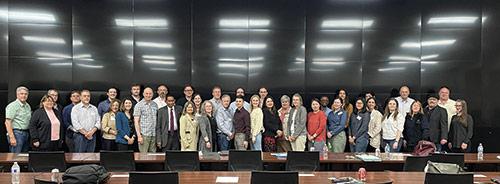 NARUC and NASEO ANSC members at Pacific Northwest National Laboratory’s Systems Engineering Building during April 2023 site visit.
The tracker shows that since 2013, more than half of states have initiated activities to support advanced nuclear research and deployment. These activities cover a range of topics related to advanced nuclear, such as financial support, research, permits, and creating spaces for collaboration.
Looking on the east coast, states such as North Carolina have allocated funding to assess the feasibility of establishing an advanced nuclear research reactor in the state. North Carolina has also passed legislation to categorize nuclear energy as a clean energy resource, replacing the term renewable energy in state statutes with the term clean energy to include nuclear technologies.
"North Carolina is excited about the present and future role of advanced nuclear in clean energy," says North Carolina Commissioner Floyd McKissick, co-chair of the NARUC-NASEO Advanced Nuclear State Collaborative. "The programs outlined in the NARUC-NASEO Advanced Nuclear State Action Tracker provide additional opportunities for the state to consider other approaches for supporting advanced nuclear deployment."
Looking further west, the Arizona Corporation Commission has recently established a docket to support the collection of research and information related to the feasibility, viability, and sustainability of advanced nuclear power generation. The docket acts as a repository for research, informational filings, and proceedings related to advanced nuclear technology.
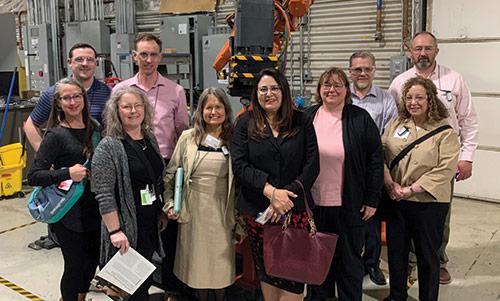 NARUC and NASEO ANSC members at Pacific Northwest National Laboratory’s Solid Phase Processing Lab during April 2023 site visit.
"Arizona is invested in understanding the role advanced nuclear plays in the state's power generation mix," says Arizona Commissioner Lea Márquez Peterson, co-chair of the NARUC-NASEO Advanced Nuclear State Collaborative. "We see great potential for its application as we continue to conduct and share research related to this possibility."
Explore the tracker to delve into advanced nuclear activities and partnerships over the past decade involving state government entities such as State Public Utility Commissions, State Energy Offices, state legislatures, and Governor's Offices.
The NARUC-NASEO Advanced Nuclear State Action Tracker is a project initiated by the NARUC-NASEO Advanced Nuclear State Collaborative. The ANSC convenes state utility regulators and State Energy Officials to enhance collective understanding of the unique regulatory and policy questions surrounding the consideration and deployment of new nuclear generation and support peer learning across states.
Stay informed on upcoming nuclear activities hosted by NARUC to continue states' exploration of advanced nuclear energy by visiting the NARUC Nuclear Energy webpage
at www.naruc.org/core-sectors/electricity-energy/nuclear-energy/ and the Advanced Nuclear State Collaborative webpage at www.naruc.org/core-sectors/electricity-energy/nuclear-energy/advanced-nu....
Free and public webinars on advanced nuclear topics will be hosted by the ANSC this spring. For questions regarding NARUC and NASEO nuclear activities, contact Kiera Zitelman from NARUC at kzitelman@naruc.org or Kelsey Jones from NASEO at kjones@naseo.org.
