

Association of Edison Illuminating Companies
Elizabeth Cook is Vice President of Technical Strategy at Association of Edison Illuminating Companies.
The development and evolution of the electric grid, from its early stages in the late 19th century to its current complex and dynamic state, has been driven by a continuous quest for more efficient energy storage and utilization methods. This historical trajectory has been marked by significant technological and infrastructural advancements, culminating in the integration of Battery Energy Storage Systems (BESS) into the grid. BESS represents not just a technological leap but a fulfillment of a long-standing aspiration toward optimizing energy management.

The role of BESS in the industry’s transformative journey is multifaceted, offering solutions to several pressing challenges facing today’s grid. BESS integration heralds a new era of modernization, enabling the adoption of on-site energy sources and facilitating a transition toward a more sustainable, efficient, and resilient energy infrastructure.

By allowing for the storage of excess energy during periods of low demand and its subsequent release during peak times, BESS enhances grid stability, improves energy efficiency, and diminishes reliance on fossil fuels. Its impact is felt across all levels of the grid — bulk generation, transmission, distribution, and customer levels — where its application in stabilizing the grid, managing peak demand, and integrating on-site energy sources bolsters customer satisfaction through improved reliability and power quality.
The adaptability of BESS to various energy storage needs underscores its significance, with advancements in technologies like lithium-ion batteries, flow batteries, and hydrogen storage showcasing the system’s dynamic nature.
To achieve integration and widespread adoption of BESS requires a collaborative and multi-pronged approach. In addition to technological innovation, there needs to be regulatory support, financial investment, and the cultivation of a skilled workforce adept in managing these new systems.
Public-private partnerships and stakeholder collaboration across the energy ecosystem are crucial for disseminating knowledge, sharing resources, and fostering best practices. Moreover, the grid’s infrastructure must evolve to accommodate BESS and other emerging technologies, requiring significant investment in research and development to surmount technical challenges, lower costs, and enhance the scalability of energy storage solutions.
Within this context, AEIC’s Center for Operational Excellence (Ops Center) is working to convene and unite the utility industry to address the challenges and gaps in BESS integration.
The Ops Center, through its Critical Issues Forum and brainstorming workshops, is catalyzing a collective effort to exchange lessons learned, navigate the complexities of integration, confront future challenges, and explore energy storage opportunities.
A central focus of these discussions is the standardization of safety and reliability protocols for BESS, including the establishment of a baseline fire safety code and the adoption of standards such as IEEE 2800. This endeavor extends to streamlining the Engineering, Procurement, and Construction (EPC) selection process and project execution strategies, highlighting the necessity for a unified and standardized approach across the utility sector.
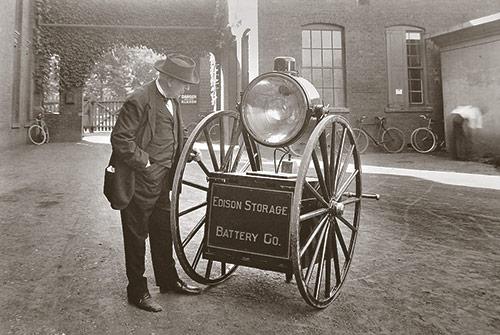 Thomas Edison.
The challenges related to system integration and operation, ranging from cybersecurity concerns to operations and maintenance management, underscore the importance of developing operational guidelines that ensure seamless and secure BESS integration.
The intrinsic value and versatility of BESS in supporting a sustainable, efficient, and resilient grid are undeniable. Successful deployment and implementation require a multifaceted strategy that addresses standardization, safety, system integration, operational excellence, and financially sound use cases in order to unlock the full potential of all types of battery storage solutions within each electric utility.
Through its collaborative approach, AEIC is navigating the electric utility industry through the present landscape of challenges and paving the pathway for future generations of energy storage solutions, ensuring that the industry remains at the forefront of the energy transition.
