

GE Vernova
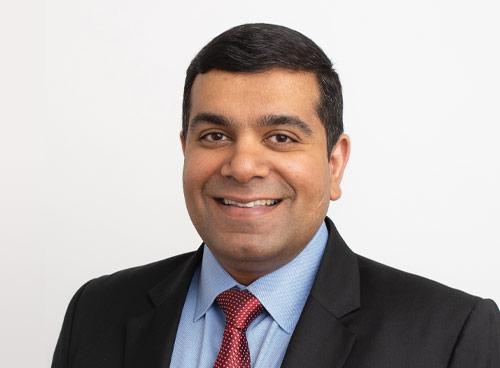
Mahesh Sudhakaran is General Manager-Grid Software at GE Vernova.
The integration of IT/OT is now a reality for the energy and utilities industry under the umbrella of grid orchestration. It's a complicated necessity in the drive toward the energy transition, which is happening at a fast pace.

GE Vernova is using grid orchestration to conquer the challenges of the future grid's ability to manage distributed energy, climate impacts, bidirectional flows, and more. The company has been moving in that direction over the past few years with acquisitions and the launching in 2023 of GridOS, the world's first grid orchestration software.
There is much to learn about this, as the need for orchestration is growing as utilities move along in the journey toward decarbonization. To bring you up to date, Public Utilities Fortnightly went to the expert, Mahesh Sudhakaran, GE Vernova General Manager-Grid Software.
PUF's Steve Mitnick: What is grid orchestration? Where does the term come from? What does it mean?
 Mahesh Sudhakaran: Having AI, machine learning, and data available in the control room enables capabilities that augment operator decisions at a new level, so they can combine insights from systems with situational, on-the-ground experience to make better decisions. That’s going to be a phenomenal unlock for utilities soon.
Mahesh Sudhakaran: You've heard of the word orchestration and might think of an orchestra conductor when you hear the term. This conductor is managing multiple instruments, multiple tempos at scale to create some kind of symphony.
Orchestration as a concept is not new in the technological world. It's existed for a while. It's an IT term that refers to how you coordinate multiple, disparate data applications, capabilities, and services so when they work together, they make sense.
If you look at IT systems, for example CRM or customer engagement systems, they already do that today. The reason they have to do that is because no one system solves everything. You need all these systems operating in concert for this to work, for it to make sense.
This has not been a challenge on the OT side, or on the grid, what is called the business of the grid side. Because in the past you could operate systems separately. Transmission, distribution, and edge could all be different. They're separate business entities for certain utilities.
But now with everything that the energy transition and electrification are throwing at the grid, you can't do that. You cannot do distribution planning without understanding what transmission is doing.
Today, distribution networks are starting to behave like transmission networks because generation is coming on both ends. Where do data centers go? Do they go to the transmission side? Based on the size, is it to the distribution side? How do you manage this grid with all its complexity?
Add renewables, climate change, multidirectional electricity, and cyberattacks and you realize the only way to manage the grid is by orchestrating different, formerly separate systems. We recognized a few years back that the grid required orchestration and have started to build mainstream products around this concept of grid orchestration.
This is how we manage data applications, grid services, and essential services at scale. And this is creating a lot of value across the transmission, distribution, and edge.
PUF: Why is grid orchestration essential for modern utilities?
Mahesh Sudhakaran: The common thread is data. With orchestration, you're exchanging data at scale and in context. In the past, a big part of doing anything was to move data from one place and put it into some kind of data repository.
That created latency in the system because you had to move the data, then present the data. Yes, those approaches are still valid in certain conditions, but the grid operates in real time, so the decisions have to be made very fast.
You also have to solve for the data layer, which makes data available to the right applications at the right time, so you get to value. Doing this in the context of the application becomes critical, and that is something that we are focused on and getting better at.
PUF: A few years ago, GE Vernova came up with an idea that drives orchestration. What was the seminal idea?
Mahesh Sudhakaran: It is not something I would say was seminal. This has been around for a while, and we used to call it IT/OT integration. We always knew the IT world could interact with the OT world to create new value, but it never happened in reality because of the operation and the customer sides of the utility.
You could run IT and OT as separate entities before, but in today's world, how do you do that and effectively tackle the challenge of an adverse weather event? When a storm or hurricane causes an outage, it impacts customers and also has a direct impact on how the utility operates. To address the challenge, we first need to understand what is happening, then how to mitigate it, and how to restore it.
How do you separately respond to cyberattacks? A cyberattack does not differentiate between an IT system or an OT system. How do you manage distributed energy, like an individual solar or a heat pump versus a solar plant at scale? Where does a data center go, on the distribution or transmission side?
These worlds of customers and operations are getting more intertwined. That means the data that goes across these two worlds must become more intertwined.
On the customer side, there's a direct link to customer satisfaction and how the customer perceives all these changes. When these systems are able to talk to each other, IT/OT integration and data orchestration at scale become easier, and we are seeing this at our customer sites around the world.
That is the genesis of GridOS, which is the grid orchestration portfolio we launched in 2023. We've started bringing more capabilities of GridOS to market, and that is helping our customers do things they could never do before.
PUF: If the CEO of one of the utilities says, "We are interested in this," how does that work?
Mahesh Sudhakaran: We have the good fortune of working with most of the large utilities in the world. It's a tremendous responsibility when many of the operational systems that the utilities rely on day to day come from us.
A significant focus for us is helping utilities move from their current reality to grid orchestration, which represents the future grid's ability to manage distributed energy, climate change, climate impacts, and bidirectional flows.
CEOs are hyper aware that the requirements of the grid are changing. The grid had a lot of what I call centralized generation coming from gas turbines, nuclear, and other sources.
That means there's a lot of rotational inertia in the grid. As you get to a world of solar, inverters, and batteries, the amount of inertia on the grid is coming down. That has a direct impact on grid resilience and reliability.
You've got two ways to address these changes: one is to add or expand hardware-based solutions on the grid, and another way is to use software.
Whenever something becomes complicated — you've seen that in every industry — the tendency is to apply software. Given the complexities of the grid today, you cannot run the grid without it.
PUF: Inertia is an important problem, so there are software solutions.
Mahesh Sudhakaran: There are software solutions we are working on to address the challenge at scale. We have customers in the UK, for instance, using technology, especially software, to model inertia. When you can determine effective inertia at a grid at any point in time, you can make smart decisions on how to allocate, distribute, and choose different portfolio elements.
PUF: What are some success stories?
Mahesh Sudhakaran: Grid orchestration makes different capabilities in different systems more available across the board. For example, visual intelligence.
There are a lot of folks trying to do visual intelligence by flying drones, using LiDAR, and collecting a lot of data. It's great because you get the intelligence, but to go from intelligence to insight, this data needs to be combined with the operational rhythms in a utility.
We take the data from visual intelligence systems and combine that with operational insights and operational models to enable use cases like vegetation management to be done at scale, making the operations more efficient. You can also make damage assessment after a storm more effective and planning more proactive. This is software utilities are using today.
At GE Vernova, we are moving proof-of-concept initiatives to commercial production. Another example is applying grid orchestration concepts to the challenge of multidirectional energy.
As electricity becomes more multidirectional, we must look at optimizing and balancing the grid at scale. We do that with software around the globe, and it is creating tremendous value.
PUF: How does the average utility get started?
Mahesh Sudhakaran: Grid orchestration is an imperative that every utility in the world will face at some point. For some, the reality is closer because they're dealing with the challenges of managing the energy transition today.
When you have DERs growing at scale or are facing more frequent and/or severe weather-related outages, it's time to take action. Any conversation on grid orchestration starts with data, and utilities have a lot of data they need to unlock.
It's a journey to take this data and leverage it across different operational entities so your systems can go from managing situations to managing risk. We introduced the GridOS Data Fabric this year and we work with partners in the GridOS ecosystem and with our customers to help utilities use the insight from these systems to get business value.
Once you have data unlocked, you can really start to leverage new technologies like AI. Everyone talks about AI today and for utilities, it is a topic often focused on the customer side. Not much AI is deployed at scale on the operational side because accessing relevant, accurate data is difficult.
Grid orchestration software is designed to unlock data from operational systems to inform AI. AI is only as good as the data you can discover, govern, and utilize, so we are bringing GridOS to market to help unlock AI in a utility.
Visibility and transparency into all of the utility's operational systems can help improve performance. Again, it is not a one-shot solution; this is about going on a journey to making operational systems better.
PUF: Where is this going to be, say three years from now?
Mahesh Sudhakaran: In three years, we hope complex decisions will be easier than they are today. Grid operators need digital support to augment their decisions in the control room.
If a weather event is coming, the number of decisions and the impact of each decision is getting more complicated. Having AI, machine learning, and data available in the control room enables capabilities that augment operator decisions at a new level, so they can combine insights from the systems with situational, on-the-ground experience to make better decisions.
That's going to be a phenomenal unlock for utilities soon. Augmenting the control room is where significant value comes in. Eventually, we could see autonomous operations in some places because data and AI are key to making complex decisions faster, so it might make sense to make some decisions more autonomous.
But this is going to happen in due course because safety, reliability, and resilience are paramount, and explainability is an important challenge these systems need to address over time. Again, we are working hard to make the systems better.
