
GE Vernova
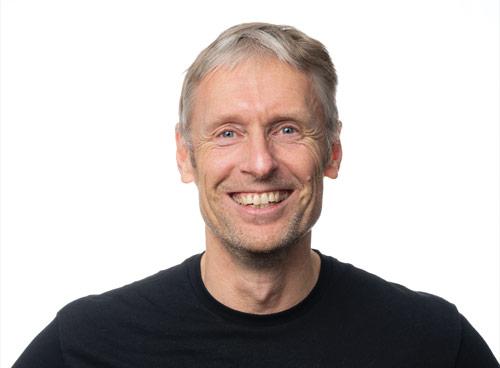
Thorsten Heller is the GridOS Chief Innovation Officer at GE Vernova and the founder of Greenbird Integration Technology AS.
In prior conversations with GE Digital General Manager of Grid Software Mahesh Sudhakaran, the readers of Public Utilities Fortnightly learned about GE Vernova's acquisition of Greenbird Integration Technology AS. It was a big deal because Greenbird specializes in data platforms for utilities and helped allow GE Vernova to aggregate information from multiple systems, permitting grid operators to use GridOS to assemble a real-time snapshot of grid conditions.

Greenbird has solved the problem of data integration models for utilities. It helped with the integration of IT/OT for the energy and utilities industry under the umbrella of grid orchestration to solve for the energy transition's bringing on to the grid bidirectional power flows and more renewables.
Here, GridOS Chief Innovation Officer at GE Vernova Thorsten Heller, also Greenbird founder, went on a deep dive into the huge amounts of data required for the grid now and in the future. It must all be orchestrated and GridOS Data Fabric is designed to solve most of the utility data challenges.
PUF's Steve Mitnick: Leveraging data is crucial to orchestrating a more sustainable grid, especially leveraging the right data. Give an illustration of how utilities can leverage the right data.
 Thorsten Heller: You need a federated data fabric that can bridge distributed data silos between OT systems, grid systems, enterprise systems, and external data sources; one that can handle, aggregate, and set the data into context and then create meaning, a semantic for the data. This is where utilities must start.
Thorsten Heller: I'll start first with some of the challenges utilities have because many utilities are used to thinking of data inside the control room. But now we are moving into a distributed energy system with more distributed energy resources (DERs), like electric vehicles, solar panels or battery storage.
I'm based in Norway, where more than ninety percent of new sold vehicles are now electric. To understand the challenges, you have to think about the impact of those on the network. From an operational point of view on grid infrastructure, not only do you have more data generated from these vehicles, but that data must be processed fast to ensure the grid can handle the demand.
More data is challenge number one. But the right data matters too. Because we get more data from more sensors and grid edge points and get more than data from different data sources.
Look at disruption management. If you want to examine asset health to understand which infrastructure components in the network might have a failure now, or in five minutes, five days, five months, you might want to leverage external data services. You want to combine data about weather, flooding, temperature, and wildfires — data sources you don't own because they're external.
You also want more grid edge or behind-the-meter data, meaning data from assets you don't own. As a utility, you may be operating assets that are aggregated; meaning, you might not even know where these assets are located or what kind of assets they are.
Ultimately, to make sense of what's happening, you must be able to process and integrate data from a wide variety of sources and in huge volume. You want that data to be right, so the meaning, type, and quality of the data must be clear.
Otherwise, you won't be able to confidently use the data for automated grid decisions or forecasts. The exponential growth of DERs, assets, and sensors, and the associated data you must process in these examples represents a huge change in the market.
To answer your question, you need the right data to do predictive maintenance or disruption management. If you are dealing with a wildfire, or preparing for a hurricane to hit, you want to send people to the right place at the right time.
You can do that if you are combining data from operational systems with data from enterprise systems to help you manage the people you are sending, the cost, the resources. Add external data and your planning and preparedness can be that much more effective.
Another example is DER forecasting. To balance the grid, keeping the frequency stable and issues like that, you must know what is happening in your network and at the edge. But you also must know what is happening on the generation, transmission, and distribution sides.
This end-to-end picture across the entire network is needed to keep the grid stable in real time. That is why the data is becoming extremely important because more of the use cases are real-time focused.
To look ahead for the next five minutes or five hours, you forecast. Now, it's moving into real time. That is the big challenge.
PUF: Talk about the challenges.
Thorsten Heller: Today, a lot of the data you need is hidden in data silos. The traditional infrastructure for utilities is separated between OT and IT systems — and many systems were built ten, fifteen, twenty years ago.
We need to federate data to bridge these silos and make it accessible to inform better decisions. This is key to grid orchestration.
Many systems were not built with integration in mind or to handle this tsunami of data. Five or six years ago, a typical SCADA would have handled maybe two million SCADA tags per second.
Now there are more sensors and a greater frequency of collecting the data. You must be able to collect sixty, seventy, eighty million SCADA tags per second.
OT systems are often completely isolated from IT enterprise systems, where you typically have the network model, the asset information, and other important data. Federation helps access data across OT-IT silos and that is the purpose of a grid data fabric and why we offer that as a foundational element of the GridOS software portfolio.
The exponential growth of data is also an issue that utilities have to tackle. You want to process in real time and process fast. It's not only big data, but also fast data. An infrastructure is needed that can handle this huge amount of data at speed.
Finally, being able to assess the meaning of the data is important. With so many data sources, maybe ten different systems involved, is the data you are seeing an accurate measurement? Looking at a voltage measurement data or an ampere measurement, how do you put it in context? How do you identify and locate the assets in your network? What might be the impacts?
So, data silos, the OT-IT challenge, and understanding meaning while setting data into context — those are big challenges for utilities.
PUF: What can utilities do? How can they get started on that journey?
Thorsten Heller: First, utilities need an infrastructure built to be scalable, with a data platform that can handle data in a distributed environment.
That is important because in a utility where the control room has been isolated, a platform that opens the door to distributed data can positively impact analytics. A company like GE Vernova can build this because the functionality and capabilities leverage deep industry experience and benefit from a focus on software development.
Second, the support or the tools to set data into context are needed — meaning you can better understand data and can create a semantic of data that forms across different systems. In simple terms, it is a translator that says, "In system A, it's called A, while in system B, it's called B."
This is the kind of platform functionality we are building with the GridOS Data Fabric. You need a federated data fabric that can bridge distributed data silos between OT systems, grid systems, enterprise systems, and external data sources; one that can handle, aggregate, and set the data into context and then create meaning, a semantic for the data. This is where utilities must start.
PUF: Are there any cases where utilities have done this?
Thorsten Heller: Many utilities have already done this on the IT side. We're helping the OT side get there too. That is where we come in, helping utilities on the control room side.
Two years ago, one of our clients in Asia processed more than four hundred billion messages per year, where each of the messages had up to a thousand measurements included without any downtime. This vast amount of big energy data empowered the utility to deliver on their vision for a smarter and more reliable grid.
In a country like Taiwan, for example, four or five years ago, there were four or five typhoons per year. As the climate changes, they may be facing ten and twelve typhoons in similar timeframes. They need the data to help manage the grid through disruptions like these.
PUF: Look to the grid of the future. What's the goal of data?
Thorsten Heller: The vision, and what I believe the future will be, is an ecosystem for data that allows utilities to optimize their core operational workflows across the entire grid based on the concept of composable systems and composable data.
There will be regional differences. Maybe topology in Taiwan is different from Dewa in Dubai. As a utility, you want to have as much as possible of what I call commodity out-of-the-box functionality, such as operational control room systems and term solutions. But a utility also needs to be able to build its custom applications on top of this data foundation.
Or there might be third-party vendors that have built a complementary and great solution. Instead of them building their own integration solution, this data ecosystem as the backbone of the future grid will make it much easier and faster for utilities to create value and advance the energy transition.
With this approach to data, utilities can build additional capabilities, and third-party companies can plug into this ecosystem. That I believe will be one of the success criteria for the future grid, a platform approach on the data side that allows new capabilities coming from utilities or third parties to easily come onboard.
This data ecosystem is something we believe will be one of the most important parts. The challenging part, and that is what we are solving, is the OT or operational data.
We need operational data backbones. We need a grid-specific data fabric and operational data ecosystems to fulfill the promise of the future grid. Otherwise, we won't be able to handle new sustainability demands.
PUF: Most on the IT side create a data lake or database to have control, which is difficult in the grid environment because data is coming from outside. How does a data fabric work differently than a data lake?
Thorsten Heller: In the data lake, the core concept is centralizing the data. That wouldn't work for grid orchestration because it requires fast access to widely distributed data.
We must choose a distributed approach in how we manage data to cover a broad category of internal and external energy-related data sources. And innovative concepts like data federation and data virtualization are important to ensure we can discover, govern, and utilize the right data at the right time.
For example, we are managing operational data in our data fabric, but you might already have built an IoT optimized data storage for high speed. Instead of copying all the data into our platform, we are virtualizing the different data sources. That creates speed for these real-time scenarios.
The core difference between a data lake that is centralized, and the GridOS Data Fabric is that we use a distributed, decentralized approach, where we are using data federation and data virtualization as concepts to provide data to set data into context without adding any latency to it.
PUF: You can't do Artificial Intelligence without this data.
Thorsten Heller: Two major challenges must be solved to get your AI solution into production. First, you need a huge set of training data, and that is what the data fabric is doing for you — accessing different sources, setting it into context, as well as doing the preparation, cleansing, annotating, and qualities check of the data.
The first thing the data fabric is doing is enabling the training data for the AI model or machine learning. If you don't have good data, you cannot get the value you need from AI. The first thing we are helping to create with the data fabric is good training data.
The second part then is when you have a range of models, you want to use the models in production. That means if you are building an AI-driven forecasting service or look-ahead service for terms, you want to use it in production.
You have to connect all the operational data with external data sources to feed the model. That is part of what the data fabric is doing. It's also helping to provide the operational data that your AI model then is executing.
Then you must run the model and retrain the model with the new data. If the data fabric is enabling both the higher-quality training data and the higher-quality operational data, we believe utilities will be better positioned to leverage AI-empowered applications so crucial to orchestrating a more sustainable grid.
