

Iberian Peninsula Blackout
Hala Ballouz is Founder and Chief Vision Officer at Electric Power Engineers.
Jeff Ressler is CEO at Clean Power Research.
Jared Leader is Sr. Director of Resilience & Globe, Research & Industry Strategy at Smart Electric Power Alliance.
Last April, over fifty-five million people lost power across Portugal, Spain, and parts of France. The outage lasted up to ten hours, caused multiple fatalities, and triggered an international scramble to understand what went wrong. The early theories of cyberattack and insufficient renewable output proved incomplete.
The official analysis from ENTSO-E — the transmission association responsible for secure and coordinated operation of Europe’s electricity grid — pointed to a fundamental misalignment between how the grid was physically behaving and the frameworks still being used to manage it.
Portugal has transformed its electricity system drastically over the past two decades. In response to EU climate commitments and falling technology costs, renewables grew from 30 percent of electricity demand in 2000 to 85 percent by 2024. But as the fuel mix changed, so did the physics.
Traditional synchronous generators provided mechanical inertia to act as a natural shock absorber that resisted sudden frequency swings and bought operators time to respond to disturbances. They also provide other benefits for the system, such as dynamic voltage control and damping capacity.
Inverter-based resources (IBRs) like solar and wind do not currently offer the same benefits for the system. They rely on rapid digital controls rather than mechanical resistance and the margins for error narrow significantly, unless augmented by storage or other fast responding technologies.
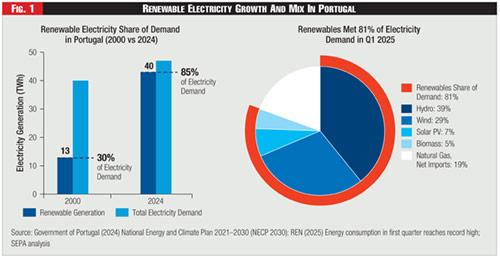 Figure 1 - Renewable Electricity Growth And Mix In Portugal
See Figure 1.
The Iberian Peninsula blackout is a case study the United States cannot ignore. Electricity markets with high IBR penetration and limited external interconnections, such as ERCOT in Texas and CAISO in California, are similar to the semi-isolated nature of the Iberian grid. The centralized regulatory and operating environment in the Southeast also faces similar risks.
Regulators in any jurisdiction can establish interconnection standards that require IBRs to actively contribute to grid stability through solutions like equipment designed with ride-through capabilities, frequency and voltage support, and grid-forming technologies can be a lever as the generation mix continues to shift.
Additionally, integrated planning requirements can make grid-edge resources, flexible loads, and distributed generation visible and dispatchable to system operators, which can give operators the ability to balance supply and demand and support voltage and frequency stability in real time.
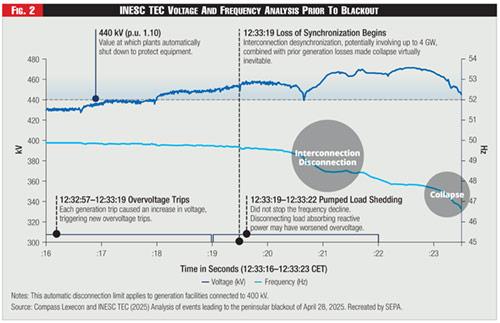 Figure 2 - INESC TEC Voltage And Frequency Analysis Prior To Blackout
More broadly, this reflects a shift the industry is beginning to recognize: Reliability is no longer just about having enough capacity, it is about how well the system is designed and operated as a whole. Policy, market structures, and physical system needs must evolve together. When they don’t, even well-supplied systems can become fragile.
What Happened
According to ENTSO-E’s diagnostic report issued on March 20, 2026, the collapse began with subtle oscillations in power, voltage, and frequency. Grid operators followed established protocols but limited cross-border capacity between the Iberian peninsula and the rest of Europe meant that the system could not draw meaningfully on external support as conditions worsened. The report also mentions that the measures taken by the system operator in Spain to mitigate frequency oscillations had the side effect of increasing voltage.
As voltage progressively increased, generators across the network tripped their automated overvoltage protection systems and disconnected. Each disconnection further reduced reactive power support, driving voltage progressively higher and triggering the next disconnection. Operators attempted load shedding to stabilize frequency, but the cascade outpaced the response and the system collapsed.
See Figure 2.
 Hala Ballouz: Portugal has transformed its electricity system drastically over the past two decades. Renewables grew from 30 percent of electricity demand in 2000 to 85 percent by 2024. But as the fuel mix changed, so did the physics.

The cascade was not caused by a fault or a failure of an element of the grid. It was the lack of scheduled reactive power support, inertia, and damping capabilities in the system, as well as real-time visibility into conditions across the network.
ENTSO-E identified several compounding factors: inconsistent regulatory approaches to voltage management, sudden generation loss from disconnections in Spain, and an uneven distribution of voltage control and reactive power support that left parts of the grid unable to stabilize locally when central coordination failed.
In October 2025, the Smart Electric Power Alliance (SEPA) brought a delegation of U.S. utility executives to Portugal to study its clean energy transition, including lessons learned on the blackout. The SEPA group identified two other structural issues that compounded the risks.
First, operators lacked sufficient visibility into grid edge conditions, such as distributed resources, flexible loads, and localized voltage behavior. Without market pathways and business models that enable flexible load and demand response, operators were limited in responding and managing real-time imbalances although they had additional resources at their disposal.
 Jared Leader: In October 2025, SEPA brought a delegation of U.S. utility executives to Portugal to study its clean energy transition, including lessons learned on the blackout. The SEPA group identified two other structural issues that compounded the risks.
Second, the least-cost electricity market dispatch model can under-commit synchronous resources needed for voltage support and inertia when those reliability attributes are not explicitly valued and procured.
Portugal's and Spain's Response
Updated standards and network codes with more visibility and coordination have been the response by the Iberian countries. Those nations have moved quickly to address the vulnerabilities the blackout exposed.
Portuguese and Spanish regulators are also actively reforming tariff structures to better align price signals with network stress, reflecting cost-causation principles rather than historical peak assumptions. It is also important to highlight that the system operation has changed after the blackout, with more synchronous units coupled on central hours of the day, which has reduced the system’s instability.
At the EU level, regulatory reforms are exploring grid-forming inverter standards, reactive power markets, market design frameworks, and improved dynamic stability tools. The system needs are shifting from energy adequacy toward ensuring the right stability attributes are available at the right times and locations.
 Jeff Ressler: FERC and NERC have made meaningful progress. NERC’s IBR Registration Initiative, now in its final phase, brings previously unregistered small-scale solar and wind resources into operator sight lines for the first time.
The Portuguese government’s Transformation, Recovery, and Resilience program will also commit four billion euros to electricity and natural gas grids, energy storage, and new hydroelectric dams to strengthen the country against both operational stress and longer-term climate risk.
ENTSO-E’s report reinforces this with 22 specific recommendations across four focus areas: voltage control and reactive power, oscillatory stability, disconnection behavior, and defense and restoration.
The U.S. is Not Immune
The risks that surfaced in the Iberian Peninsula are not unique to Europe. The U.S. grid is undergoing the same transformation with more IBRs, less synchronous generation, and an operational environment that is growing more complex faster than the frameworks and static tools governing it.
At the same time, broader forces such as energy independence, resilience, and affordability are shaping how systems evolve, coupled with a realization that reliability must be addressed locally, no matter how many interconnections are in the mix.
The stakes extend beyond keeping the lights on. Geopolitical instability and supply chain pressure have made grid resilience a matter of national energy independence.
A grid that cannot manage its own stability is a liability, regardless of how much generation capacity it holds. The Iberian blackout is a reminder that capacity is no longer king. The ability to see, dispatch, and stabilize resources across the bulk transmission system down to the distribution edge is what a reliable grid requires.
Where the U.S. Stands on Reliability in a Changing Grid
FERC and NERC have made meaningful progress. NERC’s IBR Registration Initiative, now in its final phase, brings previously unregistered small-scale solar and wind resources into operator sight lines for the first time.
FERC Order No. 901, issued in 2023, directed NERC to develop comprehensive IBR reliability standards, including ride-through requirements that keep IBRs connected during voltage and frequency disturbances rather than disconnecting at the moment the system needs them most. Both agencies can go further to shape how RTOs and ISOs model system stability and ensure operators are trained and tested for the low-inertia conditions that are becoming the new normal.
Market design is where significant work remains. Markets built around marginal cost optimization can appear economically efficient while quietly leaving voltage control, reactive power, inertia, and fast frequency response unprocured. As IBR penetration grows, these attributes become both more valuable and harder to secure through the mechanisms in place. That gap is worth examining in any jurisdiction where IBR penetration is accelerating.
Transmission and distribution planning have historically been separate processes, governed by different entities with different regulatory obligations. States across the U.S. are beginning to change that, adopting integrated planning requirements that bring the two systems into alignment and give operators visibility into grid edge resources that were previously outside their sight lines.
When operators can see and dispatch those resources, solar, storage, and flexible loads become active reliability tools. As synchronous generators are retired, the inertia and voltage support they provided must be replaced deliberately. The planning and interconnection standards regulators set can also determine how widely and consistently new technology such as grid-forming inverters and synchronous condensers is deployed.
Looking Ahead
The Iberian blackout is a signal that the rules, tools, and practices governing the grid must keep pace with the generation mix powering it. The U.S. is well positioned to meet that challenge.
Significant work is already underway across federal agencies, regional operators, and utilities. The tools exist. The regulatory levers are in place. And the lessons from Portugal arrived early enough to be instructive rather than cautionary.
Scaling renewables reliably is achievable. It requires treating grid stability not as a byproduct of sufficient generation, but as something that must be actively planned for, procured, and maintained. Utilities, operators, and regulators are already doing that work. The opportunity is to do it more efficiently and intentionally.
