

Proven Technology and Modernized Mechanisms
Darleen DeRosa is Vice President of Regulatory Affairs at Bidgely, leading policy and regulatory strategy in the U.S. and Canada. DeRosa works at the nexus of policy and technology to drive the development of a clean, reliable and responsive grid that empowers and engages customers. At Bidgely, she focuses on creating and supporting regulatory frameworks to enable utility adoption of innovative AI energy analytics solutions at the distribution grid edge. Previously, she served in Fortune 150 utility (Pacific Gas and Electric Company) senior policy and operations roles and at technology firms delivering utility solutions.
Energy affordability is grabbing national headlines as utilities, consumers, tech companies, and voters grapple with rising power costs. For utility commissions, however, affordability is a long-standing obligation codified in state law and regulatory charters to ensure safe, reliable, and affordable service.

Yet as the energy landscape rapidly evolves, striking the right balance among these three core mandates has become increasingly complex for regulatory leaders.
Because affordability is multifaceted by nature, addressing it requires a multifaceted policy approach. In September 2026, the North Carolina Clean Energy Technology Center published "The 50 States of Energy Affordability: September 2026 Quarterly Report" tracking policy actions across the country.
Since June 2026, 42 states, Washington, D.C., and Puerto Rico took a total of 334 actions related to energy affordability. The most frequent approaches targeted customer cost allocation (135), utility oversight and cost recovery (54), and customer cost-saving programs (41).
The report also highlights three dominant trends driving energy affordability policy: state efforts to rein in utility return on equity (ROE), the adoption of explicit affordability metrics, and the promotion of grid utilization metrics that incentivize greater use of existing infrastructure.
 Darleen DeRosa: Long-term affordability cannot be achieved through cost allocation and rate caps alone. It requires state commissioners to align regulatory incentives with investments in digital infrastructure that drive system-wide efficiency.
Combined, these policy steps offer a path to relief from rising utility bills and provide needed support for vulnerable customers. However, long-term affordability cannot be achieved through cost allocation and rate caps alone. It requires state commissioners to align regulatory incentives with investments in digital infrastructure that drive system-wide efficiency.
The Shift to Digital Grid Orchestration
Electric utility load growth, which remained stable at one percent to two percent annually for decades, is no longer predictable. Accelerated electrification — driven by trends like electric vehicle and solar adoption, and the unprecedented scale of the power demands of AI data centers — is bending load curves into complex, more volatile patterns.
Grid planners now face multi-year infrastructure development cycles that cannot keep pace with rapidly shifting load profiles unfolding in near-real time. Also, forecasting future demand by looking backward worked when electric loads and weather patterns were relatively stable over decades, which is no longer the case.
While current regulatory frameworks generally favor "pipes and wires" solutions, the growing realization is that utilities cannot build their way out of these converging challenges with more hard infrastructure.
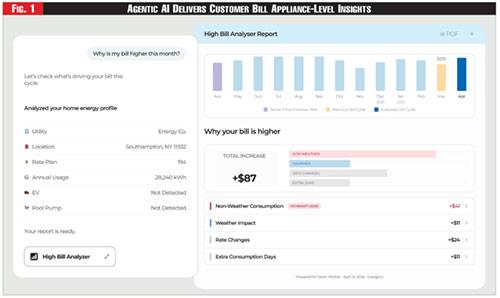 Figure 1 - Agentic AI Delivers Customer Bill Appliance-Level Insights
The focus instead is shifting to maximizing existing grid assets and guiding customers to engage with their energy use through digital tools, like artificial intelligence (AI), cloud computing, and data analytics. This shift optimizes system performance, delivers more cost-effective service, and provides opportunities for customers to lower their bills. These opportunities range from rate plans like Time of Use (TOU and EV TOU), to enrollment in Virtual Power Plant (VPP) or battery programs, to smart thermostat options, and much more.
Real-time data from smart meters and predictive AI analytics give utilities the granular visibility needed to dynamically smooth power flows and relieve peak congestion. With data, utilities are learning to stretch current grid capacity, defer costly new assets such as substations, transformers, and switching equipment, and even improve customer service while reducing cost to serve.
The Role of Autonomous Execution
In the next decade, utilities will not be defined by the physical assets they build, but by how intelligently they orchestrate them.
Predictive AI helps utilities to forecast energy demand. Generative AI synthesizes complex operational data for faster decision making. Now, agentic AI introduces autonomous workflow execution. Given specific operational targets, an AI agent can evaluate complex multi-step processes, connect across enterprise databases, and complete operational workflows automatically under pre-established human oversight rules.
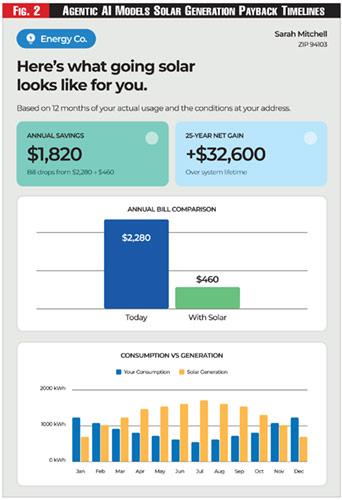 Figure 2 - Agentic AI Models Solar Generation Payback Timelines
Consider this: Where predictive AI forecasts a transformer overload during a summer heatwave, and generative AI drafts an alert to field operations, agentic AI bridges prediction and resolution. It detects the localized demand surge, evaluates real-time distributed energy resource (DER) availability, autonomously issues soft-curtailment signals to enrolled EV chargers on that feeder, and updates grid topology logs to resolve the constraint before an outage occurs. Enrolled customers are even issued a bill credit for helping to shore up the grid during peak demand stress.

Across utility programs, agentic AI functions as an operational multiplier that transforms how utilities interact with both the physical grid and the end consumer:
Customer Experience and Call Prevention. Consumers are increasingly expecting the same instant, transaction-level clarity from their energy provider as they do from mobile banking. Agentic AI meets this expectation by delivering personalized, appliance-level household insights directly to the consumer — explaining exact bill spike drivers to prevent frustrated customers and call escalations, providing interactive voice response (IVR) containment, and equipping contact center representatives with real-time co-pilot intelligence, delivered in natural language, to resolve inquiries on first contact.
Demand-Side Management and DER Integration. Rather than relying on generic conservation tips, agentic AI draws on predictive household intelligence to model realistic solar payback timelines and EV charging impacts using actual meter data reflecting real electricity usage. It monitors feeder congestion, adjusts smart thermostat parameters within customer-approved comfort bands, and dynamically schedules charging times to prevent localized voltage drops.
Proactive Rate Design and Enrollment. As dynamic tariffs grow more complex, AI agents analyze historical meter interval data to evaluate non-obvious savings opportunities, matching households with optimal rate plans and driving peak demand reduction through seamless, automated enrollment.
See Figures 1 and 2.
With agentic AI, utilities can not only engage the right customers at the right time to take the right actions but can ultimately "set it and forget it" once for the required outcome across every customer.
Digital Infrastructure Versus Capital Incentives
As the value, efficiency, and speed to market of digital infrastructure accelerates, automated orchestration offers a practical solution to unprecedented load growth and paves the way for a more flexible, affordable energy future. However, traditional cost-of-service ratemaking creates a structural disincentive by rewarding capital expenditures (CapEx) over operating expenditures (OpEx).
Utility regulatory accounting is complex and varies by jurisdiction. Generally, utility software is characterized as operations and maintenance (O&M), a subset of OpEx, and its treatment depends on multiple factors including how it is used and where it is housed. At a high level, controlling O&M expenses is extremely important for utilities and is managed closely along with CapEx spend.
Existing ratemaking constructs based on physical assets served the centralized grid and its highly predictable load and growth patterns effectively for decades. CapEx investments — earning an allowed return on equity over multi-year development cycles — form the bedrock of utility financing. Because the analytical tools, regulatory structures, and expertise on both the utility and commission sides are well-established, CapEx proposals often remain the familiar first tool for utility planning and funding requests.
By contrast, digital infrastructure — cloud platforms, software subscriptions, and AI tools — has historically been treated primarily as OpEx, earning no capital return. But, as the grid model rapidly evolves, utility funding must evolve alongside it.
While physical infrastructure will always have an essential place in long-term strategic buildouts and to replace existing aging equipment, digital infrastructure is increasingly critical and warrants updated funding structures. Yet as these digital systems expand their role in day-to-day grid operations, traditional lines for regulatory accounting are becoming far less clear.
Traditional evaluation frameworks overlook the fact that software and AI investments can deliver increased cost-effectiveness, grid flexibility, and customer benefits faster and at a lower cost than physical infrastructure.
Agentic AI exemplifies this disconnect because while it does not fit neatly into legacy rate bases, its ability to orchestrate shifting demand curves is increasingly vital for energy affordability.
To give Agentic AI and digital orchestration a more prominent role in utility operations, regulators, utilities, legislatures, consumer groups, and all relevant stakeholders must collaborate to modernize legacy ratemaking where warranted. Expanding the regulatory toolbox to give digital investments equal financial weight alongside physical assets will allow utilities to deploy faster grid flexibility at a lower long-term cost to ratepayers.
Practical Policy Pathways for Regulators
The good news is that regulatory framework modernization is already under way across forward-looking jurisdictions. State commissions, working alongside utility leaders and NARUC committees, such as the Staff Subcommittee on Accounting and Finance, are exploring innovative accounting and ratemaking mechanisms designed to incentivize utilities to deploy agile software platforms alongside traditional physical assets.
As commissions evaluate utility proposals and funding requests, considering the following recommendations may be helpful in the near term:
View Digital Infrastructure as Foundational to Affordability. Recognize that utility investments in digital solutions and data ecosystems are essential to achieving affordability goals. Order and assess utility proposals with this core value proposition in mind.
Establish Incentive Pathways for Software. Create regulatory and accounting frameworks that encourage utilities to propose innovative digital solutions on equal footing with capital builds to meet affordability mandates.
Maximize Existing Data Investments. Direct utilities to implement affordability programs that fully leverage their existing Advanced Metering Infrastructure (AMI) and data ecosystems across operational, program, customer satisfaction, and financial metrics.
Tie Physical Upgrades to Data Utilization. As utilities transition to next-generation infrastructure — such as AMI 1.0 to AMI 2.0 — require upgrade plans to use enterprise-wide data analytics as a key metric for funding approval and performance evaluation. Commissions should also bridge proceeding silos, and consolidate demand-side proceedings where possible, to capture cross-functional benefits for energy efficiency, demand response, Virtual Power Plant (VPP), and other load-management and customer programs.
Elevate Digital Solutions for Non-Wires Alternatives (NWAs). Require Non-Wires Alternatives and virtual capacity proposals to be evaluated alongside traditional infrastructure across cost, deployment speed, and long-term benefits for customers and utilities. Formally recognize AI-driven load orchestration and automated demand-side management as NWA solutions, acknowledging that dynamically shifting EV charging or adjusting thermostatic loads provides the functional equivalent of physical grid capacity more quickly than building assets and at a fraction of the cost.
Regulatory Incentives and the Grid of Tomorrow
Both regulators and utilities continue to iterate on existing practices to meet new challenges. While not all drivers of today's affordability issues fall directly under regulatory or utility control, both entities possess significant levers to affect change.
These levers include proven technology and modernized regulatory mechanisms that let utilities fund digital solutions on the same terms as physical infrastructure. Used together, they can help to slow the growth of customer bills while giving the grid the flexibility it needs to handle rapid load growth.
