

Exploring Japan’s Power Landscape
Dr. Hiroshi Okamoto is a Senior Fellow at TEPCO Holdings with over three decades of leadership in Japan’s electric power industry. Since joining TEPCO in 1993, he has served as Executive Managing Officer of TEPCO Holdings and Vice President of TEPCO Power Grid. His expertise spans grid modernization, regulatory reform, and digital-grid integration. Globally, Dr. Okamoto chairs the CHAdeMO Association and the Institute of Electrical Engineers of Japan (IEEJ), while serving on the IEC Board and CIGRE Steering Committee. He holds a Ph.D. in Electrical Engineering from the University of Tokyo and authored publications on “Utility 3.0.”
Navigating the global energy transition requires balancing rapid demand growth, grid reliability, and decarbonization targets across different regulatory and geographical landscapes. In these pages, an examination of energy issues in Canada and Japan provides insights into how distinct market environments and regional realities demand tailored regulatory solutions.
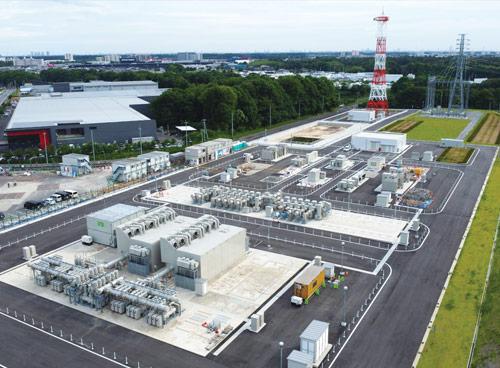
Public Utilities Fortnightly Executive Editor Rachel Bryant talked with two prominent energy leaders who offered vital international perspectives on how market structures, geography, and policy choices shape power system architecture. Together, these conversations provide actionable insights into grid resilience, capacity adequacy, and load integration.
Canadian Renewable Energy Association (CanREA) CEO Vittoria Bellissimo detailed Canada’s province-by-province procurement models and cross-border trade dynamics, while TEPCO Holdings Senior Fellow Hiroshi Okamoto reflected on Japan’s experience managing an electrically isolated, fuel-dependent island grid. Both leaders demonstrate that policy stability, long-term bilateral contracting, and technical collaboration are essential to powering the modern digital economy.
PUF’s Rachel Bryant: Looking back at Japan’s electricity system reform since the early 2000s, alongside your study of United States and European models, what core objectives drove Japan’s unique structural choices?