

Renewables Boost GDP
John Fougere is Senior Strategic Communications Consultant at the Center for Rural Energy Security (CRES) at the University of Missouri. CRES advances unbiased research, education, and collaboration for understanding the implications of federal and state energy policies and technology innovation in rural America.
It has been a long-standing, critical debate across rural America. In an era when the increasing needs for energy production and the infrastructure supporting it continues to spike across the country, what effect do hyperscale renewable energy projects have — economically, environmentally, and culturally — on the rural communities where most such projects are located?
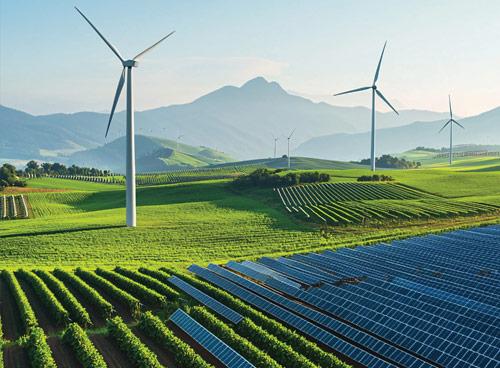
According to the first research study released by the Center for Rural Energy Security (CRES), a new think tank established in 2025 at the University of Missouri, renewable energy and agriculture can co-exist without harming rural economies. The study, “Powering Rural Prosperity: The Local Economic Impact of Utility-Scale Wind and Solar Developments,” was officially released on Sept. 3, 2026, in an event on the University of Missouri campus that included a panel discussion with key statewide stakeholders.
“For counties with wind and solar developments, we found modest positive economic impacts, but the benefits varied across sectors,” said CRES-affiliated faculty Adrienne Ohler, associate professor of applied economics at MU and lead author of the study. “More research is needed to understand why renewable energy is sited in some counties while not in others, as those underlying factors may also influence long-term economic growth.”