Natural Gas

Gas Executives Forum: The New Downstream Dynamic

Gas distributors tell how their business strategies are changing in response to issues such as higher gas prices, electric M&A, LNG, and gas pipeline development. 

Does the push for liquefied natural gas raise more questions than it answers? Will natural-gas prices level off? Gas executives from Duke Energy, New Jersey Natural Gas, National Grid USA, Sempra Energy, and Southern Co. tackle the most pressing issues.

Reversing the Gas Crisis: The Methane Hydrate Solution

Commercialization of methane recovery from coastal deposits of methane hydrates could head off an impending gas shortage.

More than half of the Earth’s organic carbon is in the form of methane hydrates—also known as the ice that burns. U.S. potential is at least 100,000 Tcf., but commercial production has not been achieved.

Roundtable: The Future Of Generation

Meeting tomorrow’s power needs will pose tough choices.

A group of executives and analysts tell Fortnightly that the outlook for generation is positive, because it has to be. But making generation work well—affordably, cleanly, and reliably—won’t be easy.

A Gas Crisis, or Not?

The conclusions made by the NPC gas study raise more questions than they answer.
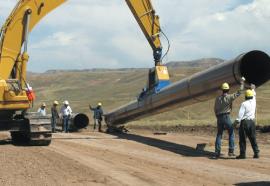
The National Petroleum Council’s study on future U.S. gas supplies raises more questions than it answers. Before the industry acts on the study’s recommendations, it should re-examine the study’s many shortcomings.

Gas Supply: Too little, Too late?

Pipeline and LNG terminal developments may arrive too late to prevent a natural gas disaster.

Alaska’s North Slope gas remains in the pipeline, so to speak, despite the efforts of industry heavyweights to bring the stranded resource to the lower-48 states. Meanwhile, LNG development is beset by questions of safety, siting, and permitting, leaving North America with high gas prices and little clarity about future supply.

Coal: Paying a King's Ransom

What's causing price volatility, and will it last?

The long period of sub-full-cost pricing in the 1990s caused great rationalization in the coal industry, leaving a much healthier and sensible market. One consequence of this is that the floor price for coal in most regions has risen about 25 percent in the last few years. With natural gas prices expected to remain high for some time, those coal markets where ready capacity is at current demand levels will see steadily high prices.

Irreconcilable Differences?

Imported natural gas contains more Btus and fewer impurities than the domestic variety, raising questions for LNG development.

While the gas industry is not yet ready to admit it, there may be a high price to pay to deal with the differences that come from an increase in imports of natural gas from overseas. But the alternative of not paying to avert a natural gas crisis would be irreconcilable.

Natural Gas Storage: Now More Than Ever

Fundamentals in the energy markets are converging to increase the need for incremental gas storage.

The natural gas market is approaching a dramatic turning point. The fundamentals in the energy markets are converging to increase the need for incremental gas storage and the way that storage is used and valued by the customer community.

What Are the Prospects for Coal?

Unless gas prices stabilize, coal prices will continue rising.

Gas prices to power plants have surged in 2003 and rekin­dled interest in new coal-fired power plants. An increasing number of new coal-­fired projects have been announced in the last 12 months. Recently, however, coal prices have begun to creep up, especially in the eastern United States.

The Case Against Gas Dependence

Greater reliance on gas-fired power implies serious economic, technological, and national security risks.

Over the past two decades, the United States has, by default, come to rely on an "In Gas We Trust" energy policy. Is such a dramatic increase in the use of natural gas to generate electricity feasible without straining gas supply and infrastructure?