

Grid
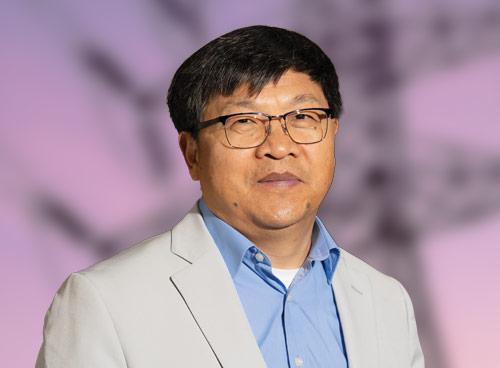
Jason Huang is founder and CEO of TS Conductor, a U.S.-based leader in award-winning, high-performance conductors for global power grids. After earning his MS in materials science and engineering from UCLA and his MBA and PhD from The Ohio State University, Huang worked with U.S. government agencies, including NIST, on sensitive American defense aircraft, and held technical, senior roles at Owens Corning, BAE Systems, Solvay, and CTC Global, where he was CEO and CTO. Today, he is dedicated to driving the global energy expansion, upgrading power grids to increase capacity and efficiency and integrating new generation faster.
The electric grid is facing an absolute tidal wave of new demand from massive data centers and rapid electrification. To keep the lights on and power our future, the industry is completely rewriting the rules of grid modernization.
This month, PUF brings you four innovators who are changing the game from the digital perimeter to the physical edge. We kick things off with Dragos to look at how a rock-solid cybersecurity baseline protects our most automated systems. Next, Rhizome takes us into the world of artificial intelligence to predict macro climate risks before they strike.
Then, TS Conductor drops some serious materials science to show how new wires can double line capacity on existing towers. After that, Osmose shows how to save millions by giving older poles a full second lifespan. Get ready to meet the teams reshaping the modern power grid.
PUF: A pristine risk map is only useful if the circuit can carry the power. Moving from software to physics with TS Conductor, advanced reconductoring looks to double capacity on existing rights-of-way. In an era defined by decade-long greenfield transmission development timelines, how does advanced reconductoring serve as a critical shortcut to effective large load integration?