Law & Lawyers

Autopilot Error

Why similar U.S and Canadian risk profiles yield varied rate-making results.

Cost of capital is often a contentious issue in utility ratemaking. This is due, in part, to the inexact nature of the tools available to financial analysts and the considerable room for divergent opinions on key inputs to cost-of-capital estimation. Perhaps for this very reason, and to achieve regulatory efficiency, Canadian regulators widely adopted a formulaic approach to setting return on equity (ROE). However, an unusual degree of rancor has evolved north of the border as allowed ROEs in Canada, once at parity, have fallen near 200-basis points below their U.S. peers.
Reconsidering Resource Adequacy, Part 2

Capacity planning for the smart grid.

The one-day-in-10-years criterion for capacity planning is coming under scrutiny. Making the most of the smart grid and demand management requires a less conservative approach. Markets and prices rather than administrative rules will ensure resource adequacy in a more efficient way.

Strategic Leadership

Get ready for fundamental changes.

In almost all business and non-profit environments, change is occurring at an accelerating pace. In the electric industry—which used to be stable—we are seeing major changes too. Utilities face growing ambiguity as well as increasing paces of change, uncertainty and complexity. As Irene Sanders stated in Strategic Thinking and the New Science, “[t]hat the future will be different from today is given. What we struggle with is our desire to know how it will be different and what we can do to influence it.”1

FIT in the USA

Constitutional questions about state-mandated renewable tariffs.

Despite state efforts to follow the European model of state-mandated feed-in tariffs to promote renewable power, these actions won’t pass Constitutional muster. The Supremacy Clause makes a formidable legal barrier to states’ FIT policies.

Vendor Neutral

T&D and Smart Grid

The ZigBee Alliance and the Wi-Fi Alliance entered an agreement to collaborate on wireless home area networks (HAN) for smart-grid applications. The initial focus of the collaboration will be ZigBeeSmart Energy Profile 2.0, which is the next-generation energy management protocol for smart grid-enabled homes based on today’s successful ZigBeeSmart Energy Profile. The ZigBeeSmart Energy Profile 2.0 is expected to be extended to operate over Wi-Fi technology as a result of the collaboration.

Do Nuclear Workers Dare?

Whistleblowing case has ramifications for an entire industry.

Should whistleblower-protection provisions of the federal Energy Reorganization Act protect an employee of a small firm that has a staff augmentation contract with a regulated nuclear energy technology company? The battle of the briefs has been blazing in a federal case set to answer that question.

The Incredible Shrinking Reactor

Small is beautiful for nuclear developers.

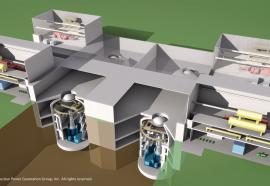
Small modular reactors (SMRs) are nuclear generating units that are about the size of railroad cars and provide about one-tenth to one-fourth the power of full-size reactors. As a result, they cost a fraction of what full-size reactors cost. The reactors are designed to provide between 40 MW and 300 MW of electric power, compared with the 1,100 to 1,700 MW output of larger reactors. In addition, most are expected to cost under $1 billion, compared with the $5 billion to $10 billion price tags of the larger units.

Tipping Point

Industry giants start the EV revolution.

Reports of the electric car’s death are greatly exaggerated. Technology, economics and politics are driving a new start for electric vehicles; already dozens of EV models are heading for U.S. showrooms. Electricity won’t replace gasoline overnight, but utilities are planning today for tomorrow’s transportation load.

Recharging Employees

How to make sustainable performance improvements at any utility.

Sustained performance improvement is often a difficult objective to achieve in a large company. Many such attempts involve various cross-functional initiatives that leave companies with unfinished projects, lower morale and disappointing results. Commonwealth Edison (ComEd) has found that the key to sustained performance improvement is the establishment of a cadre of high-potential managers to address company-wide initiatives full-time.