Nuclear

Do Nuclear Workers Dare?

Whistleblowing case has ramifications for an entire industry.

Should whistleblower-protection provisions of the federal Energy Reorganization Act protect an employee of a small firm that has a staff augmentation contract with a regulated nuclear energy technology company? The battle of the briefs has been blazing in a federal case set to answer that question.

The Incredible Shrinking Reactor

Small is beautiful for nuclear developers.

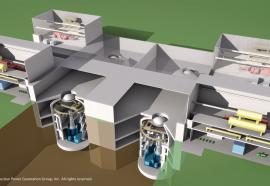
Small modular reactors (SMRs) are nuclear generating units that are about the size of railroad cars and provide about one-tenth to one-fourth the power of full-size reactors. As a result, they cost a fraction of what full-size reactors cost. The reactors are designed to provide between 40 MW and 300 MW of electric power, compared with the 1,100 to 1,700 MW output of larger reactors. In addition, most are expected to cost under $1 billion, compared with the $5 billion to $10 billion price tags of the larger units.

Nuclear Standoff

Can climate-policy brinksmanship create a sustainable nuclear industry?

American voters dashed the nuclear industry’s hopes for a renaissance last November—or so it seemed. Recent developments in Washington have rekindled those hopes, but will climate-policy brinksmanship lead to a sustainable future for nuclear power?

Subsidy Addiction

Government incentives are smothering free enterprise.

When Sen. Lamar Alexander (R-Tenn.) announced legislation in November 2009 aimed at doubling America’s nuclear power capacity within 20 years, he compared the clean-energy challenge to fighting a war. “If we were going to war, we wouldn’t mothball our nuclear navy and start subsidizing sailboats,” he told attendees at the American Nuclear Society’s winter meeting. “If addressing climate change and creating low-cost, reliable energy are national imperatives, we shouldn’t stop building nuclear plants and start subsidizing windmills.”

The Safety Vote

A prerequisite for sustained nuclear renaissance.

The nuclear renaissance requires safety as its central focus. Industry vigilance at all levels is key to accident prevention, but only favorable public opinion will allow the industry to realize its enormous potential.

Five Nuclear Challenges

Building reactors requires new federal commitment.

Several key barriers prevent the construction of a new U.S. nuclear power fleet. These barriers must be overcome to prevent a power-shortfall emergency.

Planning Ahead

Utilities that have new nuclear plants on the drawing board are involved in a host of strategies designed to address water issues. For some, these focus primarily on location. For others, technology is a key.

Water Worries

With new plants pending, cooling requires serious thought.

Cooling water shortages might force nuclear project developers to get creative.

Navigating Nuclear Risks

New approaches to contracting in a post-turnkey world.

Sponsors of new nuclear power projects face a gauntlet of development challenges, from fickle regulatory policies to supply chain uncertainties. By preemptively addressing risks and taking a systematic, hands-on approach to development, companies can improve chances for a nuclear renaissance in America.

Making Peace With Nuclear

When Patrick Moore left Greenpeace—the environmental advocacy group that he helped to create in the early 1970s—some activists labeled him a traitor and a corporate shill. It didn’t stop him, however, from becoming one of the environmental community’s most outspoken advocates for nuclear power development—and one of the harshest critics of anti-nuclear activists. Fortnightly caught up with Moore in February to discuss the state of anti-nuclear advocacy in America.