Law & Lawyers

Selling the Smart Grid - The Backlash

California learns painful lessons from its proposal to mandate demand response.

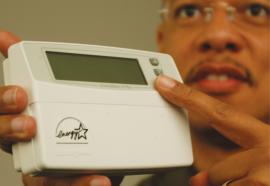
When the California Energy Commission (CEC) proposed to include programmable communicating thermostats in the state’s new building codes, it expected some push-back from home builders. It didn’t expect what it got: a major public outcry.

Selling the Smart Grid - The Policy

Why many state regulators still have qualms about endorsing smart meters.

A year ago, in its formal investigation of state policy on smart meters, the Florida Public Service Commission conceded that while three of the state’s five major investor-owned electric utilities offered an optional time-of-use rate to residential customers, participation in fact remained “typically quite small,” averaging only about 1 percent.

Selling the Smart Grid - The Pitch

Two utilities win customer support for dynamic pricing and demand response.

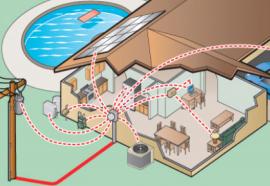
If the recent backlash against California’s proposed new building codes proves anything, it’s that ratepayers won’t buy into the smart-metering concept by themselves. The industry will have to sell it. How then should electric utilities, municipals and cooperatives go about introducing smart grid technologies? Two major utilities—Public Service Electric & Gas (PSE&G) and Southern California Edison—are in the early stages of doing just that

The Late Great Gas Utility

By abandoning R&D and marketing, the gas industry may have sealed its own fate.

Gas producers and utilities have all but abandoned R&D and marketing. Is it too late to reverse the death spiral, or can the industry learn from other check-off marketing successes?

Storm of the Decade

Process changes prepare ComEd to recover quickly from disastrous storm and flood.

Sometimes a bad storm provides the best training ground for a truly terrible storm. An outage in 2006 taught ComEd lessons that helped it recover quickly from the floods of 2007.

No Generator Left Behind

A new theory on capacity markets and the missing money.

On Wednesday May 7, FERC will host a conference in Washington, D.C. that might prove extraordinary. The commission staff promises not only to review the forward capacity markets now operating in New England and PJM—each a story unto itself—but also to discuss a new rate-making theory that has come virtually out of nowhere and which proposes to help solve the notorious “missing money” problem.

Finding the 'Sweet Spot'

As president and CEO of ISO New England, Gordon van Welie has his feet planted firmly on each of two sides of a cultural divide. First, as a transmission system operator, van Welie must keep the lights on and the wires humming. At the same time, he must run a regional market—an ongoing experiment in freewheeling capitalism in an industry fraught with more long-term uncertainty than perhaps any other.

Carbon Transparency

Public companies face rising pressure to disclose climate-change risks.

Regulation of greenhouse-gas (GHG) emissions and other efforts to control these growing environmental concerns increasingly are impacting businesses, and investors are seeking more and better information on climate-change risks to make informed investment decisions.

Letters to the Editor

In light of your prescient Frontlines column, “PURPA Redirected” (February 2008), I am curious of your insight. Is there a nexus between §571 of EISA and the demand response (DR) text in the pending FERC NOPR, RM07-19-000, “Wholesale Competition in Regions with Organized Electric Markets,” issued Feb. 22, 2008?

People

The New York ISO named Mary McGarvey its vice president and chief financial officer. Pacific Gas and Electric Co. announced that its board of directors elected Barbara Barcon as vice president, finance and chief financial officer. Henry B. “Brew” Barron was appointed president, chief executive officer and chief nuclear offer of Constellation Energy Nuclear Group. MidAmerican Energy Holdings Co. announced that Gregory E. Abel became the chief executive officer. And others...