

Women's History Month
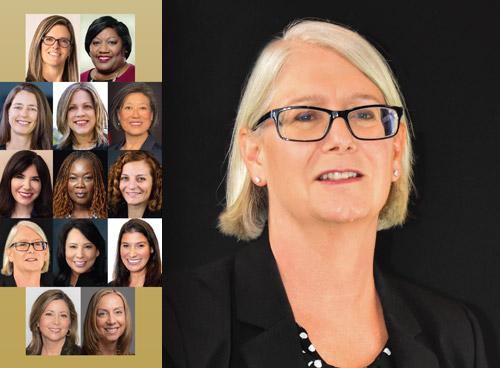
Ann Rendahl is the current President of NARUC, leading the organization of state utility regulators and serving on its Executive Committee and Board. She is also a commissioner on the Washington Utilities and Transportation Commission (UTC), first appointed in 2014 and reappointed through January 2027. Rendahl participates in key industry groups, including the Southwest Power Pool’s Markets+ States Committee and advisory councils for EPRI and several university utility programs. Before joining the UTC, she held senior legal and policy roles there. She holds degrees from Wellesley College, UC Berkeley, and UC Law San Francisco.
In recognition of Women’s History Month, PUF sat down with thirteen women leaders across the energy sector to capture their perspectives at a pivotal moment for our industry.
Demand is rising. Infrastructure investment is accelerating. Utilities, regulators, and innovators are navigating increasing expectations around affordability, reliability, and resilience. In this environment, leadership is not theoretical. It is operational. Decisions made today will shape markets, systems, and communities for decades.
The women featured here represent the breadth of the modern grid. Their roles span utilities, regulatory commissions, federal public power, trade associations, research institutions, consumer advocacy offices, and technology companies. The perspectives are varied, but several themes recur: translating complexity into clarity, balancing competing priorities, preparing the workforce of the future, and keeping customers at the center of the conversation.
These conversations are not a single narrative. They are a collection of viewpoints reflecting the realities of leadership in motion. Together, they offer insight into how this essential industry is being guided forward at a time of significant change.
PUF’s Rachel Bryant: How did you find your way into the world of energy regulation?
Commissioner Ann Rendahl: I always knew I wanted to work in public service. I earned a degree in public policy and a law degree at the same time, but I was a generalist at heart.
During law school, I took an internship in the legal division at the California Public Utilities Commission. That experience is what first exposed me to this work. At the time, I did not know much about utility regulation.
What drew me in was administrative law. I was fascinated by how agencies operate, how policy becomes practice, and how decisions affect people in very real ways. When I later worked in the Washington Attorney General’s Office representing the Washington Utilities and Transportation Commission, I began to see the scope of the work and its impact.
One person who shaped me early on was our division director, Jeff Goltz. He was a mentor in every sense of the word. He gave me room to grow, which also meant I had room to make mistakes. But mistakes are how you learn.
He modeled leadership with integrity and humanity. Years later, he returned to the Commission as Chair, and I had the opportunity to work alongside him again. When he left, I ultimately took his seat on the Commission. It is a full-circle story I still find remarkable.
PUF: When did you realize this industry was where you wanted to stay?
Commissioner Ann Rendahl: Early in my career, I worked on transportation enforcement, trucking permits, railroad safety, and pipeline safety. Then the Telecommunications Act of 1996 reshaped the telecommunications industry, and I found myself deeply involved in competitive telecommunications cases.
Over time, the focus shifted more heavily to energy. What has kept me here is that the structure of the work is familiar, but the substance is always evolving. The issues change. The industries change. There is always something new to learn. It is never dull.
PUF: What advice has stayed with you over the years?
Commissioner Ann Rendahl: One of the best pieces of advice I received was simple: if you do not know the answer, say so. Do not bluff. Do not dig a hole. Just say you will find out and follow up. That builds credibility. It builds trust. And it reinforces integrity.
I have also learned a great deal simply by watching people. You observe how leaders treat others, how they conduct themselves in a room, how they handle disagreement.
Sometimes you learn what to do. Sometimes you learn what not to do. Leadership lessons are often less about words and more about examples.

PUF: Has your view of leadership changed over time?
Commissioner Ann Rendahl: Absolutely. Early in my career, when I first became a manager, I thought leadership was about managing people and getting work done. Over time, I realized it is much more about relationships.
It is about how you show up. It is about the opportunities you give others. It is about helping people grow into their own strengths. That can be difficult. As you move through roles, your relationships shift.
When I was an attorney appearing before the Commission, I interacted with people one way. As an administrative law judge, the dynamic changed. As a senior manager, it shifted again. You have to constantly recalibrate.
I am still learning. Leadership is not something you master and then check off a list. It evolves.
PUF: You have stepped into the presidency of NARUC at a time of rapid change. How do you lead through pressure and uncertainty?
Commissioner Ann Rendahl: The last several years have tested all of us. Post-COVID, we saw significant turnover and heavy workloads. At the same time, Washington has had major legislative direction on clean energy and implementing our Climate Commitment Act. Implementation is hard, especially when resources are stretched.
What has made a difference is maintaining a collective message. We may not agree on everything, but we are on the same path. We are working toward solutions together. Perfection is not achievable, but we can focus on doing the work thoughtfully and moving forward.
In this industry, we provide an essential service. That matters. While we certainly have disagreements, we cannot afford to let polarization derail the mission. At the end of the day, we are here to keep the lights on, keep service safe, and keep rates as affordable as possible.
PUF: What do you see as the most pressing issue right now?
Commissioner Ann Rendahl: We need to build infrastructure, and we need to do it quickly. Load growth from data centers, manufacturing, electrification, and other sources is significant. Meeting that demand requires investment.
At the same time, we have to be mindful of affordability. A meaningful percentage of customers are at or below the federal poverty level. Others are just above it. There is a limit to what customers can absorb.
If rates increase beyond what people can pay, the burden shifts to other customers through uncollectible costs. Balancing infrastructure needs with affordability is one of the most difficult challenges we face.
PUF: When you look back, are there decisions that stand out as pivotal?
Commissioner Ann Rendahl: There are several cases over the years that required complex negotiations and creative problem solving. One early example involved determining rate structures for a low-level radioactive waste compact site.
We had to reconcile vastly different cost drivers and stakeholders. It took multiple attempts, but ultimately, we reached a settlement that has held for years. That felt like a win.
Over time, industries change, and regulatory frameworks have to adapt. Whether involving transportation companies, energy utilities, or climate policy implementation, the work often involves bringing people together who do not fully agree and finding a path forward. When we do that successfully, it is meaningful.
PUF: Your NARUC theme is, Uniting Regulators, Harmonizing Impact. What does that mean to you?
Commissioner Ann Rendahl: It is a three-year theme developed in collaboration with our incoming leadership. Uniting regulators does not mean we all adopt the same policies. States have different circumstances and priorities.
It means sharing information, learning from one another, and identifying what works. For example, as states grapple with large-load tariffs and data center growth, Commissioners are actively sharing approaches. That kind of collaboration allows us to harmonize impact nationally without sacrificing state authority.
PUF: As part of this Women’s History focus, what would you say to someone aspiring to lead in this field?
Commissioner Ann Rendahl: Imposter syndrome is real. Many people, especially women, experience it. Early in my career, I often questioned whether I belonged in the room.
At some point, I realized I had to project confidence even when I felt uncertain. If you shrink back, you remove yourself from the conversation. If you speak up, you give yourself a chance to contribute. You lose nothing by engaging.
This applies to everyone, not just women. But I do think women experience it more acutely. Sit at the table. Participate. Even if you are the only woman in the room, you deserve to be there. And once you are there, do the work. Earn your place. Support others coming behind you.
We are all human. We are all doing our best. Leadership is not about perfection. It is about integrity, courage, and showing up consistently.
Women’s History Month articles at fortnightly.com
- Doseke Akporiaye, WRISE Executive Director
- Hannah Bascom, Uplight Chief Growth and Commercial Officer
- Michele Beck, Utah Office of Consumer Services Director
- Vittoria Bellissimo, CanREA President and CEO
- Judy Chang, FERC Commissioner
- Neva Espinoza, EPRI Senior Vice President, Energy Supply, and Chief Generation Officer
- Sonia Kastner, Pano AI Co-Founder and CEO
- Maria Korsnick, Nuclear Energy Institute CEO
- Tracey LeBeau, WAPA Administrator and CEO
- Michele O'Connell, Orange and Rockland Utilities CEO
- Ann Rendahl, NARUC President
- Melissa Washington, ComEd Senior Vice President
- Alice Yake, Breakthrough Energy Vice President, GRIDS
