

Women's History Month
Michele Beck is the Director of the Utah Office of Consumer Services. Serving as Utah’s utility consumer advocate since 2007, she advocates on behalf of Utah’s residential and small commercial consumers of public utilities. In addition to state utility regulatory work, Ms. Beck focuses on regional energy markets and electric reliability issues including serving on several regional and national boards and advisory councils on behalf of consumers and consumer advocates. Prior to her work in Utah, Ms. Beck worked for over a decade in various positions in the electric industry in the Midwest.
In recognition of Women’s History Month, PUF sat down with thirteen women leaders across the energy sector to capture their perspectives at a pivotal moment for our industry.
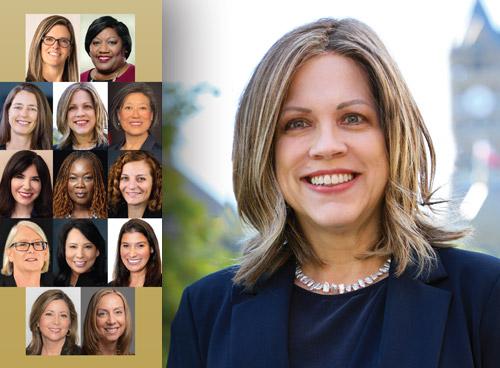
Demand is rising. Infrastructure investment is accelerating. Utilities, regulators, and innovators are navigating increasing expectations around affordability, reliability, and resilience. In this environment, leadership is not theoretical. It is operational. Decisions made today will shape markets, systems, and communities for decades.
The women featured here represent the breadth of the modern grid. Their roles span utilities, regulatory commissions, federal public power, trade associations, research institutions, consumer advocacy offices, and technology companies. The perspectives are varied, but several themes recur: translating complexity into clarity, balancing competing priorities, preparing the workforce of the future, and keeping customers at the center of the conversation.
These conversations are not a single narrative. They are a collection of viewpoints reflecting the realities of leadership in motion. Together, they offer insight into how this essential industry is being guided forward at a time of significant change.
PUF’s Rachel Bryant: When you look back, did you always see yourself working in energy, or did you take a few turns before you landed in consumer advocacy?
Michele Beck: My path here was not pre-planned. I studied political science in college and, after graduating, worked a variety of jobs to pay the bills before deciding to go back to graduate school. Grad school focused my studies but still didn’t create an obvious career path. I sort of accidentally landed in a job at a regulatory agency, even though I did not know much about utilities at the time.
It turns out I absolutely love this work, including the parts people might assume are boring, like deep regulatory analysis. I have learned that digging into the details to protect consumers is a great fit for me.
PUF: When you look back, are there any early lessons that shaped how you lead today?
Michele Beck: One of the most important lessons I learned came in my twenties, when I felt stuck in a job doing work that seemed pointless. A friend gave me advice I have never forgotten. “Whatever you’re doing,” she said, “be the best at it. Don’t get lazy just because it isn’t your dream job. If you do your best at every job, you build the habit of excellence, and when the right opportunity comes along, you’ll be ready.”
I no longer believe any experience is wasted if you approach it seriously and learn from it. I have shared that perspective with younger colleagues many times.
Even early-career detours and odd jobs teach you skills that matter later, like how to communicate, how to show up consistently, how to adapt, and how to work well with others. Those lessons often become most valuable once you step into leadership roles.
My advice is simple: take every job seriously, do it well, and keep learning. You never know which experience will end up preparing you for what comes next.
PUF: You’ve spent many years as Utah’s consumer advocate. What does your office do, and what do you most want the average customer to know about your work?
Michele Beck: The Office of Consumer Services represents residential and small commercial customers in utility matters, and our work is about fairness. We review everything a utility files, from rate cases to changes in billing terms and new program proposals. Because our resources are limited, we focus on filings with the greatest impact on everyday customers.

Our team takes a close look at what a utility is proposing and asks a straightforward question: is this justified? There are legitimate reasons costs increase, such as replacing aging infrastructure or complying with new requirements.
Our role is to make sure customers are paying their fair share. When something does not add up, we challenge it.
We see ourselves as the voice at the table that keeps discussions grounded in outcomes for the smaller customers who can’t be there to represent themselves. The goal is affordable, reliable service for people and small businesses. I often tell folks they may not have heard of our office, but we are working for them every day.
PUF: Advocacy can be an uphill battle, and not every argument you make will succeed. How do you stay motivated, and how do you keep your team motivated?
Michele Beck: I remind my team that we must take the long view of our work. In consumer advocacy, quick, clean wins are rare, so success has to be defined differently. In fact, when I hire someone, one of my first questions is, “How do you define success in your job?”
I look for people who are mission-driven and who take satisfaction in serving the public interest. When a case does not go the way we hoped, we do not treat it as a simple loss. We debrief and ask whether we made a difference. The decision may not go our way, but were our arguments heard? Did we move the conversation forward?
I often tell my team this job is like gardening. The work is never finished. You are always planting seeds, tending them, and waiting for them to grow. I have been doing this for more than thirty years, and I have seen some of those seeds bloom.
I share those stories with newer analysts, so they understand their work matters, even when the payoff is not immediate. Keeping that long-term perspective is what motivates me, and I think it motivates the team as well.
PUF: Can you share an important decision in your career that shaped where you are today?
Michele Beck: Years ago, I was a few years into a job when organizational changes did not go in my favor. I was frustrated and reached a breaking point. I said, “That’s it, I’m out of here,” and I left.
I moved into a different position that was not the right fit for me. For a long time, I saw that decision as a mistake, as if I had taken a wrong turn and set my career back. With hindsight, I see it very differently. Following my gut was the right move.
What appeared to be a wrong turn actually led directly to an opportunity that put me on the path to where I am now. It was a necessary step, even though it felt like a detour at the time.
The lesson for me was to trust your instincts when it is time for a change. Sometimes what feels like a short-term failure creates space for long-term success. Honoring that instinct ultimately led me to work I find incredibly fulfilling.
PUF: From your perspective, what is the most pressing issue facing the energy industry right now, and why does it matter to you personally?
Michele Beck: Affordability. That is very on brand for a consumer advocate, but it is also true. What worries me is that although everyone seems to now be talking about affordability, I am not sure we are actually addressing it.
I will go to a conference, see a panel titled “Affordability,” and then watch the discussion drift into something that only loosely connects back to customer bills. Simply repeating the word does not solve the problem. We owe it to customers to move past talk and into action.
Of course, we cannot just freeze spending. Utilities still must replace aging infrastructure, harden systems against wildfire and extreme weather, meet reliability expectations, and pursue policy goals established in their jurisdictions.
Those investments are necessary, but they put upward pressure on rates. That is the real tension. How do we manage costs so customers can afford everything society is asking the energy system to do?
I think many of the answers are in the fundamentals. We need rigorous evaluation of the costs and benefits of every project and program.
Some of the tried and true principles, like prudence reviews and cost-benefit analysis, still matter and need to be applied diligently. Innovation has a role, but we cannot abandon the basics that keep utilities efficient and accountable.
Affordability keeps me up at night. Energy is a fundamental necessity so we must keep it accessible for everyone, even as we invest in modernization. We are all talking about affordability. Now we need more concrete efforts to improve it.
Women’s History Month articles at fortnightly.com
- Doseke Akporiaye, WRISE Executive Director
- Hannah Bascom, Uplight Chief Growth and Commercial Officer
- Michele Beck, Utah Office of Consumer Services Director
- Vittoria Bellissimo, CanREA President and CEO
- Judy Chang, FERC Commissioner
- Neva Espinoza, EPRI Senior Vice President, Energy Supply, and Chief Generation Officer
- Sonia Kastner, Pano AI Co-Founder and CEO
- Maria Korsnick, Nuclear Energy Institute CEO
- Tracey LeBeau, WAPA Administrator and CEO
- Michele O'Connell, Orange and Rockland Utilities CEO
- Ann Rendahl, NARUC President
- Melissa Washington, ComEd Senior Vice President
- Alice Yake, Breakthrough Energy Vice President, GRIDS
