

Women's History Month
Doseke Akporiaye has spent two decades building organizations at the intersection of business strategy and social impact. As a global business executive, she has founded consulting firms, guided market expansion, shaped enterprise strategy, and led teams across industries – always focused on creating inclusive, high-performing organizations that deliver lasting value. Most recently, as Managing Director and Board Member of Oolu Energy, Doseke helped expand clean, affordable energy access to millions across Africa’s underserved communities while driving organizational growth and operational excellence. Now, as Executive Director of Women of Renewable Industries and Sustainable Energy (WRISE), she leads national efforts to advance women’s leadership, development, visibility, and impact across the clean energy and sustainability ecosystem.
In recognition of Women’s History Month, PUF sat down with thirteen women leaders across the energy sector to capture their perspectives at a pivotal moment for our industry.
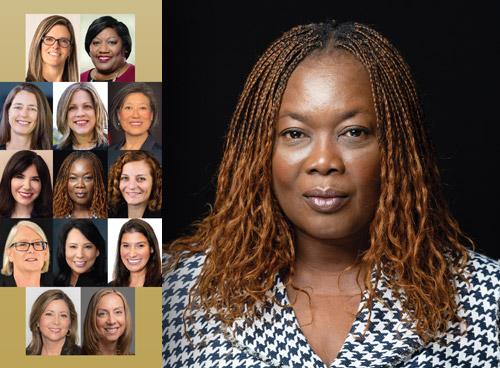
Demand is rising. Infrastructure investment is accelerating. Utilities, regulators, and innovators are navigating increasing expectations around affordability, reliability, and resilience. In this environment, leadership is not theoretical. It is operational. Decisions made today will shape markets, systems, and communities for decades.
The women featured here represent the breadth of the modern grid. Their roles span utilities, regulatory commissions, federal public power, trade associations, research institutions, consumer advocacy offices, and technology companies. The perspectives are varied, but several themes recur: translating complexity into clarity, balancing competing priorities, preparing the workforce of the future, and keeping customers at the center of the conversation.
These conversations are not a single narrative. They are a collection of viewpoints reflecting the realities of leadership in motion. Together, they offer insight into how this essential industry is being guided forward at a time of significant change.
PUF’s Rachel Bryant: Before you were leading a national organization, there were a lot of experiences that shaped you. When you look back, what really stands out?
Doseke Akporiaye: When I reflect on it, what stands out most is that curiosity has guided almost every step. I have been fortunate, and I recognize the privilege in this, that I have been able to move toward what genuinely interested me and what felt meaningful at the time.
I studied computer science simply because I wanted to understand how things worked. Computers were becoming more accessible, and I was fascinated by the possibilities. That instinct to learn and explore new spaces has been foundational to my career.
One of the most formative roles I ever had was working at the front desk of a tech company. I didn’t choose this job because of what it asked of me, but for what it could teach me and how it could humble me.
What I did not realize at the time was how much that role would shape me. It taught me to listen. It taught me to serve. It reminded me not to take myself too seriously. I learned that if I showed up and did excellent work wherever I was, more doors would open.
That perspective continues to inform how I lead. I see leadership as service. I am there to support the community and the stakeholders I represent. My journey has always been about curiosity, learning, innovation, and meaning. In my life, work has been about more than just earning a paycheck, it has been my most powerful opportunity to live out these values and connect to something larger than myself.
PUF: What drew you to lead Women of Renewable Industries and Sustainable Energy (WRISE)?
Doseke Akporiaye: The focus on women. I deeply believe that women play an instrumental role in transforming society.
I have seen firsthand how empowered women transform families and communities. There is a ripple effect. When women are equipped and supported, their impact multiplies.
When I looked at WRISE, I saw a community of women who wanted to change the industry and were looking for a space to grow and support one another. I didn’t have that when I was coming up. If I had, my journey might have been easier.
It felt like a privilege to advocate for this community. A privilege to amplify their stories. A privilege to influence systems and structures so they can thrive.
My leadership strategy is rooted in totality. Women are not just technicians or executives. They are whole people. They are thinking about career advancement, but also caregiving, fertility, finances, relationships, and health. If we are creating programming, we should address the full picture.
That is why WRISE invests in both personal and professional development. We have our flagship WRISE Leadership Forum Conference, but we also have forty-nine chapters across the country. Those chapters are run by incredible volunteers who curate experiences locally. What someone in New York needs may differ from someone in California. Giving chapters some level of autonomy allows the community to build what they need.

PUF: From your perspective, what feels most pressing for the energy industry right now?
Doseke Akporiaye: We are at a pivotal moment. There is uncertainty, and in times like this, organizations can become cautious. This is a time for focus and intention, not retreat.
One of the most pressing issues is how we tell the story of where the energy industry is headed. Conversations around affordability, reliability, and new technologies can become polarized. But most people want the same things: dependable service, reasonable costs, and systems that support long-term economic growth.
We have not always told that story clearly. Energy policy can feel abstract, and infrastructure can feel distant. If we cannot connect investments to families, jobs, and opportunity, people will disengage. The story matters because it shapes understanding and understanding builds trust.
I am also thinking about equity as the industry evolves. As infrastructure expands and technologies scale, we have to be intentional about who benefits.
Underserved and marginalized groups and communities should not be an afterthought. There are meaningful workforce pathways across this industry, including for veterans and others seeking access to stable careers and it is our collective responsibility to continue creating and growing these opportunities.
The industry will continue changing. The question is whether we approach that change thoughtfully and inclusively, and whether people can see themselves and others in the future we are building.
PUF: The energy industry has seen a lot of change in recent years. How do you lead through periods of uncertainty?
Doseke Akporiaye: Change is constant in this industry. Markets shift. Policies evolve. Technologies advance. When things move quickly, people can feel unsettled. In those moments, a leader’s first responsibility is honesty.
You do not gloss over challenges. You acknowledge what is difficult and create space for people to express what they are feeling. That does not mean amplifying fear. It means recognizing reality and addressing it directly.
The second piece is clarity. When the environment feels noisy, people need to be reminded of purpose. Why are we here? What have we accomplished? What impact are we still capable of making? I see part of my role as reinforcing that vision constantly and consistently. If you think you have communicated it enough, you probably have not.
It also means supporting people as they navigate decisions about their own paths. The energy sector touches many adjacent industries, and there are multiple ways to stay connected to the work.
Ultimately, leadership during change requires steadiness. Transparency, empathy, and consistency build trust. Sometimes leadership is visible. Other times it is simply listening and reminding people they are not navigating change alone.
PUF: What do you wish more people understood about women and underrepresented communities in energy?
Doseke Akporiaye: Everyone brings something to the table.
You cannot effectively serve a demographic that is not represented in your decision making. Women and underserved communities bring lived experiences that shape better products and services, better policies, and better outcomes.
I would also emphasize succession. Leadership is transient. None of us will be in our roles forever.
When I step into a leadership role, I do so with the intent to eventually make myself redundant. That mindset forces me to invest in the next generation and ask: Who will lead after me? Am I equipping them? Am I removing barriers?
If we are not intentional about building leaders, the industry will stagnate. Whether you are in a utility, a regulatory office, or a nonprofit, you have to ask what you are doing today to prepare those who will take this work further than you did.
That responsibility goes beyond commercial success. It is about sustaining impact.
PUF: In a moment that can feel heavy at times, what keeps you grounded and optimistic about this work?
Doseke Akporiaye: The community. When I see women supporting one another, mentoring one another, and advocating for one another, I am reminded why this work matters.
When I see chapters thriving and volunteers dedicating their time to build something bigger than themselves, it reinforces that this is more than an organization.
This industry is complex and, at times, politically charged. But at its core, it is about people. It is about powering homes, schools, hospitals, and businesses. It is about economic mobility and resilience. When I return to that, it becomes clear the work is worth it.
Women’s History Month articles at fortnightly.com
- Doseke Akporiaye, WRISE Executive Director
- Hannah Bascom, Uplight Chief Growth and Commercial Officer
- Michele Beck, Utah Office of Consumer Services Director
- Vittoria Bellissimo, CanREA President and CEO
- Judy Chang, FERC Commissioner
- Neva Espinoza, EPRI Senior Vice President, Energy Supply, and Chief Generation Officer
- Sonia Kastner, Pano AI Co-Founder and CEO
- Maria Korsnick, Nuclear Energy Institute CEO
- Tracey LeBeau, WAPA Administrator and CEO
- Michele O'Connell, Orange and Rockland Utilities CEO
- Ann Rendahl, NARUC President
- Melissa Washington, ComEd Senior Vice President
- Alice Yake, Breakthrough Energy Vice President, GRIDS
