

Women's History Month
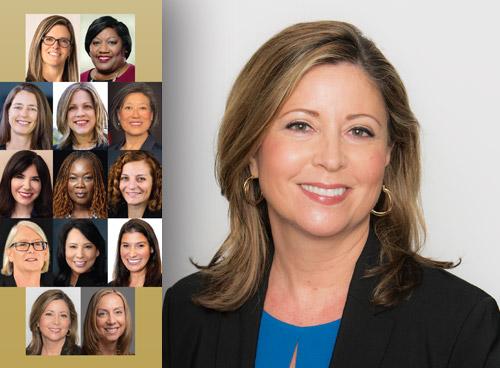
Maria Korsnick has served as president and chief executive officer of the Nuclear Energy Institute since 2017, leading the industry’s policy organization in Washington, D.C. An engineer by training, she previously was senior vice president of Northeast Operations at Exelon, overseeing multiple nuclear plants. Before Exelon, she was chief nuclear officer and acting CEO of Constellation Energy Nuclear Group, where she began her career in 1986 and advanced through roles from engineer to executive leadership. Korsnick holds a nuclear engineering degree from the University of Maryland and lives in Maryland with her husband; they have two adult children.
In recognition of Women’s History Month, PUF sat down with thirteen women leaders across the energy sector to capture their perspectives at a pivotal moment for our industry.
Demand is rising. Infrastructure investment is accelerating. Utilities, regulators, and innovators are navigating increasing expectations around affordability, reliability, and resilience. In this environment, leadership is not theoretical. It is operational. Decisions made today will shape markets, systems, and communities for decades.
The women featured here represent the breadth of the modern grid. Their roles span utilities, regulatory commissions, federal public power, trade associations, research institutions, consumer advocacy offices, and technology companies. The perspectives are varied, but several themes recur: translating complexity into clarity, balancing competing priorities, preparing the workforce of the future, and keeping customers at the center of the conversation.
These conversations are not a single narrative. They are a collection of viewpoints reflecting the realities of leadership in motion. Together, they offer insight into how this essential industry is being guided forward at a time of significant change.
PUF’s Rachel Bryant: Most of us do not grow up imagining we will work in nuclear energy, much less lead in it. When you look back, where did your path begin?
Maria Korsnick: It started in high school, around the time of the Three Mile Island accident. I remember watching the news coverage and feeling struck by how unclear everything seemed. Even the President visited the control room, which underscored how significant the moment was.
What stayed with me was not fear, but curiosity. If my family lived near that plant, I would want to understand what was happening. I would want to know how the systems worked and whether they were truly safe.
That instinct to understand rather than react is what led me to major in nuclear engineering. I also minored in chemical engineering, but nuclear was where my interest truly took hold.
More than forty years later, I am still in the field. What began as curiosity evolved into a deep respect for the rigor, discipline, and responsibility that nuclear energy demands. It is an industry built on precision and accountability, and I have always appreciated that.
PUF: Early in your career, was there a decision that shaped everything that followed?
Maria Korsnick: When you work at a nuclear power plant, a common progression is to move into the control room as an operator. At the time, there were no women in that role at my site, and I decided to pursue it anyway.
Becoming a senior reactor operator is a two-year training program. It requires mastering the plant’s systems and preparing to make real-time decisions that affect safety and reliability. I was the first woman at my plant to go down that path, but what mattered most was what the role taught me.
The control room is the nerve center of the plant. You gain an integrated view of how every system fits together. You understand how electrical, mechanical, and safety systems interact. You see how regulatory requirements shape operations and are constantly synthesizing information.
You are also at a crossroads of people and communication. Maintenance teams, engineers, work management, supervisors, and other operators all connect through that space. It forces you to think beyond your own area of expertise. You learn to listen carefully and to communicate clearly, especially under pressure.
I saw firsthand how decisions in one area can ripple across an entire organization. I built relationships across departments and developed confidence in making decisions grounded in safety and clarity.
PUF: Nuclear is still often misunderstood from the outside. What do you wish more people appreciated?
Maria Korsnick: I often say that I love nuclear energy because I know it from the inside out. I have worked in plants and across the industry my entire career. I am not sure everyone appreciates the strength of the safety culture that surrounds nuclear power.
I’ll say something that usually surprises people: I love nuclear waste. Every form of energy has a waste stream. What distinguishes nuclear is that we fully understand ours.
It is carefully tracked, securely stored, and responsibly managed. There is transparency and accountability. There are clear regulatory requirements and long-term planning.

As we move forward, there will be additional solutions, whether that is consolidated interim storage, permanent disposal, or advanced fuel-cycle technologies. But even today, the material is handled safely and deliberately. That is not an afterthought. It is a core part of how we operate.
Nuclear provides reliable, carbon-free energy at scale. It operates around the clock. It supports grid stability and resilience. And it does so within one of the most robust regulatory frameworks in the world.
That combination of reliability, environmental benefit, and discipline is something I believe deserves greater recognition.
PUF: As you moved into broader leadership roles, how did your approach evolve?
Maria Korsnick: Leadership begins with sincerity. People can sense quickly if you are not genuine. I am passionate about nuclear energy because I have lived it. That authenticity matters.
Over time, I have learned that leadership is less about having all the answers and more about creating clarity. It is about communicating direction, listening carefully, and aligning people around a shared mission.
The individuals in this industry care deeply about what they do. They understand the responsibility that comes with providing reliable power. My role is not to issue directives from a distance. It is to connect, engage, and reinforce why our work matters.
When people believe in the mission, they bring their best efforts. Nuclear provides reliable, carbon-free electricity every day. The people behind that work deserve leadership that recognizes their commitment and provides confidence in where we are headed.
PUF: What has leading through complex and high-pressure moments taught you?
Maria Korsnick: From the outside, careers can look linear and smooth. In reality, they include difficult assignments and moments of uncertainty.
I have stepped into situations that required immediate action and careful judgment. In those moments, calm leadership is essential.
You assess the facts, bring in the right expertise, and make decisions grounded in safety and integrity. You communicate clearly and consistently so people understand what is happening and why.
When steadiness is demonstrated, people respond with trust. That trust builds resilience, and resilience is critical in an industry where the stakes are high and public confidence matters.
PUF: Were there mentors or influences that shaped how you lead?
Maria Korsnick: My mom was one of my biggest influences. She is not technical, but she encouraged me from a very young age.
When I speak publicly, I often imagine I am explaining the topic to her. If I can describe something in a way that she would understand, then I am probably communicating effectively. Whether someone agrees or not, there are always people who genuinely want to understand.
That perspective keeps me grounded. It reminds me that communication is not about demonstrating expertise. It is about building understanding.
PUF: Looking ahead, what gives you confidence about nuclear’s future?
Maria Korsnick: Nuclear is having a moment. That does not mean there are no challenges, but there is renewed attention and momentum.
There is innovation happening in advanced reactor technologies. There is serious conversation about strengthening the domestic fuel supply chain. There is bipartisan recognition that reliable, carbon-free power is essential to meeting growing demand.
Electricity demand is increasing due to data centers, electrification, and industrial growth. Nuclear can operate at scale, provide grid stability, and support decarbonization goals simultaneously.
It is encouraging to see policymakers, utilities, and technology developers working together with a shared sense of purpose. That collaboration gives me confidence.
PUF: This issue highlights women across the industry. What do you hope people better understand about leadership in this space?
Maria Korsnick: I focus on the attributes people bring rather than categories. Strong leaders come in many forms.
I have spent most of my career in a male-dominated industry. What I found is that when you show up prepared, contribute meaningfully, and work collaboratively, you earn respect. Competence and sincerity matter.
Many women bring a strong relationship orientation to leadership. Building connections, fostering collaboration, and thinking holistically about teams are valuable strengths. Those qualities are not exclusive to women, but they are often emphasized in how women lead.
Ultimately, leadership is about bringing people together to accomplish something important. When teams reflect a diversity of experiences and perspectives, decisions are stronger. That benefits organizations, communities, and the industry as a whole.
Women’s History Month articles at fortnightly.com
- Doseke Akporiaye, WRISE Executive Director
- Hannah Bascom, Uplight Chief Growth and Commercial Officer
- Michele Beck, Utah Office of Consumer Services Director
- Vittoria Bellissimo, CanREA President and CEO
- Judy Chang, FERC Commissioner
- Neva Espinoza, EPRI Senior Vice President, Energy Supply, and Chief Generation Officer
- Sonia Kastner, Pano AI Co-Founder and CEO
- Maria Korsnick, Nuclear Energy Institute CEO
- Tracey LeBeau, WAPA Administrator and CEO
- Michele O'Connell, Orange and Rockland Utilities CEO
- Ann Rendahl, NARUC President
- Melissa Washington, ComEd Senior Vice President
- Alice Yake, Breakthrough Energy Vice President, GRIDS
