Law & Lawyers

Bench Report: Top 10 Groundbreaking Legal Decisions in 2009

1. High Court Reconsiders ‘Just and Reasonable’ Standard; 2. EPA Endangerment Finding: Implementing; 3. Paying the Postage for Grid Expansion; 4. Weighing the Certainty of Climate Change; 5. Lawful Emissions Deemed Public Nuisance; 6. Not Quite a Leak-proof Backstop; 7. FERC Bends Rules to Boost Renewables; 8. An ‘Anchor’ for Merchant Transmission; 9. Texas Throws a Curve at Small Wind Developers; 10. Resource Adequacy.

People (December 2009)

Con Edison named Craig S. Ivey as president. American Electric Power (AEP) promoted Brian X. Tierney to executive v.p. and CFO. FirstEnergy named Tony C. Banks as v.p. product and business development for FirstEnergy Solutions. Exelon named Douglas J. Brown as senior v.p. and chief investment officer following a 26-year career with Chrysler. And more...

Solar Expansion

Technologies are scaling up quickly to meet industry needs.

Like other California electric utilities, San Francisco-based Pacific Gas & Electric (PG&E) has been scrambling to meet the state’s renewable portfolio standard (RPS), which requires suppliers to obtain at least 20 percent of their power from renewable energy sources by 2010. Though the RPS includes a variety of technologies, renewables developers are choosing utility-scale solar power more than any other resource, says Hal La Flash, PG&E’s director of emerging clean technologies.

Buying Into Solar

Rewards, challenges and options for rate-based investments.

Utilities traditionally have met renewable portfolio standards with power purchases from IPPs. But new approaches are allowing utilities to build their rate bases with investments in solar generation.

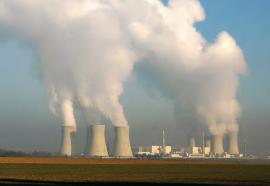
Nuclear Standoff - Nuclear Breach

Federal failure to fulfill spent-fuel obligations creates expensive risks.


For more than 50 years, the federal government has failed to manage spent nuclear fuel (SNF) and high-level radioactive waste (HLW), imposing the burdens for this critical function on the private sector. Nuclear plant operators incurred upwards of several hundred million dollars per reactor in uncompensated expense and risk premiums, and potentially face decades of additional costs and risks coping with SNF and HLW.

Paying with Plastic

Customers demand real choices for bill payment.

In the world of utility bill payments, few issues have generated more controversy than the use of credit, debit and pre-paid cards. Generally, regulated utilities have been unable to build a compelling business case to offer no-fee card payments to customers, preferring instead to partner with third-party processors (TPPs) who happily charge convenience fees to card users.

Subsidy Addiction

Government incentives are smothering free enterprise.

When Sen. Lamar Alexander (R-Tenn.) announced legislation in November 2009 aimed at doubling America’s nuclear power capacity within 20 years, he compared the clean-energy challenge to fighting a war. “If we were going to war, we wouldn’t mothball our nuclear navy and start subsidizing sailboats,” he told attendees at the American Nuclear Society’s winter meeting. “If addressing climate change and creating low-cost, reliable energy are national imperatives, we shouldn’t stop building nuclear plants and start subsidizing windmills.”

Can We Afford Climate Regulation?

Lawmakers are rushing a costly decision.

Utilities are struggling to predict the costs of greenhouse gas regulation. In the quest for a greener planet, how much should consumers be asked to pay for environmental benefits that might be difficult to measure?