Demanding More from DR

Customer-specific demand-response strategies become more sophisticated.

Demand-response technologies are quickly becoming more sophisticated, and markets are treating demand as a resource. But realizing the true potential of DR requires utilities to apply today’s technology solutions and program structures—and to base their strategies on actual customer behavior and preferences—rather than yesterday’s outdated assumptions about centralized load control.


Bringing Customers On Board, part II

The entire utility-consumer relationship must be reengineered.

The business case for advanced metering infrastructure (AMI) can’t be justified alone on operational savings to the utility. But critical assumptions involving process improvements and system efficiencies depend on customer involvement. This sequel to a September 2009 article examines customer engagement strategies and techniques.

The Constellation Experience

Ring-fencing after the subprime meltdown.

When Électricité de France stepped in to buy Constellation Energy’s nuclear assets and help the company avoid bankruptcy, the Maryland Public Service Commission conditioned the sale on a set of ring-fencing provisions. The industry has been using such structures to protect ratepayers in complex and high-risk M&A transactions since the 1990s. The protection isn’t foolproof, however—and it can bring problematic regulatory trade-offs.

Vendor Neutral

Alstom introduces a new 3-MW wind turbine, one of the world’s most powerful for onshore installations; Solyndra reports its larges-ever rooftop installation of cylindrical photovoltaic (PV) systems — a 704-kW project in New Jersey; Plug Power reports that its GenDrive fuel cell units will power Walmart Canada’s fleet of electric lift trucks at a Alberta distribution center.

Transactions (August 2010)

CenterPoint Energy floats registered public offering of 22 million common shares; ConEd issues $700 million in senior unsecured debt in two tranches; 10-years notes; Duke Energy raises $45 million by leveraging ownership in the 14-MW Blue Wing Solar Project in Texas.

Getting Engaged

How to avoid a Texas-style backlash.

Is customer engagement more about damage control, or helping customers understand their options?

Nuclear YIMBY

Local communities welcome new reactor projects.

Visitors to Waynesboro in northeast Georgia might be surprised at local residents’ opinions about two new nuclear energy plants planned for that site; namely, they’re giving the reactors a warm welcome.

People (July 2010)

Constellation promotes Maria Korsnick to Chief Nuclear Officer; Chip Pardee becomes Exelon’s COO; plus executive changes at American Transmission, Entergy, Idaho Power, New Jersey Resources, Northwestern Energy, Piedmont Natural Gas, Pinnacle West, Spectra Energy, TVA, Williams, EPRI and more...

Got Prepaid?

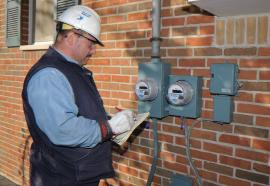
Smart meters open the door to advance billing.

Investor-owned utility executives have long understood the benefits of prepaid metering, but technical and regulatory roadblocks have prevented wide-scale implementation. Now, however, two IOUs—Arizona Public Service and DTE—are planning prepaid metering programs that could be offered to all customers. Smart metering technology might pave the way for prepaid to become a standard service.

PURPA's Changing Climate

California defends its cogen feed-in tariff—complete with its own virtual carbon tax.

California’s new feed-in tariff (FIT) is creating a burgeoning market for green energy investments, but the policy has sparked a fierce battle over state authority to dictate wholesale power transactions. A federal case will determine whether the 1978 Public Utility Regulatory Policies Act pre-empts states from requiring purchases that exceed utilities’ avoided cost.